


News & Events
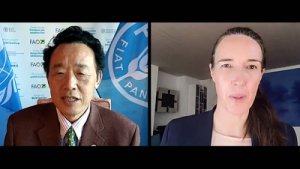
Consumers can be the “catalyst” to drive the transformation of agri-food systems, influencing how we produce and consume food in an increasingly digital world, said the Director-General of the Food and Agriculture Organization of the United Nations (FAO), QU Dongyu, today in a special address during the celebration of Consumers International’s 60th anniversary.
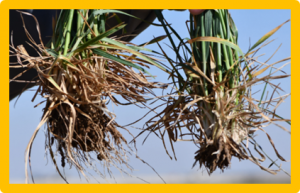
The biogeochemical cycling of sulfur in soil is closely associated with the mobility and bioavailability of heavy metals; however the influence of sulfur on the behavior of metal-based nanoparticles has not yet been studied. The influence of S fertilizer (S0 and Na2SO4) applied in paddy soils on CuO NPs behavior in soil pore water was explored in the present study. Synchrotron-based techniques were applied to investigate the migration and speciation transformation of CuO NPs in soil pore water colloids.
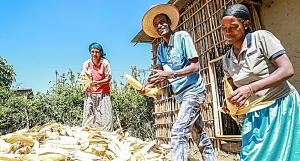
An independent study published last month has documented the extensive reach of CGIAR-related agricultural innovations in Ethiopia over the past 20 years. The study represents the culmination of years of work by the independent CGIAR Standing Panel on Impact Assessment (SPIA)[1], together with the Ethiopian Central Statistics Agency (CSA) and the World Bank Living Standards Measurement Study (LSMS) team, to develop and test a country-level approach to assessing adoption and diffusion of agricultural innovations using national surveys.
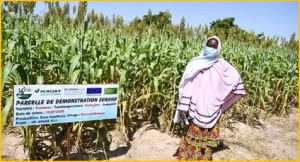
Farmers in Mali, who volunteered to grow climate-resilient and locally adapted varieties of sorghum, pearl millet, groundnut and cowpea crops under the UE-APSAN-Mali project, demonstrated the superior features of their crops during a field visit by other farmers, seed producers and local officials. Small groups of selected highly motivated farmers identified through project implementing partners had carried out testing trials and demonstrations on their pilot plots.
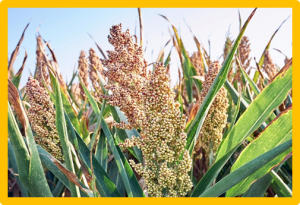
Sorghum is generally grown in water limited conditions and often lodges under post-anthesis drought, which reduces yield and quality. Due to its complexity, our understanding on the genetic control of lodging is very limited. We dissected the genetic architecture of lodging in grain sorghum through genome-wide association study (GWAS) on 2308 unique hybrids grown in 17 Australian sorghum trials over 3 years.
CGIAR Excellence in Breeding (EiB), Accelerating Genetic Gains (AGG), along with partners MAIZE, IRRI, CIMMYT, Syngenta. Driving Genetic Gain through selection is at the core of every successful plant breeding program. In this webinar targeting national breeding programs in Africa, EiB will explain the concepts behind genetic gain; introduce tools and approaches to measure genetic gain; provide real examples from a national program in East Africa’.
Global trade in food products has proven remarkably resilient during the pandemic, with developing countries even managing to increase export revenues, according to a new report published today by the Food and Agriculture Organization of the United Nations (FAO). Data available through June "suggest strong, albeit not complete, resilience of the global food markets to COVID-19 shocks", the semi-annual Food Outlook says in a special feature on recent trends in food imports bills and export earnings.
Rice blast, caused by Magnaporthe oryzae, is one of the most destructive diseases of rice worldwide. The identification and utilization of resistance genes are crucial and significant for breeding resistant rice cultivars. We identified a resistance gene from Shuangkang77009, which is highly resistant to the rice blast isolate Guy11 using map-based cloning. We performed bulked segregant analysis combined with specific length amplified fragment sequencing.
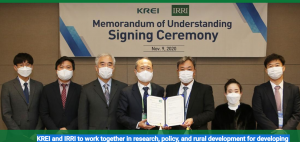
Building on its strong relationships with South Korean government partners, the International Rice Research Institute (IRRI) recently signed a 5-year Memorandum of Understanding with South Korean agency Korea Rural Economic Institute (KREI), to cooperate in various areas of agricultural research, policy, and rural development to generate impact in South Korea and across the developing world.
One CGIAR is a dynamic reformulation of CGIAR’s partnerships, knowledge, assets, and global presence, aiming for greater integration and impact in the face of the interdependent challenges facing today’s world. As One CGIAR, scientific innovations for food, land and water systems can be deployed faster, at a larger scale, and at reduced cost, having greater impact where they are needed the most. This will provide our beneficiaries around the world with more sustainable ways to grow, catch, transport, process, trade, and consume safe and nutritious food.
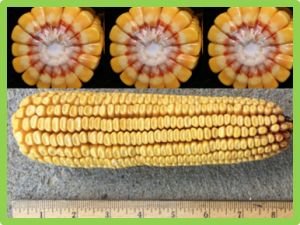
Kernel row number (KRN) is one of the most important yield-influencing traits and is closely associated with female inflorescence development in maize (Zea mays L.). In this study, an F2:3 population derived from a cross between V54 (low KRN line) and Lian87 (high KRN line) was used to map quantitative trait loci (QTLs) conferring KRN in maize. We identified 12 QTLs for KRN in four environments, each explaining 1.40–14.95% of phenotypic variance
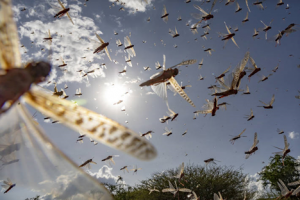
Well, as we predicted, climatic conditions are driving this new round of locust activity. In many areas, rains came early, triggering earlier than usual reproduction; other areas continue to get steady rains, which sparks locust breeding. Large swathes of Yemen that are inaccessible are also key locust breeding grounds -- basically a reservoir for the pest.