


News & Events

The Kenyan Government has lauded the media's contribution in fostering an appreciation of the potential that science, technology, and innovation offered in the attainment of the country's development agenda, specifically, in improving food security and boosting the manufacturing sector. Speaking during this year's OFAB-Kenya Media Awards gala held in Nairobi,
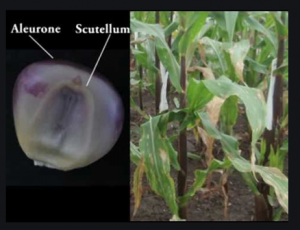
Haploids are naturally produced in maize (Zea mays L.) at different rates and can also be induced through different methods. Haploids are used to develop doubled haploids (DHs), which have many potential uses. The development of DH lines in maize involves haploid induction, haploid identification, chromosome doubling, and field sowing for self‐pollination of D0 plants. Different potential methods are used for haploid induction,

A study documented the benefits of genetically modified (GM) maize in the South American country of Honduras. Higher yield and income, and easier crop management were the farmers' top reasons for their positive opinions toward transgenic corn. The objective of the study was to document and determine the knowledge, perceptions, opinions, and attitudes of Honduran farmers towards GM maize.
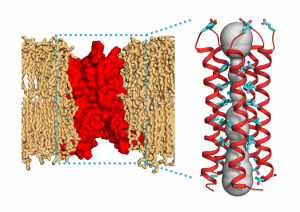
Chemists at the Massachusetts Institute of Technology (MIT) have identified the molecular structure of a protein found in SARS-CoV-2, the virus that causes COVID-19. The protein, called the envelope protein E, forms a cation-selective channel and plays a key role in the virus's ability to replicate itself and stimulate the host cell's inflammation response.
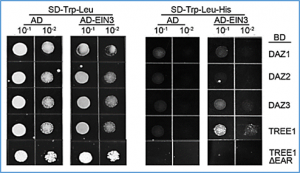
Ethylene is an important plant hormone that regulates plant growth, in which the master transcriptionactivator EIN3 (Ethylene Insensitive 3)-mediated transcriptional activation plays vital roles. However, the EIN3-mediated transcriptional repression in ethylene response is unknown. We report here that a Transcriptional Repressor of EIN3-dependent Ethylene-response 1 (TREE1) interacts with EIN3 to regulate transcriptional repression that leads to an inhibition of shoot growth in response to ethylene. Tissue-specific transcriptome analysis showed that most of the genes are down-regulated by ethylene in shoots, and a DNA binding motif was identified that is important for this transcriptional repression.
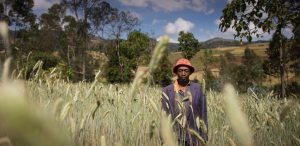
Only 1.7 per cent of climate finance – a fraction of what is needed - goes to small-scale farmers in developing countries despite their disproportionate vulnerability to the impacts of climate change, according to a report released by the UN’s International Fund for Agricultural Development (IFAD) and Climate Policy Initiative (CPI) today. Examining the Climate Finance Gap for Small-Scale Agriculture is the first detailed analysis of climate finance flows to small-scale farmers.

Efforts to curtail the COVID-19 pandemic have sent shockwaves across the globe. The immediate measures to preserve human life and bring the health crisis under control have been wholly necessary, but as restrictions on modern life remain in place for months to come, disruptions to food systems will inevitably become more acute. The number of hungry people, already at 800 million, could double as part of the wider fallout from the pandemic.
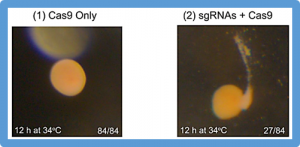
Reef-building corals are keystone species that are threatened by anthropogenic stresses including climate change. To investigate corals’ responses to stress and other aspects of their biology, numerous genomic and transcriptomic studies have been performed, generating many hypotheses about the roles of particular genes and molecular pathways. However, it has not generally been possible to test these hypotheses rigorously because of the lack of genetic tools for corals or closely related cnidarians. CRISPR technology seems likely to alleviate this problem. Indeed, we show here that microinjection of single-guide RNA/Cas9 ribonucleoprotein complexes into fertilized eggs of the coral Acropora millepora can produce a sufficiently high frequency of mutations to detect a clear phenotype in the injected generation.
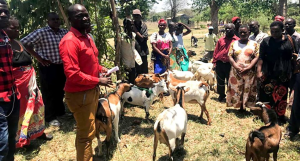
It was the competition among buyers that increased the price for heavier goats of good quality, while the goats of poor quality fetched low prices,” observed Mr Bictor Chimtondo, a goat rearing farmer, during an auction at Kachala market in Malawi. With vibrant goat markets and growing goat populations, the demand for goat meat is increasing in urban and rural areas in Malawi. Despite their growing importance as source of nutritious meat and income, goat value chains remain poorly commercialized.
Antimicrobial medicines have long been overused and misused. Now, around the world, people, plants and animals are dying from infections that cannot be treated – even with our strongest antimicrobial treatments. Antimicrobial resistance (AMR) is spreading further and faster every day. If left unaddressed, AMR may force tens of millions more people into extreme poverty, hunger and malnutrition.
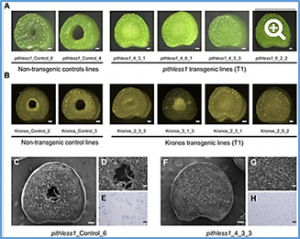
Stem solidness is an important agronomic trait of durum (Triticum turgidum L. var. durum) and bread (Triticum aestivum L.) wheat that provides resistance to the wheat stem sawfly. This dominant trait is conferred by the SSt1 locus on chromosome 3B. However, the molecular identity and mechanisms underpinning stem solidness have not been identified. Here, we demonstrate that copy number variation of TdDof, a gene encoding a putative DNA binding with one finger protein,

Climate change is accelerating. Flood, drought and rising sea levels are threatening sanitation systems, from toilets to septic tanks to treatment plants. Floodwater can contaminate wells used for drinking water. Flooding can also damage toilets and spread human waste into communities and food crops, causing deadly and chronic diseases, and posing risks to crop and food safety.