


News & Events

Economist Graham Brookes of P.G. Economics Ltd. continues his online country reports to provide the latest data on the economic and environmental benefits of genetically modified (GM) crops. His latest episode was hosted by Pakistan, with Federal Minister Syed-Fakhar Imam of the Ministry of Food Security and Research in attendance. Brookes first gave his 23-year global report about the economic and environmental impacts of GM crops, stating that the total farm income gain from GM crops from 1996 to 2018 amounts to US$ 225 billion.
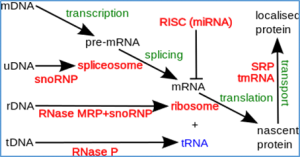
Plants can respond to biotic or abiotic stresses. To cope with various conditions, numerous intricate molecular regulatory mechanisms have evolved in plants. Noncoding RNAs (ncRNAs) can be divided into small noncoding RNAs (sRNAs), long noncoding RNAs (lncRNAs) and circular RNAs (circRNAs). Emerging evidence has demonstrated that interplay among the ncRNAs acts as a novel layer in the regulatory mechanisms,

The Australian Office of the Gene Technology Regulator (OGTR) invites comments from the public to assess license application DIR 176 from PTM Solutions Australia Pty Ltd to conduct a field trial of white clover genetically modified for increased condensed tannins in leaves. The field trial is proposed to be conducted in up to four sites per year, with a maximum total area of one hectare per year, over five and a half years. Sites will be selected from 117 local government areas. The GM white clover grown in this field trial would not be used for human food or animal feed.
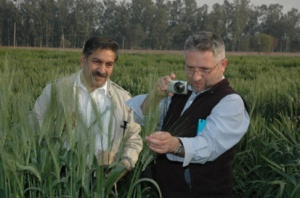
The first study was conducted for a comprehensive and systematic evaluation of the entire collection of wheat, ~22,000 accessions conserved in the Indian National Gene Bank. The unprecedented initiative and study was led by Prof. KC Bansal, former Director of Indian Council of Agricultural Research - National Bureau of Plant Genetic Resources (ICAR-NBPGR). The results of the study are published on the cover of Crop Science journal, November-December 2020 issue.
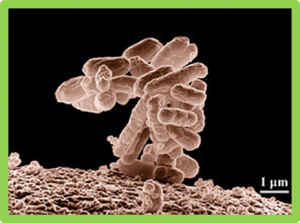
Among the 20 amino acids, three of them—leucine (Leu), arginine (Arg), and serine (Ser)—are encoded by six different codons. In comparison, all of the other 17 amino acids are encoded by either 4, 3, 2, or 1 codon. Peculiarly, Ser is separated into two disparate Ser codon boxes, differing by at least two-base substitutions, in contrast to Leu and Arg, of which codons are mutually exchangeable by a single-base substitution.
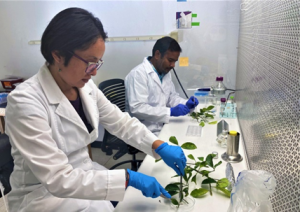
Researchers from Texas A&M AgriLife have made a discovery that will help fight fastidious pathogens costing U.S. agriculture billions of dollars annually. For years, research scientist and associate professor Dr. Kranthi Mandadi and his colleagues at the Texas A&M AgriLife Research and Extension in Weslaco have been working on developing new biological technologies to fight fastidious or "unculturable" pathogens. Now they have developed a new screening method to expedite solutions for citrus greening and other ‘fastidious' diseases.
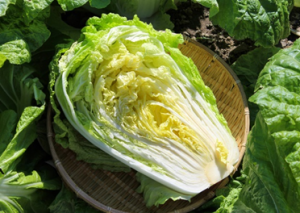
Research conducted at Dartmouth College finds that the biological clock of a popular food crop controls close to three-quarters of its genes. The study, published in the journal eLife, can help researchers identify genes that can help improve growth and stress resilience when a plant is moved to a new region or if a plant encounters changes in climate conditions.

Sub-Saharan Africa is projected to see a 55% increase in food demand by 2035, where cassava (Manihot esculenta) is the most widely planted crop and a major calorie source. Yet, cassava yield in this region has not increased significantly for 13 yr. Improvement of genetic yield potential, the basis of the first Green Revolution, could be realized by improving photosynthetic efficiency. First, the factors limiting photosynthesis and their genetic variability within extant germplasm must be understood.

When the Svalbard Global Seed Vault opened in 2008, the International Center for Agricultural Research in the Dry Areas (ICARDA) then based at Tel Hadia, just outside Aleppo, Syria, was among the first genebanks to deposit safety duplicates of its seeds. The ICARDA genebank had the largest collection of crop diversity from the Fertile Crescent, including barley, durum wheat, faba bean, chickpea, and lentil. Little did the Seed Vault's creators realize that the first withdrawal of seeds would come so soon.
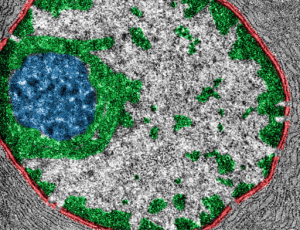
A long-standing puzzle in evolution is why new genes — ones that seem to arise out of nowhere — can quickly take over functions essential for an organism’s survival. A new study in fruit flies may help solve that puzzle. It shows that some new genes quickly become crucial because they regulate a type of DNA called heterochromatin.
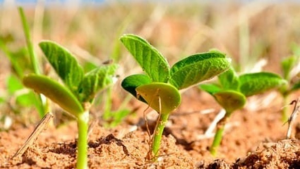
Isoflavonoids, which include a variety of secondary metabolites, are derived from the phenylpropanoid pathway and are distributed predominantly in leguminous plants. These compounds play a critical role in plant-environment interactions and are beneficial to human health. Isoflavone synthase (IFS) is a key enzyme in isoflavonoid synthesis and shares a common substrate with flavanone-3-hydroxylase (F3H) and flavone synthase II (FNS II)

The global CRISPR gene editing market is increasing gradually with a healthy compound annual growth rate of 23.35% from 2019 to 2026. The market growth is attributed to the growing prevalence of cancer worldwide and the expanding application of CRISPR technology by various academic institutions. These data are included in the market report released by Data Bridge Market Research.