


News & Events
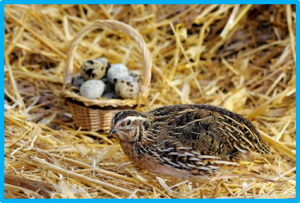
A Chinese research team published the results of their feeding study involving Japanese quails fed with transgenic maize. They concluded that the genetically modified (GM) maize is a safe food source for the quails. The Japanese quails were used for a 49-day feeding study to determine if GM maize strain C0030.3.5 will have an effect on the quail's body performance and egg quality. Also investigated were the bodily fates of the transgenic proteins in the quails.
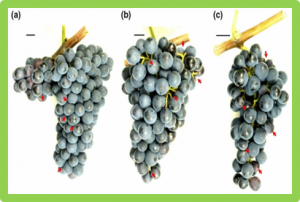
Grapevine (Vitis vinifera L.) is an economically important crop that needs to comply with high quality standards for fruit, juice and wine production. Intense plant protection is required to avoid fungal damage. Grapevine cultivars with loose cluster architecture enable reducing protective treatments due to their enhanced resilience against fungal infections, such as Botrytis cinerea-induced gray mold.

With the COVID-19 pandemic, there has been an unprecedented demand for rapid diagnostics. CRISPR-Cas-assisted nucleic acid detection assays have been found to be helpful because of their well-designed detection mechanism, fast assay time, and low reaction temperature. To further improve the technique, powerful, digital-based detection has been integrated.

ISAAA invites all Indonesian stakeholders to the webinar The Role of Biotechnology in Supporting Food Security in Indonesia to be held on November 27, 2020, at 3:15 PM (GMT+7) via Zoom. Most of the talks will be delivered in Bahasa Indonesia. During this ISAAA webinar, agricultural economist Graham Brookes of PG Economics will share the highlights of his study on the economic and environmental benefits of GM crops from 1996 to 2018, particularly the following:
A total of 239 isolates of blast (Pyricularia oryzae Cavara) collected from northern and central Vietnam showed a wide variation in pathogenicity based on the reaction patterns to 25 differential varieties (DVs) harboring 23 resistance genes and susceptible cultivar Lijiangxintuanheigu (LTH). The frequencies of isolates virulent toward DVs for Pish, Pik-m, Pi1, Pik-h, Pik, Pik-p, Pi7(t), Pi9(t), Piz-5, Pita-2, and Pita were low, but they were high for DVs for Pib, Pit, Pia, Pii, Pi3, Pi5(t), Pik-s, Piz, Piz-t, Pi12(t), Pi19(t), and Pi20(t).

The Federal Government of Nigeria is counting on agricultural technology to help deliver food security solutions and address challenges brought by climate change. In his speech during this year's Open Forum on Agricultural Biotechnology in Africa (OFAB)-Nigeria Media Awards, Nigeria‘s Minister of Agriculture and Rural Development Alhaji Sabo Nanono stressed that the country is relying on the contribution of genetic modification (GM) technology to improve the quality of food crops and benefit the Nigerian community.
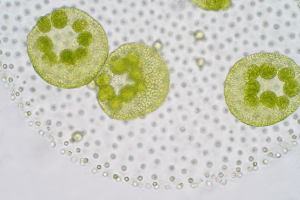
Common viruses are too small to be seen by a standard microscope and don't have enough genes to survive without a host. They reproduce by having the host replicate their genetic material and make proteins necessary to make copies of themselves. Thus, scientists from Virginia Tech were perplexed when they found giant viruses with genes that they don't seem to need. To elucidate further on this mystery, Frank Aylward, Mohammad Moniruzzaman
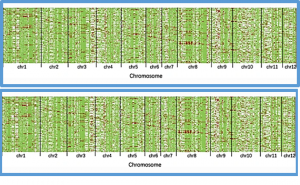
Heterosis has contributed immensely to agricultural production, but its genetic basis is unclear. We evaluated dominance effects by creating two hybrid populations: a B-homo set with a homozygous background and heterozygous chromosomal segments and a B-heter set with a heterozygous background and homozygous segments. This was achieved by crossing a set of 156 backcrossed-derived chromosome segment substitution lines (CSSLs)

Widespread male migration from rural areas is one of the most important forces shaping agrarian transformation in Nepal. One particularly important area affected is the governance and management of local public goods, especially irrigation systems. Given the crucial role of irrigation in agricultural productivity and food security, attention to gender in irrigation governance is not only necessary for existing systems, but also opens potential new opportunities for sustainable and inclusive development in rural Nepal.

QU Dongyu, Director-General of the Food and Agriculture Organization of the United Nations, today called on G20 members to address the impacts of COVID-19 on agri-food systems by boosting farmers productivity, scaling up social protection mechanisms and investing in digital innovation, among other measures.
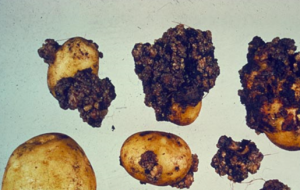
Potato wart disease, caused by the obligate biotrophic soil-born fungus Synchytrium endobioticum, is the most important quarantine disease of potato. Because of its huge impact on yield, the lack of chemical control and the formation of resting spores with long viability, breeding for resistant varieties combined with strict quarantine measures are the only way to efficiently and durably manage the disease. In this study, we set out to make an inventory of the different resistance sources. Using a Genome-Wide Association Study (GWAS) in the potato breeding genepool, we identified Sen4, associated with pathotypes 2, 6 and 18 resistance.

To help stakeholders understand the impact of genetically modified (GM) crops on the environment, a technical forum on Greener Greens: Environmental Impact of Biotech Crops will be held on November 23, 2020, 2-4 PM (GMT+8) via Zoom. The technical forum is one of the activities for the 16th National Biotechnology Week (NBW2020) in the Philippines. The NBW2020 celebration is led by the Department of Environment and Natural Resources, in collaboration with other government agencies and partner institutions.