


News & Events
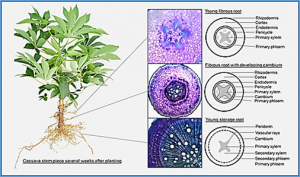
Cassava (Manihot esculenta Crantz) is one of the important staple foods in Sub-Saharan Africa. It produces starchy storage roots that provide food and income for several hundred million people, mainly in tropical agriculture zones. Increasing cassava storage root and starch yield is one of the major breeding targets with respect to securing the future food supply for the growing population of Sub-Saharan Africa.

ISAAA along with co-organizers Inter-American Institute for Cooperation on Agriculture, United States Department of Agriculture, and Virginia Tech concluded this year's seven-session on the Webinar Series on Regulatory Approaches for Agricultural and Food Applications of Animal Biotechnology on December 3, 2020, with the final online plenary meeting held to list down the challenges in communication and training faced by different countries when implementing or developing a framework for animal biotechnology.

A landmark discovery for genomes of 15 wheat varieties which represents breeding around the world has been sequenced by an international group of scientists led by the University of Saskatchewan (USask). According to Curtis Pozniak, Director of USask Crop Development Center (CDC), the discovery is "like finding the missing pieces on your favorite puzzle that you have been working on for decades."
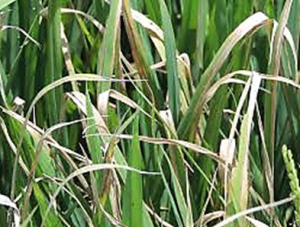
The endophytic microbiome plays an important role in plant health and pathogenesis. However, little is known about its relationship with bacterial blight (BB) of rice caused by Xanthomonas oryzae pv. oryzae (Xoo). The current study compared the community compositional structure of the endophytic microbiota in healthy and BB symptomatic leaves of rice through a metabarcoding approach, which revealed BB induced a decrease in the alpha-diversity of the fungal communities and an increase in the bacterial communities.

The Philippines is the first country to plant a biotech crop in Southeast Asia and has become a model for science-based biosafety regulation in the region. In 2019, Filipino farmers boosted the area planted to biotech maize. Global biotech crop adoption in 2019 and the Philippine experience on biotech crops will be presented through a webinar on December 14, 2020, at 10 AM (GMT+8) via Zoom.
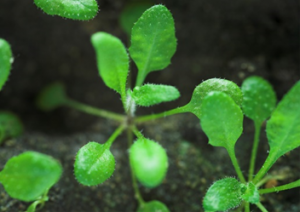
A research team from the Centre for Research in Agricultural Economics (CRAG) has found that plants are more tolerant to soil salinity by regulating the TEMPRANILLO (TEM) genes. These findings open up new possibilities in the development of plant varieties that are better adapted to climate change. The study, led by researcher Soraya Pelaz, reveals the crucial role that TEM genes play in protecting plants from increased soil salinity, one of the major limiting factors for crop production.
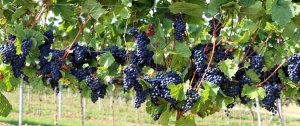
In this study, we report the functional characterization of VvNPF6.5, a member of nitrate transporter 1/peptide transporter family (NRT1/PTR/NPF) in Vitis vinifera. Subcellular localization in Arabidopsis protoplasts indicated that VvNPF6.5 is plasma membrane localized. Quantitative RT-PCR analysis indicated that VvNPF6.5 is expressed predominantly in roots and stems and its expression is rapidly induced by nitrate.

A team of scientists at Gladstone Institutes, University of California, Berkeley (UC Berkeley), and the University of California, San Francisco (UCSF) has developed the technology for a CRISPR-based test for COVID-19 that uses a smartphone camera to provide accurate results in under 30 minutes. The Gladstone team led by Dr. Melanie Ott and Parinaz Fozouni worked with UC Berkeley bioengineer Dr. Daniel Fletcher and Dr. Jennifer Doudna, senior investigator at Gladstone, professor at UC Berkeley, president of the Innovative Genomics Institute, and investigator of the Howard Hughes Medical Institute.
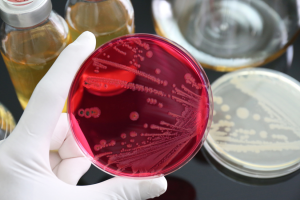
Two independent studies reveal that retrons, similar to CRISPR, are part of the bacterial immune arsenal, protecting the bacteria from viruses called phages. Scientists from Weizmann Institute of Science, Israel, reported in Cell how a particular retron defends bacteria through abortive infection. This process involves triggering newly infected cells to self-destruct so the virus can't replicate and spread to others. This is the first concrete evidence about the natural role of retrons.
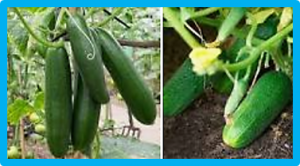
Determinate and indeterminate growth habits of cucumber can affect plant architecture and crop yield. The TERMINAL FLOWER 1 (TFL1) controls determinate/indeterminate growth in Arabidopsis. In this study, a novel mutation in cucumber TFL1 homolog (CsCEN) has shown to regulate determinate growth and product of terminal flowers in cucumber (Cucumis sativus L.), which is similar to the function of CsTFL1 as previously reported.

In image processing, speech and video processing, machine vision, natural language processing, and classic two-player games, in particular, the state-of-the-art has been rapidly pushed forward over the last decade, as a series of machine-learning performance records were achieved for publicly organized challenge problems. In many of these challenges, the records now meet or exceed human performance level.

Established in 1949, the CCP is FAO´s oldest technical committee. It consists of 110 FAO Member Nations, plus observers. The CCP normally meets once every two years, additional sessions may also be held upon Members' request.