


News & Events
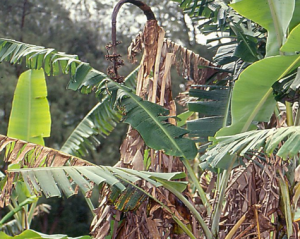
Banana is an important fruit and food crop, but is threatened by Fusarium wilt, one of the most devastating soil-borne fungal diseases. Only host resistance facilitates banana cultivation in infested soils around the world, but the genetic basis of Fusarium wilt of banana (FWB) is unknown. We selfed a heterozygous wild banana accession Musa acuminata ssp. malaccensis (Mam, AA, 2n = 22) to generate a mapping population and to investigate the inheritance of resistance to Race 1 and tropical race 4 (TR4) that cause FWB

Aquatic foods are an integral part of the global food system that contribute significantly to food and nutrition security and livelihoods, particularly throughout low- and middle-income countries. The global supply of aquatic foods comes from capture fisheries and aquaculture, but there is concern about sustainability of the industry and its ability to meet future needs and demands.

The coronavirus outbreak has affected trade in food and farm goods, imperiling efforts to reduce hunger and malnutrition and adding to pressure already on the farm sector from climate change. The pandemic-induced postponement of the WTO’s next ministerial conference and ongoing tensions among major economies have affected both the substance and process of updating the global trade rulebook.
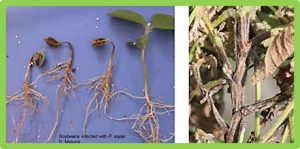
Quantitative disease resistance (QDR) toward Phytophthora sojae in soybean is a complex trait controlled by many small-effect loci throughout the genome. Along with the technical and rate-limiting challenges of phenotyping resistance to a root pathogen, the trait complexity can limit breeding efficiency. However, the application of genomic prediction to traits with complex genetic architecture, such as QDR toward P. sojae, is likely to improve breeding efficiency.

COVID-19 is often a biphasic illness with an initial phase of upper respiratory symptoms that can rapidly progress to profound hypoxemia and respiratory failure. Postmortem studies of severe COVID-19 reveal diffuse alveolar damage, hyaline membranes, and thrombi, with varying degrees of inflammation and types of cellular infiltrates. Now, with their autopsy study of early victims of the pandemic in China
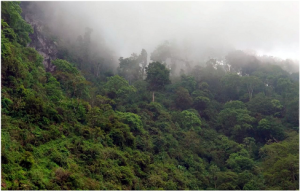
The coronavirus disease 2019 (COVID-19) pandemic is the latest episode in a string of environment-borne human tragedies, catastrophic in its magnitude, reach, and repercussions. Understandably, the scientific literature has focused on the causes and consequences of the pandemic from an anthropocentric viewpoint. As immense as the human tragedy surrounding the pandemic is, the glaring blind spot is the ecological impact of the pandemic and the pandemic-induced lockdown.
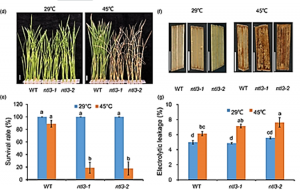
Heat stress induces misfolded protein accumulation in endoplasmic reticulum (ER), which initiates the unfolded protein response (UPR) in plants. Previous work has demonstrated the important role of a rice ER membrane-associated transcription factor OsbZIP74 (also known as OsbZIP50) in UPR. However, how OsbZIP74 and other membrane-associated transcription factors are involved in heat stress tolerance in rice is not reported.

While we are about to celebrate the 5th anniversary of the Paris Agreement on climate change, carbon neutrality pledges across a range of stakeholders and sectors is observed. As of today, more than 110 countries have committed to a net-zero objective. In such a context, the seminar explores how to support countries to become carbon neutral, by promoting soil and forest carbon sequestration efforts
The FAO Council today wrapped up its 165th Session. The new Strategy for Private Sector Engagement has been approved. Members also welcomed the Outline of the Strategic Framework 2022-31 and the Outline of the Medium-Term Plan 2022-25. The new Strategic Framework puts at its centre the strategic narrative of Leaving No One Behind through sustainable, inclusive and resilient food systems for better production, better nutrition, a better environment, and a better life.

The autopolyploid nature of potato and sweetpotato ensures a wide range of meiotic configurations and linkage phases leading to complex gene-action and pose problems in genotype data quality and genomic selection analyses. We used a 315-progeny biparental F1 population of hexaploid sweetpotato and a diversity panel of 380 tetraploid potato, genotyped using different platforms to answer the following questions: (i) do polyploid crop breeders need to invest more for additional sequencing depth? (ii) how many markers are required to make selection decisions? (iii) does considering non-additive genetic effects improve predictive ability (PA)? (iv) does considering dosage or quantitative trait loci (QTL) offer significant improvement to PA?

A meeting between Japan’s Ambassador to Cambodia and the Southeast Asian Representative of the International Rice Research Institute (IRRI) discussed ideas on strengthening future partnership and collaboration between Japan and IRRI to support the Cambodian agricultural sector. IRRI SEA Representative, Dr. Yasmi Yurdi, who is currently based in Cambodia, met with Japanese Ambassador to Cambodia, H.E. Masahiro Mikami, to convey the institute’s gratitude to the Government of Japan for its long-term and continued support of IRRI.

The Germplasm Health Units (GHUs) of various CGIAR centers have come together to organize a global seminar series for the GHU’s International Phytosanitary Awareness Week event, part of the United Nations’ year-long celebration of the International Year of Plant Health (IYPH 2020).Held from 9 to 13 November 2020, the 5-day online webinar series, with the theme of “Phytosanitary Safety for Transboundary pest prevention,” brought together phytosanitary professionals and experts from Asia,