


News & Events
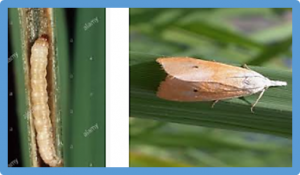
Rice (Oryza sativa L.) production is always threatened by biotic and abiotic stresses. Both stresses can reduce rice productivity and quality. Yellow stem borer (YSB; Scirpophaga incertulas Walker) is one of the biotic stresses and is reported as the most destructive pest of tropical rice insects. The application of pesticides is less effective since the insect larvae live and feed inside the stem, thus inhibiting pesticides to reach the larvae
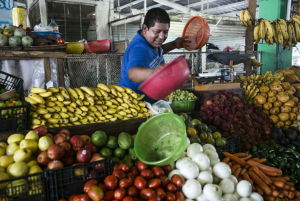
The Food and Agriculture Organization of the United Nations (FAO) has welcomed the recent decision by the Global Environment Facility (GEF) Council to approve 13 FAO-led projects in 16 countries, totaling some $78.5 million dollars. The decision came during the 59th GEF Council Meeting and will build upon its June 2020 decision to approve $176 million for FAO-led projects.
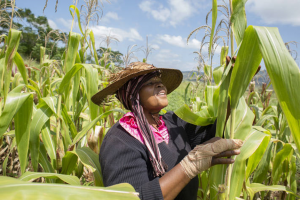
The Food and Agriculture Organization of the United Nations (FAO) is increasing efforts aimed at bolstering the global response to Fall Armyworm (FAW), considered one of the top 10 devastating plant pests affecting food and agriculture. FAO Director-General, QU Dongyu, noted today that great strides had been made by the Global Action for Fall Armyworm Control (GA), a coordination mechanism established by him a year ago, but emphasized that many challenges remain to be tackled in the sustainable management of this pest.
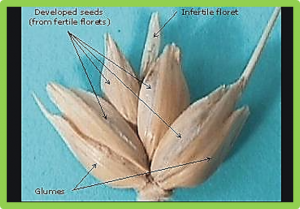
As an important component of plant height (PH), spike extension length (SEL) plays a significant role in formation of an ideotype in wheat. Despite the fact that numerous loci for SEL in wheat have been reported, our knowledge on PH-independent loci remains to be limited. In this study, two recombinant inbred line (RIL) populations genotyped using the Wheat55K SNP were used to detect quantitative trait loci (QTL) controlling SEL across six environments.
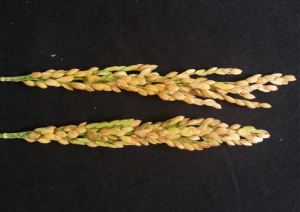
A research team at the Hefei Institutes of Physical Science (HFIPS), Chinese Academy of Science led by Prof. WU Yuejin has developed a rice variety using ion beam breeding technology. Prof. Wu's team applied ion beam mutagenesis in crop breeding to promote the development of molecular breeding. The rice variety is called Zhongkejing No. 5. "Zhongke" means the Chinese Academy of Science in Chinese, and it was developed for the advantageous production areas of glutinous rice in Anhui province.
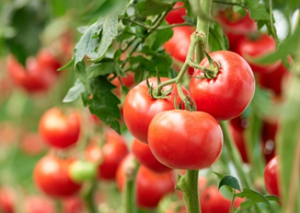
L-DOPA is produced from tyrosine, an amino acid found in many food products. The research team inserted a gene encoding a tyrosinase, an enzyme that uses tyrosine to build molecules such as L-DOPA. This elevated the level of L-DOPA specifically in the fruit part of the plant and led to higher yields than those associated with L-DOPA production in the whole plant.
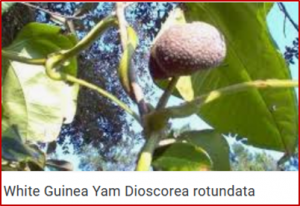
White Guinea yam (Dioscorea rotundata) is an important staple tuber crop in West Africa. However, its origin remains unclear. In this study, we resequenced 336 accessions of white Guinea yam and compared them with the sequences of wild Dioscorea species using an improved reference genome sequence of D. rotundata. In contrast to a previous study suggesting that D. rotundata originated from a subgroup of Dioscorea praehensilis
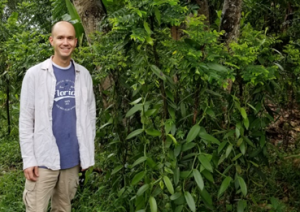
University of Florida scientists led by tropical plant geneticist Dr. Alan Chambers have developed a tool to unlock the genetic traits that pinpoint the vanilla variety that produces an abundance of beans, grows efficiently and sustainably, with consumer-approved taste. The results of this study are published in a paper in Nature Food. Together with researchers at Elo Life Systems, a North Carolina-based food and agriculture company, Dr. Chambers co-led the generation of a "chromosome-scale" sequencing of vanilla DNA.
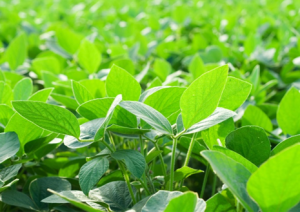
A fungus in the soil called Fusarium virguliforme causes SDS, attacking a soybean plant's roots. The symptoms of SDS are typically seen on leaves after flowering, where scattered yellow spots appear between veins. These spots form large chlorotic and necrotic blotches between the leaf veins, while the midvein and major lateral veins remain green. Diseased plants will have rotted taproots and lateral roots, and by the time a farmer sees discolored leaves, it is already too late.
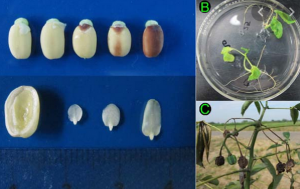
Embryo rescue (ER) in cassava breeding has several relevant applications, from the recovery of broad crosses to the recovery of seeds from the standard pollination program. Cassava fruit setting may drop from 100%, during the 1st week after pollination, to less than 40% during the 2nd week after pollination due to the abscission of fruits depending on genotypes. Therefore, the availability of an ER protocol for early stages of embryo development

As vaccines for COVID-19 reach high efficacy rates and with Britain's approval of Pfizer-BioNTech vaccine for emergency use, the World Health Organization (WHO) pinpoints the next challenge: public acceptance of the vaccine. After the vaccine approval, a system for mass production for sufficient supply, efficient rollout, and equitable access would be laid out. Strategies to drive acceptance and uptake of the vaccines are vital in the process.

NBMA Director General Dr Rufus Ebegba, while speaking during the validation exercise in Abuja on December 9, 2020, said that the Agency has been evolving and the Federal government is poised to drive the economy and the livelihood of the people. He noted that Nigeria has keyed in science and technology as major drivers of the economy, hence the need for the NBMA to ensure that gene editing and its products are safe and do not have an adverse impact on human health and the environment.