


News & Events
The global CRISPR gene editing market was valued at $846.2 million in 2019 and is projected to reach $10,825.1 million by 2030, registering a compound annual growth rate of 26.86% during the forecast. This is according to the forecast report of Research and Markets. The report, titled Global CRISPR Gene Editing Market: Focus on Products, Applications, End Users, Country Data (16 Countries), and Competitive Landscape - Analysis and Forecast, 2020-2030, highlights the answers to the key questions raised about CRISPR including:

The Ministry of Agriculture passed Regulation 50/2020 that provides guidelines for establishing a post-monitoring evaluation scheme for genetically engineered (GE) crops. The guidelines were developed in accordance with the country's regulatory framework through Regulation 21/2005.
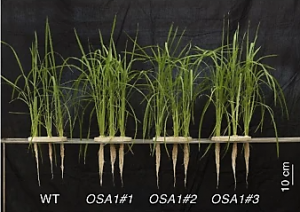
Nitrogen (N) and carbon (C) are essential elements for plant growth and crop yield. Thus, improved N and C utilisation contributes to agricultural productivity and reduces the need for fertilisation. In the present study, we find that overexpression of a single rice gene, Oryza sativa plasma membrane (PM) H+-ATPase 1 (OSA1), facilitates ammonium absorption and assimilation in roots and enhanced light-induced stomatal opening with higher photosynthesis rate in leaves. As a result, OSA1 overexpression in rice plants causes a 33% increase in grain yield and a 46% increase in N use efficiency overall.

Japanese researchers from Nagoya University, in partnership with Nanjing Agricultural University, developed a method to increase simultaneously the nutrient uptake through the roots and the stomatal opening of rice to increase its yield with less use of fertilizer. The researchers created a new variety of field-grown rice paddy with an overexpression of the plasma membrane proton pump gene OSA1. Plasma membrane proton pump is also responsible for the opening of stomata in plants thereby increasing its photosynthetic rate.

Developing countries continued to plant more biotech crops in 2019, according to the ISAAA report on the Global Status of Commercialized Biotech/GM Crops: 2019. The report is now available on the ISAAA website. Developed countries used to plant more biotech crops since commercialization started in 1996 until in 2011, the global area of biotech crops was evenly distributed. In 2012, developing countries outperformed the developed countries continuously.
Dong Thap Muoi Agriculture Research and Development Center addressed the 2020 annual report on 19 Jan 2021. Vegetable, Patato, Flower Research and Development Center addressed the 2020 annual report on 21 Jan 2021. The IAS addressed the 2020 annual report on 28 Jan 2021. Hung Loc Agriculture R&D Center addressed the 2020 annual report on 26 Jan 2021.
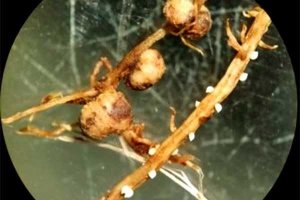
Soybean cyst nematode (SCN, Heterodera glycines, Ichinohe) is the most devastating pathogen of soybean. Understanding the genetic basis of SCN resistance is crucial for managing this parasite in the field. Two major loci, rhg1 and Rhg4, were previously characterized as valuable resources for SCN resistance. However, their continuous use has caused shifts in the virulence of SCN populations, which can overcome the resistance conferred by these two major loci. Reduced effectiveness became a major concern in the soybean industry due to continuous use of rhg1 for decades.
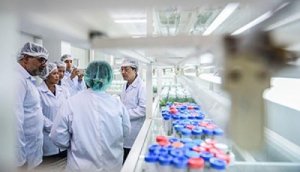
FAO Director-General, QU Dongyu, spoke today at a conference entitled Bonding science and policy to accelerate food systems transformation, hosted by the University of Montpellier. The event saw one of Europe’s oldest universities – its founding statutes date back to 1220 – tackle one of the most acute of modern challenges: how to feed a growing population sustainably, amid unprecedented threats to the Earth’s climate and biodiversity.
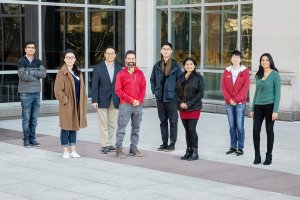
Researchers used single-molecule imaging to compare the genome-editing tools CRISPR-Cas9 and TALEN. Their experiments revealed that TALEN is up to five times more efficient than CRISPR-Cas9 in parts of the genome, called heterochromatin, that are densely packed. Fragile X syndrome, sickle cell anemia, beta-thalassemia and other diseases are the result of genetic defects in the heterochromatin.
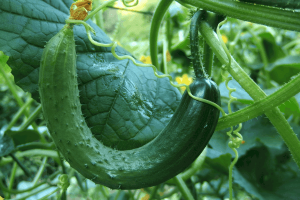
Nicotiana tabacum is a non‐food herb that has the potential to be utilized as bio‐factory for generating medicines, vaccines or valuable small metabolites. To achieve these goals, the improvement of genetic tools for pre‐designed genome modifications is indispensable. The development of CRISPR/Cas nucleases allows the induction of site‐specific double‐strand breaks to enhance homologous recombination‐mediated gene targeting (GT). However, the efficiency of GT is still a challenging obstacle for many crops including tobacco.
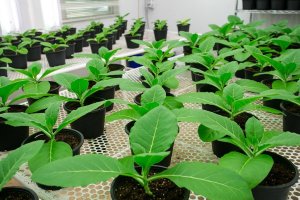
In a bid to discover how to maximize the tobacco plant's potentials as bio-factories, an international team of scientists investigated which CRISPR technology was more efficient in incorporating two herbicide resistance modifications simultaneously in the tobacco' SuRB gene. The results not only exhibited which CRISPR technology was more efficient, but that it was also possible to inherit gene-targeted modifications.
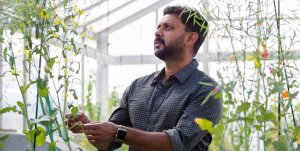
Biologists from the University of Calgary were successful in modifying the height and shape of the canola plant by altering just a single gene using gene editing, potentially improving its ability to yield more. The scientists worked on a wild type strain of the canola. Their objective was to modify the height and shape of canola by targeting the BnD14 gene, a receptor for the strigolactone hormone.