


News & Events

A study led by Melbourne University has established how plants use their metabolism to tell time and know when to grow. This discovery could help in growing crops in different environments, including different seasons, latitudes, or even in artificial environments and vertical gardens. The study led by Dr. Mike Haydon, from the School of BioSciences, details how plants use their metabolism to sense time at dusk and help conserve energy produced from sunlight during the day. Dr. Haydon said that while plants do not sleep as humans do, their metabolism adjusts during the night to conserve energy for the following day for photosynthesis.

The new process developed by UIC's Bradley Merrill, lead author of the paper published in Molecular Cell, involves using special molecules called guide RNA that ferry the Cas9 enzyme within the cell and determine the precise DNA sequence at which Cas9 will cut. They call their specially engineered guide RNA molecules "proGuides," and the molecules allow for the programmed sequential editing of DNA using Cas9.
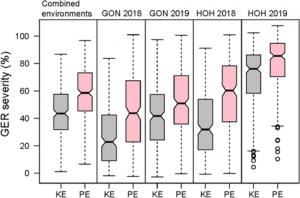
Fusarium graminearum (Fg) causes Gibberella ear rot (GER) in maize leading to yield reduction and contamination of grains with several mycotoxins. This study aimed to elucidate the molecular basis of GER resistance among 500 doubled haploid lines derived from two European maize landraces, “Kemater Landmais Gelb” (KE) and “Petkuser Ferdinand Rot” (PE). The two landraces were analyzed individually using genome-wide association studies and genomic selection (GS).

International Women's Day is a global day to celebrate the social, economic, cultural and political achievements of women, while also making a call to action for strengthening gender equality and accelerating women’s empowerment. The theme this year is Women in leadership: Achieving an equal future in a COVID-19 world. It celebrates the remarkable efforts by women and girls around the globe to shape a more equitable future and the recovery from the COVID-19 pandemic.
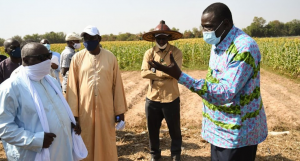
This is something we needed to know about, support, promote and make better known at the national level in order to benefit to the maximum,” said Minister Mohamed Ould Mahmoud while on a visit to the ICRISAT research station in Samanko with a group of high-level members of the Malian Ministry of Agriculture, Livestock and Fisheries. The Minister commended the organization’s contribution to sorghum, millet and legumes research for food and fodder security and the role of the genebank in protecting the crops’ genetic resources in the region.
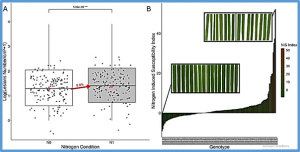
Nitrogen fertilization is known to increase disease susceptibility, a phenomenon called Nitrogen-Induced Susceptibility (NIS). In rice, this phenomenon has been observed in infections with the blast fungus Magnaporthe oryzae. A previous classical genetic study revealed a locus (NIS1) that enhances susceptibility to rice blast under high nitrogen fertilization. In order to further address the underlying genetics of plasticity in susceptibility to rice blast after fertilization, we analyzed NIS under greenhouse-controlled conditions in a panel of 139 temperate japonica rice strains.
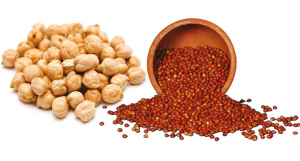
Could legumes be the key to food production sustainability and climate change resilience? They consume less than half the non-renewable energy of traditional cereals, they can survive harsh conditions like drought and they improve soil health by fixing nitrogen. On this, World Pulses Day, February 10, Dr Christopher Ochieng Ojiewo, principal scientist at ICRISAT (International Crops Research Institute for the Semi-Arid Tropics) in Nairobi, Kenya, asks the question “What lessons can we learn from legume farmers in Africa?”
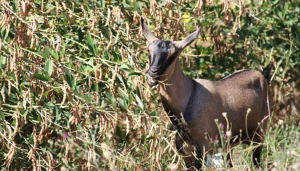
A whopping 49% increase in cropping area, 153 % increase in production and 68 % increase in productivity since 2000 – these numbers show the phenomenal expansion of pigeonpea in Malawi sparked by wilt-resistant medium-duration varieties developed by ICRISAT scientists. The new varieties provided a sustainable solution to farmers affected by the dwindling ‘Chiperoni’ rains in Southern Malawi, a traditional pigeonpea growing area.
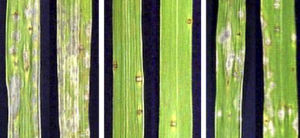
A total of 201 isolates of Pyricularia oryzae (the causal agent of rice blast) were collected from three rice ecosystems (upland, lowland, and swampy) in five regions of Indonesia (West Java, Lampung, South Sumatra, Kalimantan, and Bali). Their pathogenicities were characterized based on the patterns of reaction of 25 differential varieties (DVs) and the susceptible control Lijiangxintuanheigu (LTH), which was susceptible to all blast isolates.
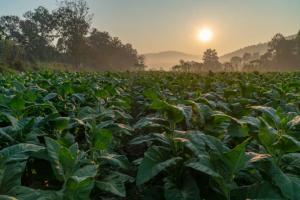
The researchers used genetic engineering in producing vitamin A and optimizing rhodopsin production simultaneously in tobacco plants by introducing an enzyme from a marine bacterium. Vitamin A activates the light-controlled cation channel, channelrhodopsin-2, which can only be switched on or off by light. Vitamin A paired with rhodopsin allows the researchers to manipulate the growth of pollen tubes and the development of leaves using green light.
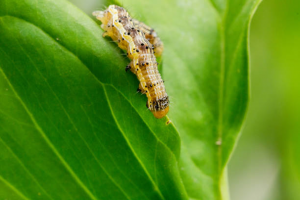
Scientists from Penn State University used CRISPR-Cas9 to successfully produce caterpillars that lack a specific enzyme that inhibits the plant's response to alert neighboring plants of the presence of herbivores nearby. The study identified an enzyme, glucose oxidase (GOX), found in the saliva of tomato fruitworm caterpillars. GOX was found to be responsible for the closing of the stomata in plants preventing its plant defensive emissions known as herbivore-induced plant volatiles (HPV).
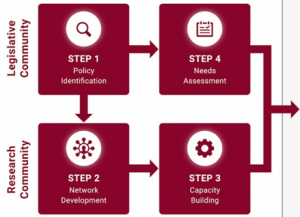
Core to the goal of scientific exploration is the opportunity to guide future decision-making. Yet, elected officials often miss opportunities to use science in their policymaking. This work reports on an experiment with the US Congress—evaluating the effects of a randomized, dual-population (i.e., researchers and congressional offices) outreach model for supporting legislative use of research evidence regarding child and family policy issues.