


News & Events

Scientists from the Earlham Institute created a new automated system using liquid handling robots to identify the genetic basis of growth inhibition of plant pathogens to prevent the rapid spread of crop diseases.The scientists screened 2,880 species of Pseudomonas isolated from a potato field in just 11 hours to identify and compare the pathogen growth inhibition with a biosynthetic gene cluster. They were able to identify the genes responsible for pathogen growth inhibition in just two weeks.
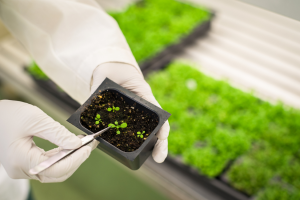
Zinc is one of the essential micronutrients for plants and animals because of its vital functions in many proteins. Zinc deficiency affects approximately 2 billion people worldwide, mostly those who are on plant-based diets relying on crops from soils lacking in zinc. Thus, the researchers searched for ways to increase zinc absorption of plants using the model plant, thale cress (Arabidopsis).
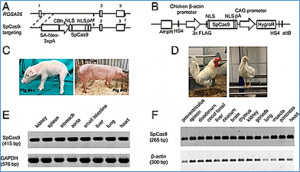
Genetically modified animals continue to provide important insights into the molecular basis of health and disease. Research has focused mostly on genetically modified mice, although other species like pigs resemble the human physiology more closely. In addition, cross-species comparisons with phylogenetically distant species such as chickens provide powerful insights into fundamental biological and biomedical processes.
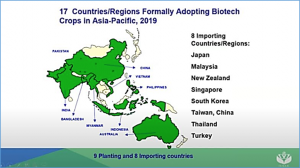
Pakistan is one of the top adopters of biotech crops in the Asia-Pacific, according to ISAAA SEAsiaCenter Director Dr. Rhodora Romero-Aldemita, who was one of the speakers in the ISAAA Brief 55 Launch and Seminar on Science Communication and Public Engagement held physically and virtually at COMSTECH, Islamabad, Pakistan on March 9, 2021.

The International Canola Pan-genome Consortium, an international group of leading academic and commercial companies from the USA, Canada, Europe, and Israel has announced the successful completion of the canola/rapeseed pan-genome. The international consortium generated a full genome sequence of 12 canola and rapeseed varieties that were assembled using NRGene's DeNovoMAGIC™ software.
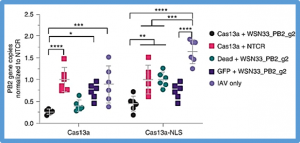
Cas13a has been used to target RNA viruses in cell culture, but efficacy has not been demonstrated in animal models. In this study, we used messenger RNA (mRNA)-encoded Cas13a for mitigating influenza virus A and severe acute respiratory syndrome coronavirus 2 (SARS-CoV-2) infection in mice and hamsters, respectively. We designed CRISPR RNAs (crRNAs) specific for PB1 and highly conserved regions of PB2 of influenza virus, and against the replicase and nucleocapsid genes of SARS-CoV-2, and selected the crRNAs that reduced viral RNA levels most efficiently in cell culture.
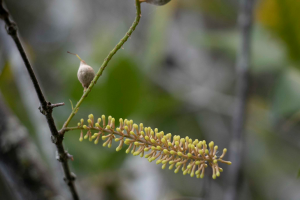
A group of researchers from the University of Queensland used the remaining 100 trees of Buburin Nut (Macadamia jansenii) as the perfect model for sequencing and assembling all future plant genomes to learn how rare plant species could survive extinction and its associated genetic bottleneck. The researchers used long-read technologies, short-read technologies, and the combination of the two to analyze all the 14 assembled chromosomes to get the highest quality of genome sequences.

Scientists designed CRISPR RNAs that can potentially work against 99% of flu strains documented in the last 100 years, and may also be effective against the contagious variants of the coronavirus that are currently circulating. Their study is the first to show that mRNA can be used to express the Cas13a protein and make it work directly in lung tissue. It's also the first to demonstrate the Cas13a protein is effective in stopping SARS-CoV-2 replication.
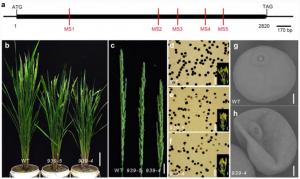
In land plants, pentatricopeptide repeat (PPR) proteins play key roles in mitochondrial group II intron splicing, but how these nucleus-encoded proteins are imported into mitochondria is unknown. To date, a few PPR proteins have been characterized in rice (Oryza sativa). Here, we demonstrate that the mitochondrion-localized P-subfamily PPR protein OsPPR939 is required for the splicing of nad5 introns 1, 2, and 3 in rice. Complete knockout or partial disruption of OsPPR939 function resulted in different degrees of growth retardation and pollen sterility.

Dr. Jennifer Thomson, Emeritus Professor of Microbiology in the Department of Molecular and Cell Biology at the University of Cape Town in South Africa has written a new book, GM Crops and the Global Divide, which explores global attitudes to GM crops and unravels the reasons behind negative sentiments. Genetically modified (GM) crops have been commercially grown since 1996.

The Turkish Government, through the Official Gazette published on February 27, 2021, has announced the Biosafety Decisions on import of genetically engineered (GE) soybean and corn events. The announcement in the Official Gazette included approvals and cancellations.Under the Turkish Biosafety law, approval for biotech events automatically expires after 10 years, and a new application must be made to renew the events.

There is a decrease in the land available for rice cultivation due to the rapid conversion to urban uses. Subsequently, acid soil could be an alternative land cultivating rice, but will require the use of aluminum (Al)-tolerant rice varieties. This Al tolerance trait is genetically controlled, and there is a need to discover more genes needed to develop Al-tolerant rice.