


News & Events
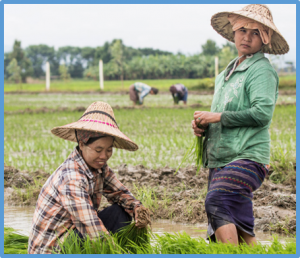
In 2021, the impact of the epidemic and the global economic recession will have an impact on world food security. After the epidemic, what problems will global food security face and how to deal with it? What challenges will global food security face? The health and economic impact of the COVID-19 pandemic are well known. As of today, an estimate 100 million people have contracted the virus worldwide, and over 2.2 million died from the disease. According to the International Monetary Fund, the global economy shrunk by 3.5 per cent last year.
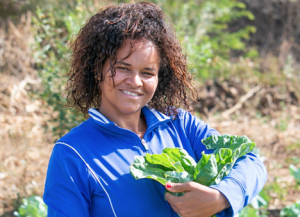
Like other women on Santiago, the largest island of Cabo Verde, Maria Lizita Varela used to rely on sand extraction as a source of income. It was thankless, dangerous work.“We have to go deeper into the sea nowadays,” she recalls. “We go over where water reaches our head. We can spend as much as three hours in the water with sand getting into our eyes, mouth, ears. Oftentimes, I felt like I might drown.” Many women thus have to rely on their partners and families for housing and other basic needs. And due to a range of other infrastructural and institutional obstacles, job opportunities in other industries such as agriculture are extremely limited.
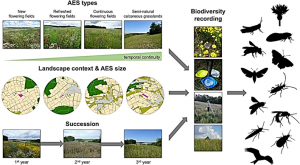
Agri-environmental schemes (AES) aim to restore biodiversity and biodiversity-mediated ecosystem services in landscapes impoverished by modern agriculture. However, a systematic, empirical evaluation of different AES types across multiple taxa and functional groups is missing. Within one orthogonal design, we studied sown flowering AES types with different temporal continuity, size, and landscape context and used calcareous grasslands as seminatural reference habitat.
IRRI puts a spotlight on the central role of women in rice-based agri-food systems and the importance of creating an enabling environment so they can lead and make a difference in their households and communities.Together with CGIAR, we are dedicated to working for and with women, knowing that their full and active participation spells the sustainability of agri-food systems amidst large and sweeping challenges such as COVID-19 and climate change.
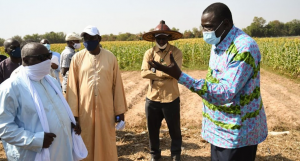
This is something we needed to know about, support, promote and make better known at the national level in order to benefit to the maximum,” said Minister Mohamed Ould Mahmoud while on a visit to the ICRISAT research station in Samanko with a group of high-level members of the Malian Ministry of Agriculture, Livestock and Fisheries. The Minister commended the organization’s contribution to sorghum, millet and legumes research for food and fodder security and the role of the genebank in protecting the crops’ genetic resources in the region.
The biosynthesis and modification of cell wall composition and structure are controlled by hundreds of enzymes and have a direct consequence on plant growth and development. However, the majority of these enzymes has not been functionally characterised. Rice mutants with leaf-rolling phenotypes were screened in a field.
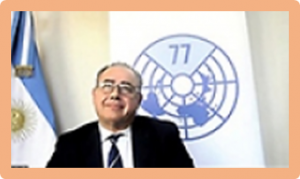
FAO Director-General QU Dongyu today participated in the chairpersonship handover ceremony of the G77 & China - Rome Chapter and praised the Group’s important contribution to FAO’s work and development. Qu recognized the efforts and leadership of the outgoing chairperson Esti Andayani, Ambassador and Permanent Representative of Indonesia to FAO, IFAD, WFP and UNIDROIT, and welcomed the incoming one, Carlos Bernardo Cherniak, Ambassador and Permanent Representative of Argentina to FAO, IFAD and WFP.
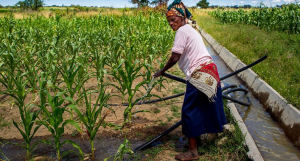
Simple agricultural innovations, such as soil probes to detect water and salinity levels at different depths, have not only helped smallholder farmers conserve scarce resources, they’ve reduced conflict within communities and fostered harmony in families. Interventions in Zimbabwe have demonstrated that returns on investment in R&D go far beyond increased yields and productivity.

Barley yellow mosaic disease is caused by Barley yellow mosaic virus and Barley mild mosaic virus and leads to severe yield losses in barley (Hordeum vulgare) in Central Europe and East-Asia. Several resistance loci are used in barley breeding. However, cases of resistance-breaking viral strains are known, raising concerns about the durability of those genes
Governance, innovation and capacity building are the high roads to coping with water scarcity in Iraq and neighboring countries, which have been home to agricultural civilizations for 5000 years, FAO Director-General QU Dongyu said today. "Effective water governance needs transparency, meaningful participation from diverse stakeholders and robust accountability mechanisms in place, he said.
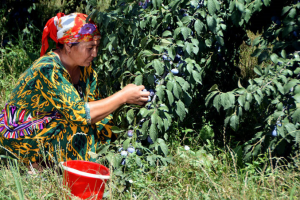
With focus on science, technology and innovation, Central Asian countries can contribute to agri-food systems transformation and serve as a model for other regions facing similar challenges amid the COVID-19 pandemic and beyond, FAO Director-General QU Dongyu said today at the Third Meeting of the Ministers of Agriculture of Central Asia. The virtual event, hosted by the Government of Kyrgyz Republic, focused on innovations in agri-food systems.
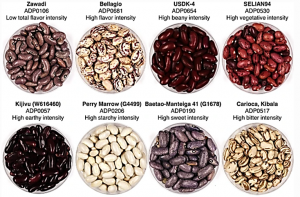
Common dry beans are a nutritious food recognized as a staple globally, but their consumption is low in the USA. Improving bean flavor and texture through breeding has the potential to improve consumer acceptance and suitability for new end-use products. Little is known about genetic variability and inheritance of bean sensory characteristics. A total of 430 genotypes of the Andean Diversity Panel representing twenty seed types were grown in three locations