


News & Events
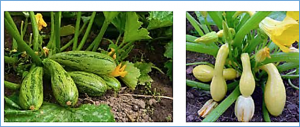
Phytophthora root and crown rot, caused by the soilborne oomycete pathogen Phytophthora capsici, leads to severe yield losses in squash (Cucurbita pepo). To identify quantitative trait loci (QTL) involved in resistance to this disease, we crossed a partially resistant squash breeding line with a susceptible zucchini cultivar and evaluated over 13,000 F2 seedlings in a greenhouse screen.

Researchers identified a gene that can increase apple's water use efficiency (WUE) when it is overexpressed. This discovery can be a potential solution to the water deficit in China's apple industry, one of the major limiting factors of apple production in some parts of the country.Scientists investigated the relationship between autophagy, the natural mechanism cells use to remove its unnecessary components, and water use efficiency regulation.

Italian MEP Herbert Dorfmann, the agriculture coordinator of Christian-democrat Europe's People Party (EPP) has said that labeling foodstuffs as gene-edited products is simply not possible as the genetic improvements brought about by new breeding technologies (NBTs) are not identifiable. The lawmaker said he is frequently communicating with researchers and experts who maintained that it is impossible to differentiate whether a modification of a plant is done in the laboratory with NBTs or with conventional breeding techniques that have been used for decades.

This study statistically explores the relationship between information provision and peoples’ attitudes towards the application of gene-editing technology to food, by contrasting cases of gene-edited livestock and vegetables in Japan. Japanese food producers and researchers are optimistic about the application of the clustered regularly interspaced short palindromic repeats (CRISPR) approach to food.

Australia's Office of the Gene Technology Regulator (OGTR) has issued license DIR 176 to PTM Solutions Australia Pty. Ltd. authorizing the limited and controlled release (field trial) of white clover genetically modified (GM) for increased condensed tannins. The trial is proposed to take place between April 2021 and December 2026, on up to four sites per year with a maximum area of 1 hectare per year across all sites.

Kanwarpal Dhugga, a principal scientist of biotechnology, specifically editing genes for disease resistance in maize and wheat working at the International Maize and Wheat Improvement Center (CIMMYT) talked about gene editing of wheat and maize. Dr. Magdy M. Mahfouz from King Abdullah University, Saudi Arabia, talked about the recent updates in gene editing.
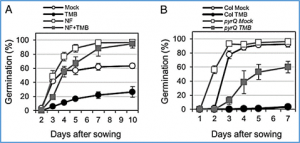
Plants sense and integrate diverse stimuli to determine the timing for germination. A smoke compound, 3,4,5-trimethylfuran-2(5H)-one (trimethylbutenolide, TMB), has been identified to inhibit the seed germination of higher plants. To understand the mode of action, we examined various physiological and molecular aspects of the TMB-dependent inhibition of seed germination in Arabidopsis thaliana. The results indicated that the effect of TMB is due to the enhanced physiological dormancy, which is modulated by other dormancy regulatory cues such as after-ripening, stratification, and ABA/GA signaling. In addition, gene expression profiling showed that TMB caused genome-wide transcriptional changes, altering the expression of a series of dormancy-related genes.
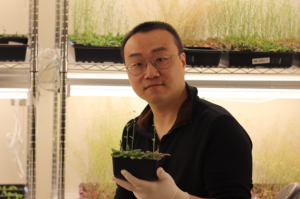
Researchers from the University of California Riverside (UC Riverside) discovered the second gene involved in temperature sensing in plants that could promote food security amidst climate change.The researchers modified a completely temperature-insensitive mutant Arabidopsis to make it reactive to temperature again. Upon examining the genes of the twice-mutated plant, they found a new gene, RCB, with products that work closely with HEMERA, the first gene they discovered to stabilize the heat-sensing function.

A team of researchers led by Boston College has successfully grown bovine meat by using decellularized spinach leaf as edible platform in a laboratory. The team removed the plant cells from the spinach leaf and used the remaining vascular framework to grow isolated precursors of cow meat cells. The cells were cultured on the surface of the decellularized spinach leaves and gelatin coated glass. It showed ~25% expression of myosin heavy-chain and maintained ~99% viability for up to 14 days.
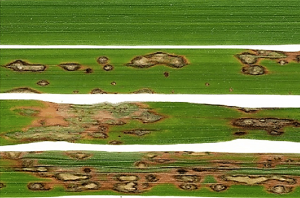
Dark brown necrotic lesions caused by Magnaporthe oryzae on rice foliage is a contrasting microhabitat for leaf-colonizing microbiome as compared with the surrounding healthy chlorophyll-rich tissues. We explored culturable bacterial communities of blast lesions by adopting microbiological tools for isolating effective biocontrol bacterial strains against M. oryzae. 16S rRNA gene sequencing-based molecular identification revealed a total of 17 bacterial species
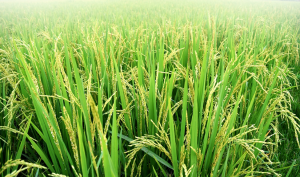
Researchers from Tohoku University and partners successfully restored pollen development in sterile rice by disrupting a mitochondrial gene using mitochondrion-targeted transcription activator-like effector nucleases (mitoTALENs). The results are published in BioRxiv. Genomes in plant mitochondria sometimes contain cytoplasmic male sterility (CMS)-associated genes, which are used by breeders to develop high-yielding F1 hybrid seed in different crops.

Cornell University, the University of Maryland (UMD), and Stanford University have worked together to quantify the man-made effects of climate change on global agricultural productivity growth for the first time. Using a robust model of weather effects on productivity, the study showed a 21% reduction in global agricultural productivity since 1961, which according to the researchers is equivalent to completely losing the last seven years of productivity growth.