


News & Events
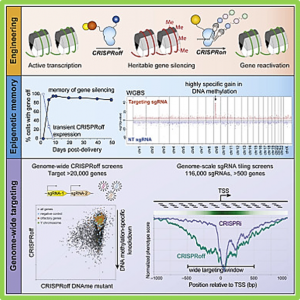
A general approach for heritably altering gene expression has the potential to enable many discovery and therapeutic efforts. Here, we present CRISPRoff—a programmable epigenetic memory writer consisting of a single dead Cas9 fusion protein that establishes DNA methylation and repressive histone modifications. Transient CRISPRoff expression initiates highly specific DNA methylation and gene repression that is maintained through cell division and differentiation of stem cells to neurons

CRISPER has just got better with the latest gene editing technology called CRISPRoff. Researchers from the Massachusetts Institute of Technology and the University of California, San Francisco (UCSF) described the new reversible CRISPR method in the Cell journal.Since its discovery, CRISPR-Cas9 has revolutionized genetic engineering by enabling researchers to make targeted modifications in the DNA.
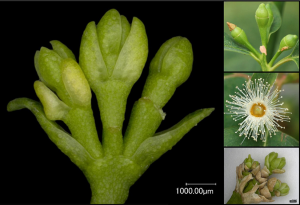
An international research team led by Oregon State University reported that Eucalyptus, a pest-resistant evergreen valued for its hardy lumber and wellness-promoting oil, can be genetically modified not to reproduce sexually, a key step toward preventing the tree from invading native ecosystems.Led by Steve Krauss from Oregon State University, the team used CRISPR-Cas9 gene editing technique to knock out LEAFY, the master gene behind flower formation.
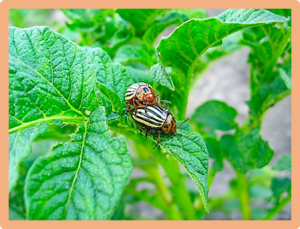
The present study was performed to express stacked insecticidal genes in potato cv. Lady Olympia and Agria to encode resistance against Colorado potato beetle (CPB), Leptinotarsa decemlineata (Say). Bacillus thuringiensis (Bt) gene (cry3A), synthetic hybrid (SN-19) and plant proteinase inhibitor Oryza cystatin II (OCII) cloned in pCAMBIA1301 binary vector in two different combinations as of DS-1 (cry3A + SN-19 genes) and DS-2 (OCII + SN-19 genes) constructs and further transformed to two potato cultivars using Agrobacterium-mediated transformation.

The study focused on the probiotic yeast Saccharomyces boulardii. It is considered a probiotic as it survives and thrives in the gut while other yeast species either cannot tolerate heat or broken down by stomach acid. Previous research has been successful in genetically engineering baker's yeast, S. cerevisiae, used in a wide variety of biomanufacturing applications. Nathan Crook, assistant professor of chemical and biomolecular engineering at NC State, and his team were surprised to learn that most of the S. cerevisiae tools worked in S. boulardii.

Radical reforms in Kenya's agricultural sector are set to inject fresh impetus to Bt cotton farming in the country, should a fibre crops legislative Bill pass into law. The Government shall be mandated to promote and market fibre crops and products locally and internationally, a development that will invigorate Bt cotton production. The Bill, technically referred to as Fibre Crops Development Authority Bill, seeks to provide for the development, regulation, and promotion of cotton and sisal industries.
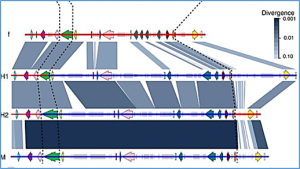
Hermaphroditic (perfect) flowers were a key trait in grapevine domestication, enabling a drastic increase in yields due to the efficiency of self-pollination in the domesticated grapevine (Vitis vinifera L. ssp. vinifera). In contrast, all extant wild Vitis species are dioecious, each plant having only male or female flowers. In this study, we identified the male (M) and female (f) haplotypes of the sex-determining region (SDR) in the wild grapevine species V. cinerea and confirmed the boundaries of the SDR.
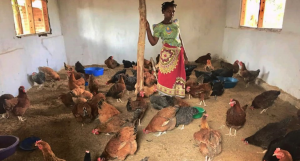
Zaone Poultry Company in Thyolo and Chimtengo Youth Poultry company in Chiradzulu are two Small and Medium Enterprises (SMEs) established under the EU funded CLIM2 project in Malawi. In 2019, the project introduced to them Kuroiler chickens, a dual-purpose breed originally bred in India that was introduced in Malawi from Tanzania. This hybrid chicken is known to outperform local chicken breeds under free range, semi-intensive and intensive management systems.
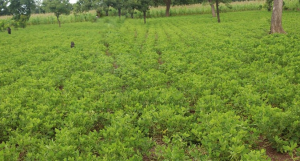
Two improved groundnut varieties have helped a group of farmers in Ghana increase their yields five-fold, breaking a three-decade stranglehold on the crop’s productivity. The improved varieties, SARINUT 1 and SARINUT 2, are also combating devastating afflictions of groundnut production like leaf spot disease in the country’s Savanna Region. The farmers’ group, Soglokonbo Groundnut Farmers Association in the region’s East Gonja district, has been using the improved varieties and good agricultural practises to produce around 1,200 kg per hectare in stark contrast to the 225 kg per hectare they were harvesting earlier.
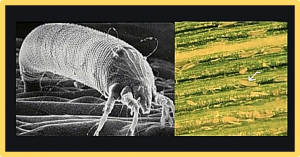
Wheat curl mite (WCM, Aceria tosichella Keifer) is a disastrous wheat pest in many wheat-growing regions worldwide. WCM not only directly affects wheat yield, but also transmits wheat streak mosaic virus. Growing WCM resistant cultivars is the most economical and sustainable method to reduce its damage. A hard winter wheat breeding line OK05312 (PI 670019) carries Cmc4 gene resistance to A. tosichella and has many desirable agronomic traits
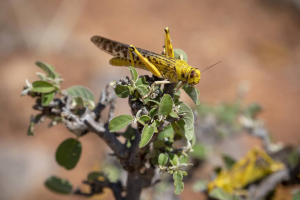
Cressman: At the moment, swarms are declining rapidly across the Horn of Africa thanks to the large-scale control operations mounted by governments and supported by FAO over the past 14 months and poor rains. Swarms in Ethiopia, Kenya and Somalia remain immature and continue to become smaller. Without rainfall, they will not mature and breed. The upcoming rainy season that is expected to be drier than normal should contribute to a further decline in locusts.

European Space Agency (ESA) astronaut Thomas Pesquet was named Food and Agriculture Organization (FAO) Goodwill Ambassador today, the International Day of Human Space Flight.Pesquet will help FAO raise awareness about the importance of transforming the world's agri-food systems, making them more resilient, inclusive, efficient and sustainable to overcome the challenges of persisting and growing hunger, and preserving the planet's environment and biodiversity.