


News & Events

Maize (Zea mays L.) has limited cold tolerance, and breeding for cold tolerance is a noteworthy bottleneck for reaching the high potential of maize production in temperate areas. In this study, we evaluate a large panel of 836 maize inbred lines to detect genetic loci and candidate genes for cold tolerance at the germination and seedling stages. Genetic variation for cold tolerance was larger than in previous reports with moderately high heritability for most traits. We identified 187 significant single-nucleotide polymorphisms (SNPs) that were integrated into 159 quantitative trait loci (QTL) for emergence and traits related to early growth.
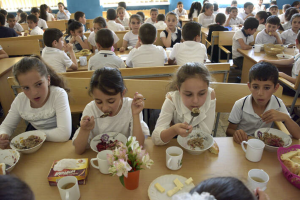
Aimed at providing lawmakers with practical guidance on legislative processes that prioritize nutrition, the Inter-Parliamentary Union (IPU) in partnership with the Food and Agriculture Organization of the United Nations (FAO), published today a new Handbook for Parliamentarians, entitled "Food Systems and Nutrition". The online Handbook was produced in collaboration with the Scaling-Up Nutrition (SUN) Movement, the World Health Organization (WHO), the United Nations Children's Fund (UNICEF) and the African Union Development Agency's New Partnership for Africa's Development (AUDA-NEPAD).

A recent study found that Koreans tend to accept gene-edited (GEd) more than genetically modified (GM) foods. Their level of scientific knowledge is a major factor affecting their choice, thereby highlighting the importance of the availability of relevant information to the public. The study investigated the consumer acceptance of GEd technology and its comparison to GM technology with the aim of classifying the targets of technology application to food and non-food products and analyze the difference in consumer acceptance between the two.
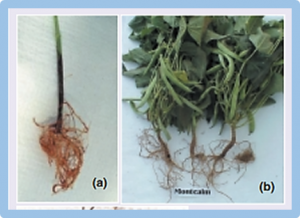
Drought is the main abiotic constraint of the production of common bean. Improved adaptation to drought environments has become a main goal of crop breeding due to the increasing scarcity of water that will occur in the future. The overall objective of our study was to identify genomic regions associated with drought resistance based on root traits using genome-wide association analysis.
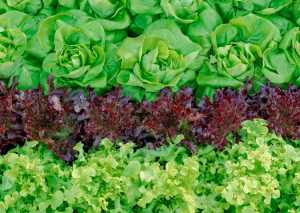
Research conducted by the Wageningen University and Research (WUR) and BGI Genomics has described the special history of lettuce in detail through their DNA analysis of 445 types of lettuce.The Centre for Genetic Resource, the Netherlands (CGN), the Dutch gene bank and part of WUR, manages a collection of 2,500 lettuce types, the largest, most complete, and best-documented lettuce collection in the world.
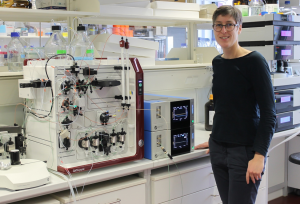
A team of scientists from the University of Bayreuth and Max Planck Institute for Developmental Biology has developed the first biosensor to observe the plant hormone, auxin, in real-time. Auxin is responsible for many biological processes in plants as it functions as a regulator for the plant's response to external stimuli. Because of this, auxin is located in almost all parts of the plants. The biosensor is based on the Escherichia coli tryptophan repressor and is genetically encoded to the plants.
A simple soil indicator failed to predict durum wheat response to Zn fertilization. Only one of the combinations tested increased wheat yield in the 11 field experiments carried out. Zinc foliar spraying (1.28 kg ha−1) was effective for wheat biofortification when applied at early booting (durum wheat) or flowering, and also when splitting this application between stem elongation and flowering stages (bread wheat).
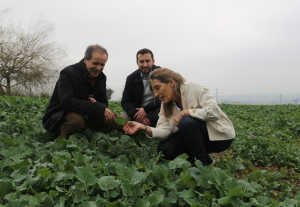
The study tested different methods of zinc biofortification to wheat in calcareous soils in southern Spain for a period of eight years. The researchers applied different doses of fertilizer in the soil and different doses of zinc were sprayed to the plant leaves at various stages of the wheat's development. The results showed that the application of fertilizers to the soil was not very effective, but foliar application increased zinc concentrations in grains by up to 51% with just 10% of the fertilizers used.
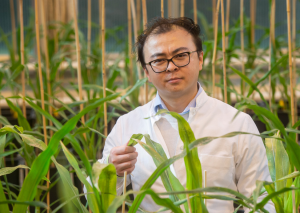
A study conducted by researchers from the University of Bonn in Germany and Southwest University in China sheds light on an unusual interdependence. They found that maize can attract special soil bacteria that, in turn, help the plants to grow better. The results could also lead to breeding new varieties that use less fertilizer and therefore have less impact on the environment.
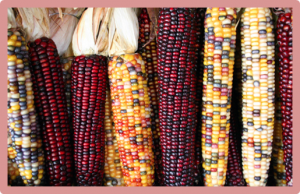
The BES1/BZR1 transcription factors regulate the expression of genes responsive to brassinosteroids and play pivotal roles in plant development, but their role in regulating kernel development in maize remains unclear. In this study, we found that ZmBES1/BZR1-5 positively regulates kernel size. Association analysis of candidate genes in 513 diverse maize inbred lines indicated that three SNPs related to ZmBES1/BZR1-5 were significantly associated with kernel width and whilst four SNPs were related to 100-kernel weight.
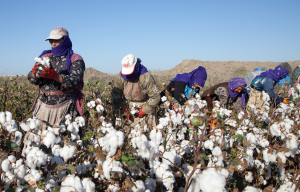
Agriculture experts in Pakistan advised growers to plant Bt cotton varieties along with a 10 percent area of non-Bt cotton crops to save them from pest attacks. Agriculture extension department spokesperson said that the government had set a target of cultivating 200,000 acres with cotton this year and for this purpose, the agriculture department was also providing a subsidy of Rs.1000/- per bag of approved and certified cottonseed and the farmers can purchase cotton seed of approved Bt cotton varieties including IUB-13
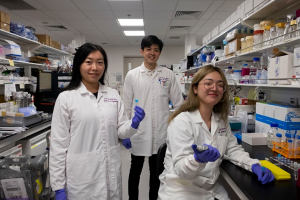
Individuals who have recovered from COVID-19, particularly those who have pre-existing heart ailments, are at risk of developing blood clots because of lingering and overactive immune responses. This is the result of the study conducted by Nanyang Technological University published in eLife. The research team investigated the potential connection of COVID-19 and blood clot formation and provided more insights on "long haul COVID", which refers to medium- and long-term health effects of COVID-19.