


News & Events

Developments in regulations of genome-edited plants are rapidly changing and continue to evolve as more countries firm up their regulatory policies. This is according to the Transgenic Research article authored by international biotech experts.The article presents the latest legal and regulatory developments in various jurisdictions including Canada, Argentina, Brazil, the USA, Kenya, Nigeria, South Africa, Australia, New Zealand, Japan, and the Philippines.

ISAAA partnered with the Philippine Department of Agriculture Biotech Program Office (DA-BPO) to conduct the Level 1C of the track-specific ladderized training program under the Progressive Manpower Enhancement Program (PMEP). The online workshop intended to help Philippine regulators understand how crop and animal biotech products in the Philippines are developed while complying with the prescribed regulatory and biosafety guidelines of the country.

Soybean seeds are an ideal host for the production of recombinant proteins because of their high content of proteins, long-term stability of seed proteins under ambient conditions, and easy establishment of efficient purification protocols. In this study, a polypeptide fusion strategy was applied to explore the capacity of elastin-like polypeptide (ELP) and γ-zein fusions in increasing the accumulation of the recombinant protein in soybean seeds

Farmers in South Australia (SA) have started sowing genetically modified (GM) crops following the lifting of their 16-year-old ban on GM crops. GM canola and Bt cotton were the first genetically engineered crops approved for growth in SA. Farmers have begun dry-sowing GM canola crops despite below-average rainfall in March and April. They were hoping to save as much moisture as possible before the rainy season starts.
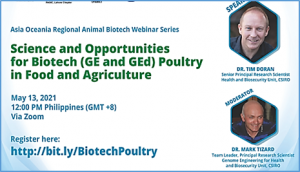
Genetic engineering and gene editing allow scientists to improve the characteristics of living organisms, including poultry. Thus, these tools provide solutions and opportunities in food and agriculture. ISAAA will hold a webinar on Science and Opportunities for Biotech (GE and GEd) Poultry in Food and Agriculture on May 13, 2021, at 12 PM GMT+8 via Zoom.
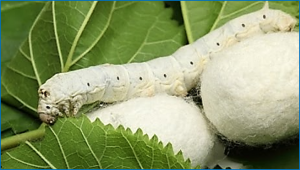
Chemical insecticides remain the main strategy to combat mosquito-borne diseases, but the growing threat of insecticide resistance prompts the urgent need to develop alternative, ecofriendly, and sustainable vector control tools. Entomopathogenic fungi can overcome insecticide resistance and represent promising biocontrol tools for the control of mosquitoes.
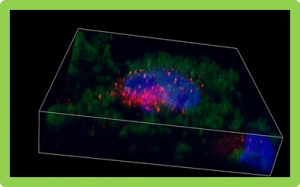
To realize RNA interference (RNAi) therapeutics, it is necessary to deliver therapeutic RNAs (such as small interfering RNA or siRNA) into cell cytoplasm. A major challenge of RNAi therapeutics is the endosomal entrapment of the delivered siRNA. In this study, we developed a family of delivery vehicles called Janus base nanopieces (NPs). They are rod-shaped nanoparticles formed by bundles of Janus base nanotubes (JBNTs) with RNA cargoes incorporated inside via charge interactions

Autism spectrum disorder (ASD) is a highly heritable neurodevelopmental disorder that is thought to emerge very early in development. Cerebral overgrowth, which is clinically referred to as macrocephaly, is frequently observed in children with ASD, and brain imaging studies have reported increases in both gray- and white-matter volume. Children with these early signs of brain enlargement have been shown to be part of an ASD group with high probability of receiving a diagnosis
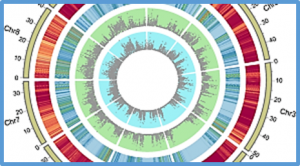
Adaptation is a robust way through which plants are able to overcome environmental constraints. The mechanisms of adaptation in heterogeneous natural environments are largely unknown. Deciphering the genomic basis of local adaptation will contribute to further improvement in domesticated plants. To this end, we describe a high-depth (19.4 ×) haplotype map of 3.02 million single nucleotide polymorphisms in foxtail millet (Setaria italica) from whole-genome resequencing of 312 accessions.
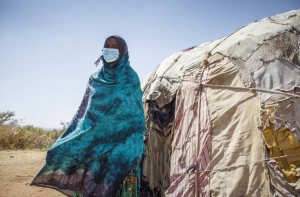
The number of people facing acute food insecurity and needing urgent life and livelihood-saving assistance has hit a five-year high in 2020 in countries beset by food crises, an annual report launched today by the Global Network Against Food Crises (GNAFC) - an international alliance of the UN, the EU, governmental and non-governmental agencies working to tackle food crises together - has found.

After an extensive consultative and iterative process over the last two years, the Vision and Strategy for FAO's Work in Nutrition (FAO’s Nutrition Strategy) was endorsed at the 166th Session of the FAO Council last week. The new strategy establishes FAO’s objectives for nutrition going forward and provides a framework to guide FAO’s action over the next five years.

Fruit taste is determined by sugars, acids and in some species, bitter chemicals. Attraction of seed-dispersing organisms in nature and breeding for consumer preferences requires reduced fruit bitterness. A key metabolic shift during ripening prevents tomato fruit bitterness by eliminating α-tomatine, a renowned defence-associated Solanum alkaloid. Here, we combined fine mapping with information from 150 resequenced genomes and genotyping a 650-tomato core collection