


News & Events

An international team of researchers conducted a study to explore the effects of advertisement framing on health and environmental benefits, sources of perceived risk reduction, and domain-specific knowledge on the acceptance of genetically modified foods. Its findings offer strategic directions to policymakers, marketing personnel, and food technologists in increasing awareness and acceptance of GM food products.
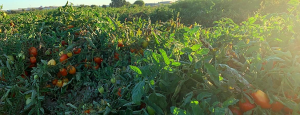
Scientists from the University of California Riverside (UC Riverside) have discovered the genes in important agricultural crops such as tomatoes and rice that will help the crops survive longer during extreme periods of drought brought by global warming.The scientists used xylem differentiation in tomato to profile the tomato root cell type mRNA fragments from greenhouse experiments and in the actual field. They discovered cell type-enriched genes responsible for telling the plant to make three things: xylem, lignin, and suberin
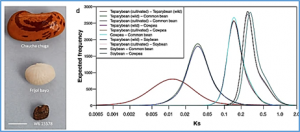
Tepary bean (Phaseolus acutifolis A. Gray), native to the Sonoran Desert, is highly adapted to heat and drought. It is a sister species of common bean (Phaseolus vulgaris L.), the most important legume protein source for direct human consumption, and whose production is threatened by climate change. Here, we report on the tepary genome including exploration of possible mechanisms for resilience to moderate heat stress and a reduced disease resistance gene repertoire, consistent with adaptation to arid and hot environments.
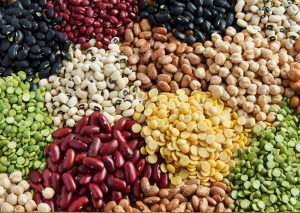
A study led by Penn State University Professor of Biology Hong Ma has revealed a history of whole-genome duplications in the legume family tree which includes beans, soybeans, peanuts, and other economically important crops. The study also helped uncover the evolution of genes involved in nitrogen fixation, a key trait likely important in the evolutionary spread and diversification of legumes and vital for their use as "green manure" in agriculture.

Experts from the University of São Paulo analyzed blood samples from Brazil and found that people who have had Dengue previously are twice as likely to exhibit COVID-19 symptoms when infected by the SARS-CoV-2 virus. The study is published in the Oxford Academic journal Clinical Infectious Diseases. The researchers collected blood samples from 1,285 residents of Mâncio Lima, a small town in the state of Acre, part of Brazil's Amazon region.
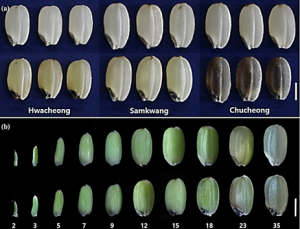
Successful production of viable seeds is a major component of plant life cycles, and seed development is a complex, highly regulated process that affects characteristics such as seed viability and color. In this study, three yellowish-pericarp embryo lethal (yel) mutants, yel-hc, yel-sk, and yel-cc, were produced from three different japonica cultivars of rice (Oryza sativa L). Mutant seeds had yellowish pericarps and exhibited embryonic lethality, with significantly reduced grain size and weight.

Following a public comment period that closed on March 5, Japan's Ministry of Agriculture, Forestry, and Fisheries (MAFF) amended the handling procedures for feed and feed additive products derived from the crossbreeding of genome-edited varieties previously notified to MAFF with conventional varieties, other previously notified genome-edited varieties, and genetically engineered products for which MAFF has granted feed safety approval.
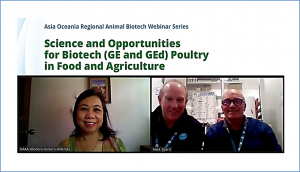
The webinar was streamed on May 13, 2021, and featured Dr. Tim Doran, Senior Principal Research Scientist for the Health and Biosecurity Unit of Australia's Commonwealth Scientific and Industrial Research Organisation (CSIRO). Doran gave a presentation about the GEd chickens developed by CSIRO using in vivo transfection of primordial germ cells (PGCs), a direct-injection technique that they specifically developed.
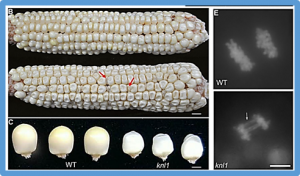
The Knl1-Mis12-Ndc80 (KMN) network is an essential component of the kinetochore–microtubule attachment interface, which is required for genomic stability in eukaryotes. However, little is known about plant Knl1 proteins because of their complex evolutionary history. Here, we cloned the Knl1 homolog from maize (Zea mays) and confirmed it as a constitutive central kinetochore component.

Time devoted to science communication is a valuable investment that can have a tremendous societal impact, according to the University of Illinois at Urbana-Champaign Assistant Professor Esther Ngumbi. The statement was discussed in A Comprehensive Guide on Science Communication edited by Fani Kelesidou and Eclodie Chabrol and published by Hindawi.
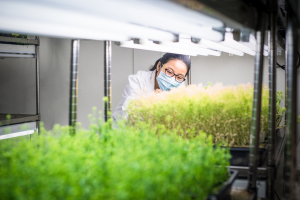
In the last 100 years, there have been over a dozen plant pandemics that affected key food crops. With the rapidly increasing world population and the massive impact of climate change, failing to innovate ways to make crops resilient to diseases can make millions go hungry, according to 2Blades Foundation's video titled The Work of Our Lives.
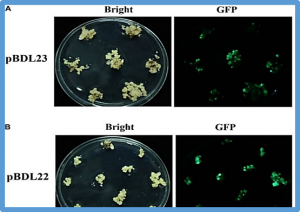
Rice blast is one of the most serious diseases of rice and a major threat to rice production. Breeding disease-resistant rice is one of the most economical, safe, and effective measures for the control of rice blast. As a complement to traditional crop breeding, the transgenic method can avoid the time-consuming process of crosses and multi-generation selection. In this study, maize (Zea mays) Activator (Ac)/Dissociation (Ds) transposon vectors carrying green fluorescent protein (GFP) and red fluorescent protein (mCherry) genetic markers were used for generating marker-free transgenic rice.