


News & Events

The Food and Agriculture Organization (FAO) of the United Nations launched a new Corporate Environmental Responsibility Strategy that aims to reduce the Organization’s total Greenhouse Gas Emissions (GHG) by 45 percent by 2030. The ambitious new emissions reduction strategy focuses on improving the sustainability of daily operations, including the introduction of energy efficiency measures in facilities, updating travel policies to reduce travel-related emissions, and improving water use and recycling schemes.

Health and agri-food systems must be strengthened and improved to counter the impact of the COVID-19 pandemic and to avoid a global food crisis, the Director-General of the Food and Agriculture Organization of the United Nations (FAO), QU Dongyu, said today. "Beyond jeopardizing human health, the pandemic is also disrupting our agri-food systems that are the core to our health and life," the FAO Director-General told world leaders at the virtual Global Health Summit of the G20. "We need to take immediate action, to avoid a global food crisis with long-term impacts."
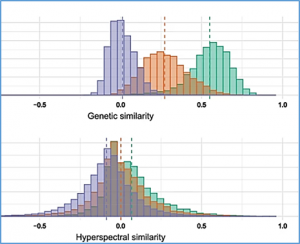
The demand for sustainable sources of biomass is increasing worldwide. The early prediction of biomass via indirect selection of dry matter yield (DMY) based on hyperspectral and/or genomic prediction is crucial to affordably untap the potential of winter rye (Secale cereale L.) as a dual-purpose crop. However, this estimation involves multiple genetic backgrounds and genetic relatedness is a crucial factor in genomic selection (GS).

In the high Andes of Peru, rural farmers are becoming sustainable stewards of the ecosystems on which they depend – bolstering the region’s water security and their own livelihoods. IFAD is supporting these rural farmers the Conservation and Sustainable Use of High-Andean Ecosystems project, through compensation of environmental services for rural poverty alleviation and social inclusion.

Today’s diet of most peoples around the world is dominated by the Big 3 – rice, wheat, and maize – which account for about 50% of the world’s consumption of calories. According to FAO about 95% of the world›s food needs are provided for by just 30 species of plants. In stark contrast 30,000 plant species are edible of which over 7,000 species, such as millets, fonio, tef, yam, cassava, Bambara groundnut, jackfruit, mangosteen, sesame, okra and minor cucurbits, and many more were, or still are, a part of the diets of many communities around the world
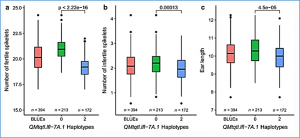
Grain yield in wheat (Triticum aestivum L.) is a polygenic trait representing the culmination of many developmental processes and their interactions with the environment. Toward maintaining genetic gains in yield potential, ‘reductionist approaches’ are commonly undertaken by which the genetic control of yield components, that collectively determine yield, are established. Here we use an eight-founder German multi-parental wheat population to investigate the genetic control and phenotypic trade-offs between 15 yield components.
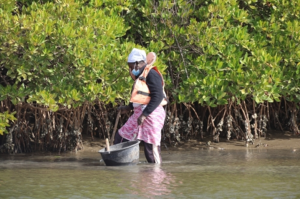
“We go to look for oysters in the mangroves to feed our families and for business. This is how I make a living. If I work for two to three days, I can earn money to cover my expenses,” says Fatou Sarr, President of the Women Transformers Group of Diamniadio, a cooperative and producers’ organization that supports small-scale oyster producers. Entrepreneurs like Fatou are on a quest to save natural habitats, like the species-rich mangroves located in the Siné Saloum Delta – a UNESCO World Heritage site – in central Senegal.

Health and agri-food systems must be strengthened and improved to counter the impact of the COVID-19 pandemic and to avoid a global food crisis, the Director-General of the Food and Agriculture Organization of the United Nations (FAO), QU Dongyu, said today. "Beyond jeopardizing human health, the pandemic is also disrupting our agri-food systems that are the core to our health and life," the FAO Director-General told world leaders at the virtual Global Health Summit of the G20. "We need to take immediate action, to avoid a global food crisis with long-term impacts."
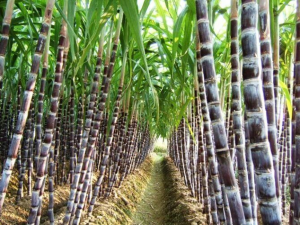
Sugarcane breeding programs have achieved up to 1% genetic gain in key traits such as tonnes of cane per hectare (TCH), commercial cane sugar (CCS) and Fibre content over the past decades. Here, we assess the potential of genomic selection to increase the rate of genetic gain for these traits by deriving genomic estimated breeding values (GEBVs) from a reference population of 3984 clones genotyped for 26 K SNP. We evaluated the three different genomic prediction approaches GBLUP, genomic single step (GenomicSS), and BayesR.
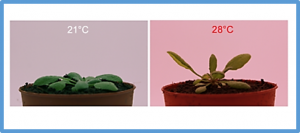
A study conducted by an international research team from Belgium, the Netherlands, United States, and the United Kingdom reveals the fundamental molecular insights into the ways that plants respond to high temperatures. The researchers have identified the protein kinase MAP4K4/TOT3 as a light signaling-independent regulator of this process.
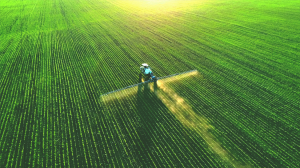
Research led by Finland's Aalto University assessed just how global food production will be affected if greenhouse gas emissions are left uncut. The research reveals that rapid, out-of-control growth of greenhouse gas emissions may, by the end of the century, lead to more than a third of current global food production falling into conditions in which no food is grown today.
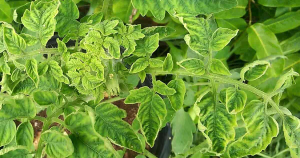
Autophagy is a highly conserved catabolic process regulating cellular homeostasis and adaptation to different biotic and abiotic stress. Several autophagy-related proteins (ATGs) are reported to be involved in autophagic processes, and considering their importance in regulating growth and stress adaptation, these proteins have been identified and characterized in several plant species. However, there is no information available on the role of autophagy-related proteins regulating the tolerance of tomato to tomato leaf curl disease (ToLCD).