


News & Events
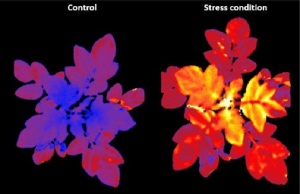
A group of scientists developed a potato that emits light at the earliest stages of stress. The breakthrough can help give warning and provide enough time for farmers to address the crop's problems before it is lost to abiotic stress.The scientists chose to modify the Irish potato (Solanum tuberosum) by establishing a whole-plant redox imaging that makes the potato express the chloroplast-targeted redox-sensitive green fluorescence protein 2 (roGFP2).
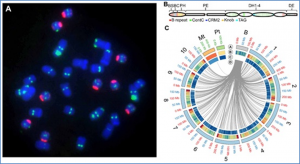
Three research groups from the University of Missouri, the Institute of Experimental Botany of the Czech Academy of Sciences, and the Institute of Genetics and Developmental Biology of the Chinese Academy of Sciences have recently reported a reference sequence for the supernumerary B chromosome in maize. Supernumerary B chromosomes are present in thousands of plant and animal genomes despite being nonessential. They are maintained in populations by mechanisms of "drive" that make them inherited at higher than typical Mendelian rates.
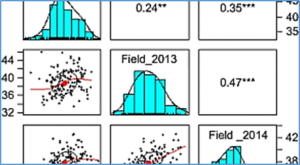
One of the breeding goals in rapeseed production is to enhance the seed oil content to cater to the increased demand for vegetable oils due to a growing global population. To investigate the genetic basis of variation in seed oil content, we used 60 K Brassica Infinium SNP array along with phenotype data of 203 Chinese semi-winter rapeseed accessions to perform a genome-wide analysis of haplotype blocks associated with the oil content.

Scientists and experts from the John Innes Centre (JIC) urge governments around the world to come together and fund a new international research platform, to reduce the impact of major wheat pathogens, and improve global food security. The JIC is calling for an internationally coordinated approach to deliver a new ‘R-Gene Atlas', which would help identify new genetic solutions conferring disease resistance for crops, which could be bred into commercial wheat varieties.

Scientists from the University of York developed an adaptable framework for describing the genome across all Brassica species or cole crops to help develop better varieties.The scientists used gene technology to show that the fundamental structure of the genomes of Brassica species is the same. They corrected organizational errors such as misplaced genome segments to clarify the evolutionary pathways and provided a global gene nomenclature system for the cultivated Brassica species.
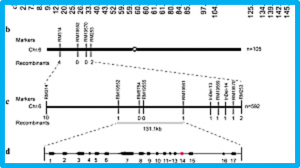
Accumulation of anthocyanin is a desirable trait to be selected in rice domestication, but the molecular mechanism of anthocyanin biosynthesis in rice remains largely unknown. In this study, a novel allele of chromogen gene C, OrC1, from Oryza rufipongon was cloned and identified as a determinant regulator of anthocyanin biosynthesis. Although OrC1 functions in purple apiculus, leaf sheath and stigma in indica background, it only promotes purple apiculus in japonica
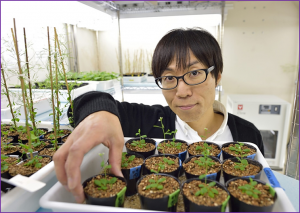
A team of scientists from Japan, Europe, and the USA has identified a pathway leading to accelerated flowering of plants in low-nitrogen soils. The scientists, led by Associate Professor Takeo Sato of Hokkaido University's Graduate School of Life Science, have revealed the molecular mechanism responsible for the acceleration of flowering in Arabidopsis under low nitrogen conditions.

In 2019, six African countries have adopted biotech crops to battle challenges in crop production. One of the biotech crop adopters from the continent is Nigeria, with over 2,000 farmers growing genetically engineered cowpea in 2021. "The crop, which was developed by Nigerian scientists, has been genetically modified (GM) to resist the destructive pod-borer insect pest. As a result, farmers will be able to significantly reduce pesticide applications and harvest bigger yields.
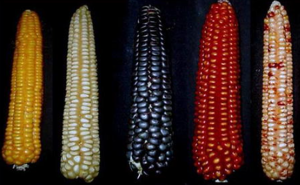
Genetically modified yellow corn has increasingly been used in the Philippines since 2002. In just a period of 17 years, the area planted increased to about 835 thousand hectares, increasing by an average of 31.24% per year. A third of all corn farmers in the Philippines or about 460 thousand families are planting GM corn. Total factor productivity growth in the corn industry of the country was estimated to be 11.45% higher due to GM corn adoption.

ISAAA and partners present the webinar International Trade in Crops with New Breeding Technologies: The Australian Perspective to provide an insight into the future landscape of trade involving gene-edited crops, particularly in relation to countries involved in the international trade of agricultural products. It will be held on June 11, 2021, at 2 PM Manila / 4 PM Sydney via Zoom.

GM maize was approved for commercial planting in 2002. By 2019, a third of all Filipino maize farmers or about 460 thousand families were planting GM maize. The total welfare gain from adopting GM maize reached US$189.4 million. This indicates a significant improvement in the income of farming families. Furthermore, resource-poor farming families were found to benefit more from GM technology than high-income farming families.
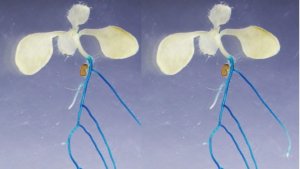
The nitrate transporter NRT2.1, which plays a central role in high-affinity nitrate uptake in roots, is activated at the post-translational level in response to nitrogen (N) starvation1,2. However, the critical enzymes required for the post-translational activation of NRT2.1 remain to be identified. Here, we show that a type 2C protein phosphatase, designated CEPD-induced phosphatase (CEPH), activates high-affinity nitrate uptake by directly dephosphorylating Ser501 of NRT2.1, a residue that functions as a negative phospho-switch in Arabidopsis2.