


News & Events
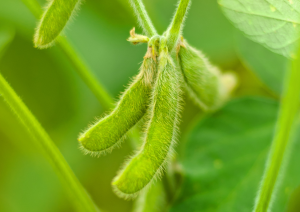
On June 1, 2021, Bioceres Crop Solutions has announced that it has successfully completed the regulatory review process and received approval for its HB4 drought and herbicide tolerant soybeans from the Canadian Health Agency and the Canadian Food Inspection Agency. With approximately 2.5 million hectares farmed every year and yields often below three tons per hectare, Canada's soybean production regions are well suited for HB4 value generation.
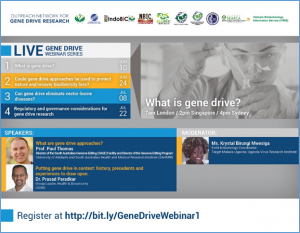
The potential uses and impacts of gene drive technologies are a topic of growing interest at the international and national levels in many countries. The Gene Drive Webinar Series aims to help promote a productive and balanced conversation on the benefits and risks of possible gene drive applications, providing factual and accurate information that can help place the discussion under the Convention on Biological Diversity in context.
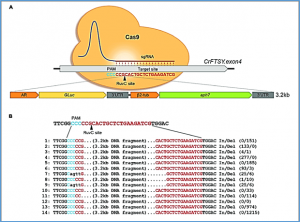
Conventional methods of DNA sequence insertion into plants, using Agrobacterium-mediated transformation or microprojectile bombardment, result in the integration of the DNA at random sites in the genome. These plants may exhibit altered agronomic traits as a consequence of disruption or silencing of genes that serve a critical function. Also, genes of interest inserted at random sites are often not expressed at the desired level.
Two of the world’s great agricultural challenges require bold new approaches and could share a solution. Nitrogen (N) pollution, affecting water, air, and the climate, presents one massive challenge. Ninety percent of increased reactive N originates as synthetic fertilizer applied to agricultural fields or N fixed in them (1). Because crops take up only 42 to 47% of the total applied N, more than half is lost to the environment in some way (2, 3).
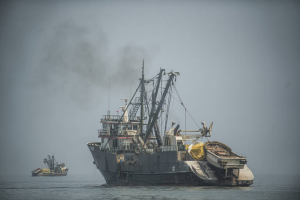
Global action is making a major difference in efforts to combat Illegal, Unreported, and Unregulated (IUU) fishing, but more needs to be done as consumer demand and fish production continue to rise, the Director-General of the Food and Agriculture Organization of the United Nations (FAO), QU Dongyu, said Monday.The Director-General was speaking at a High-Level Event at the Third Meeting of the Parties of the 2009 FAO Agreement on Port State Measures (PSMA), a virtual event hosted by the European Union.
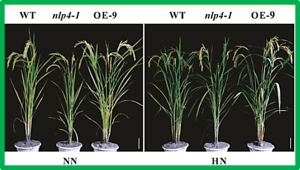
Nitrogen (N) is one of the key essential macronutrients that affects rice growth and yield. Inorganic N fertilizers are excessively used to boost yield and generate serious collateral environmental pollution. Therefore, improving crop N use efficiency (NUE) is highly desirable and has been a major endeavour in crop improvement. However, only a few regulators have been identified that can be used to improve NUE in rice to date.
The Director-General of the Food and Agriculture Organization of the United Nations (FAO), QU Dongyu, today shared his views on FAO’s roadmap for agri-food systems’ transformation as he met with the Rome-based Africa Regional Group, and stressed the need for a systematic and participatory approach to make agri-food systems more efficient, inclusive, resilient and sustainable.

Mass communication using social media is a key tool in development, Nobel Prize-winning economist Esther Duflo said today at a seminar hosted by the Food and Agriculture Organization of the United Nations (FAO). Duflo's talk was based on research - related to the COVID-19 pandemic - using randomized control trials (RCTs) to make "messaging to poor people" more effective. "That's at the core of a lot of potential strategies in developing countries," she said.
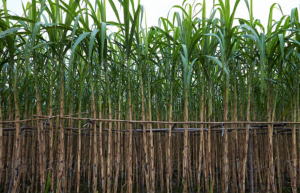
Genomic selection (GS) has the potential to increase the rate of genetic gain in sugarcane beyond the levels achieved by conventional phenotypic selection (PS). To assess different implementation strategies, we simulated two different GS-based breeding strategies and compared genetic gain and genetic variance over five breeding cycles to standard PS. GS scheme 1 followed similar routines like conventional PS but included three rapid recurrent genomic selection (RRGS) steps.
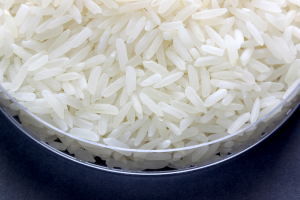
Cell-type-specific markers are considered as relevant tools to identify developmental processes in cell differentiation during plant reproduction. CAS scientists characterized Vegetative Cell Specific 1 (VCS1) of rice, which is expressed particularly in late pollen and was projected to encode a small protein of 205 amino acid residues. Reporter fusion protein expression indicated that VCS1 was exclusively targeted to the vegetative nucleus of pollen.
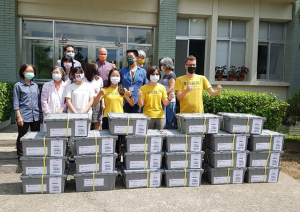
The World Vegetable Center (WorldVeg), an international agricultural research institute with headquarters in Shanhua, Taiwan, has sent more than 11,700 samples of 48 vegetable species from Taiwan to the Svalbard Global Seed Vault in Norway. The Svalbard Global Seed Vault, the long-term seed storage facility is designed to protect the world's agricultural diversity and heritage.
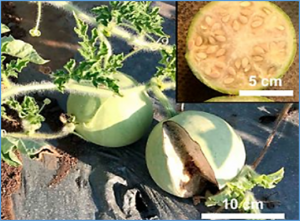
Wild relatives or progenitors of crops are important resources for breeding and for understanding domestication. Identifying them, however, is difficult because of extinction, hybridization, and the challenge of distinguishing them from feral forms. Here, we use collection-based systematics, iconography, and resequenced accessions of Citrullus lanatus and other species of Citrullus to search for the potential progenitor of the domesticated watermelon.