


News & Events
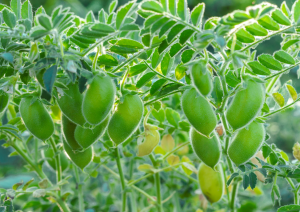
Researchers from The University of Western Australia (UWA)'s Institute of Agriculture, in collaboration with the International Crops Research Institute for the Semi-Arid Tropics (ICRISAT) have identified genes and loci (the position of the genes) for chickpea root architecture and root traits that were associated with phosphorus acquisition and use efficiencies. The UWA and ICRISAT research teams used three statistical models to identify more than 100 marker-trait associations where they identified one single genetic variation that they associated with phosphorous uptake and use efficiency.
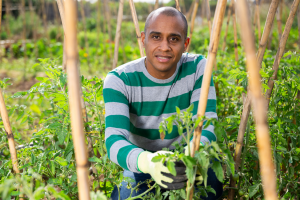
With the agricultural sector as the backbone of Pakistan's economy, the country's officials and experts believe that the enhanced cooperation under the China-Pakistan Economic Corridor (CPEC) can greatly help the country modernize the sector, ensure food security, and improve local people's livelihood.
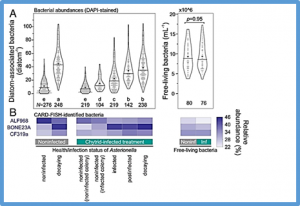
Microbial interactions in aquatic environments profoundly affect global biogeochemical cycles, but the role of microparasites has been largely overlooked. Using a model pathosystem, we studied hitherto cryptic interactions between microparasitic fungi (chytrid Rhizophydiales), their diatom host Asterionella, and cell-associated and free-living bacteria. We analyzed the effect of fungal infections on microbial abundances, bacterial taxonomy,
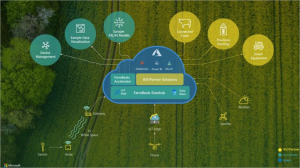
Microsoft's Azure FarmBeats is a platform consisting of a set of software layers that collect and process data from remote sensors, artificial intelligence (AI), and carbon emission from farms to help farmers make smart decisions and lower environmental impacts. Azure FarmBeats can support large and small-scale farms in plotting appropriate intervals for aerial imagery and in the placement of sensors. It can monitor the farms' crop production, and most importantly, the amount of carbon absorbed in the soil to grow quality crops with fewer fertilizer needs.

Kelp Burger, developed by New York-based meat alternative brand Akua, is gluten-free and a healthy plant-based alternative to conventional meat. It has high amounts of zinc, calcium, folate, potassium, iron, fiber, and protein, as well as vitamins A, B6, and K. Kelp also helps absorb carbon and nitrogen in the ocean and does not need any fertilizers, freshwater, feed, or any dry land to grow.
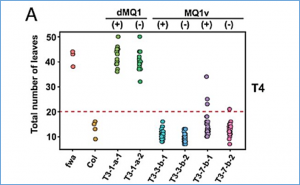
CRISPR-based targeted modification of epigenetic marks such as DNA cytosine methylation is an important strategy to regulate the expression of genes and their associated phenotypes. Although plants have DNA methylation in all sequence contexts (CG, CHG, CHH, where H = A, T, C), methylation in the symmetric CG context is particularly important for gene silencing and is very efficiently maintained through mitotic and meiotic cell divisions
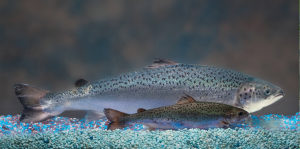
AquaBounty has announced that Brazil's National Biosafety Technical Commission (CTNBio) has approved their application for the sale of the company's genetically engineered (GE) Atlantic salmon in Brazil. With this approval, AquaBounty moves closer to realizing an exciting new market opportunity in South America. CTNBio assessed AquaBounty's application to ensure that it met the relevant standards and regulatory requirements and concluded that the sale and consumption of AquaBounty's GE salmon is safe for the environment and human health.
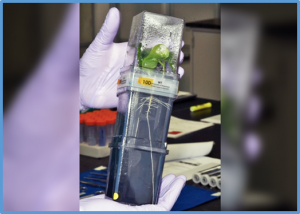
On June 3, 2021, botanist Simon Gilroy from the University of Wisconsin-Madison launched cotton seeds including genetically modified ones to the International Space Station (ISS) on a SpaceX Dragon capsule. Gilroy and his team will study cotton seedlings grown on the ISS to better understand cotton growth. This is the first time that cotton will be grown in space.
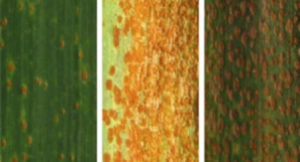
The wheat landrace Hongmazha (HMZ) possesses adult plant resistance (APR) to leaf rust. To detect and validate quantitative trait locus (QTL) for the APR, four wheat populations were assessed for leaf rust severity in a total of eight field and greenhouse experiments. The mapping population Aquileja × HMZ (120 recombinant inbred lines, RILs) was genotyped using 90 K SNP markers. A major QTL (QLr.cau-2BL) was detected between the markers IWB3854 and IWB21922 on chromosome 2BL

The FAO Director-General, QU Dongyu, and the Italian Deputy Minister for Foreign Affairs and International Cooperation, Marina Sereni, had a virtual meeting to exchange on areas of cooperation between FAO and Italy, including the G20 presidency of Italy, the Food Coalition, the G20 Green Garden (G20GG) project, as well as the UN Food Systems Pre-Summit event that will be organised by Italy from 26 to 28 July 2021 in Rome.
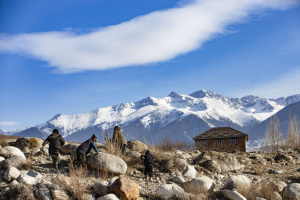
Greenhouse gas (GHG) emissions due to land use changes such as converting forests to agricultural land have been decreasing over the past 20 years, a decline that has been counterbalanced by increased emissions - notably high in industrialized countries - from off-farm activities before and after food production according to a new study led by the Food and Agriculture Organization of the United Nations (FAO) and published today in Environmental Resource Letters.
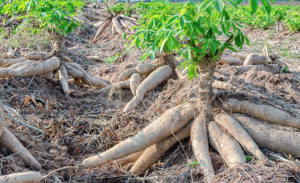
Sucrose synthase (SUS), a key enzyme of the sucrose metabolism pathway, is encoded by a multi-gene family in plants. To date, dozens of SUS gene families have been characterized in various plant genomes. However, only a few studies have performed comprehensive analyses in tropical crops like cassava (Manihot esculenta Crantz). In the present study, seven non-redundant members of the SUS gene family (MeSUS1-7) were identified and characterized from the cassava genome.