


News & Events

Targeted mutagenesis could be a potential approach in date palm improvement, according to King Faisal University researchers and partners. A chapter in the book The Date Palm Genome tackles the potential use of mutagenesis techniques in date palm improvement. Date palm is an economically important crop in the oases agroecological zones. There are limited studies on the genetic improvement of this fruit tree to exhibit desirable characteristics.
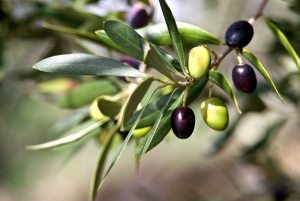
Olives have a high number of repetitive sequences in their genomes and are complex in nature, making sequencing difficult. But the research team found a way to obtain more sequences and perform seven different strategies to assemble the final genome using Oxford Nanopore third-generation sequencing and 'Hi-C' scaffolding to conduct comparative genomics analyses. These included gene family expansion and contraction, whole-genome replication, phylogenetic analysis, and positive selection.
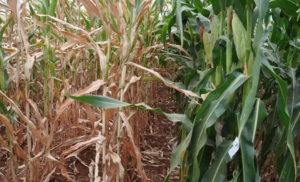
Maize (Zea mays L.) plays a critical role in ensuring food and nutritional security, and livelihoods of millions of resource-constrained smallholders. However, maize yields in the tropical rainfed environments are now increasingly vulnerable to various climate-induced stresses, especially drought, heat, waterlogging, salinity, cold, diseases, and insect pests, which often come in combinations to severely impact maize crops.

Punjab Finance Minister Makhdoom Hashim Jawan Bakht has said that a progressive approach is being promoted to enhance agricultural productivity which is vital for food security in the country. The provincial minister said this while addressing a seminar on development, poverty rate, and food security, organized by Government College University, Lahore, Pakistan on June 17, 2021.
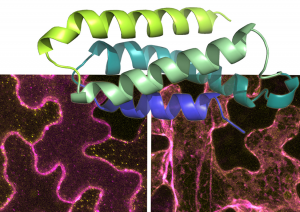
Plant cells self-destruct to survive. When they detect a pathogen, they set off a chain reaction that ultimately destroys them, preventing the disease from spreading. Dangl's team discovered the mechanism behind this self-destruction. They found that plant defense proteins cluster together to pierce the cell membrane, opening a channel into the infected cell. Calcium then floods in, ultimately killing the cell.
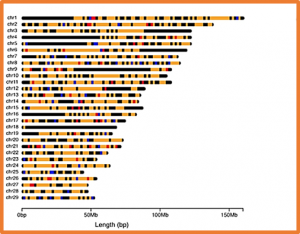
No off-target events were detected from high depth whole genome sequencing performed in precursor cell-lines and resultant calves cloned from those edited and non-edited cell lines. Long molecule sequencing at the edited site and plasmid-specific PCRs did not reveal structural variations and/or plasmid integration events in edited samples. Furthermore, an in-depth analysis of de novo mutations across the edited and non-edited cloned calves revealed that the mutation frequency and spectra were unaffected by editing status.
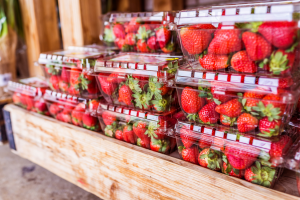
The film possesses antifungal and antimicrobial properties that help in preserving the strawberries. It is made of chitosan, a type of sugar found in sea shells, blended with the vapor from the essential oils, and synthesized silver nanoparticles (AgNPs) which helps prevent molds and pathogens from reaching the fruit's surface. The scientists also exposed the film to radiation and found that it extends the strawberries' shelf life compared to the control group.
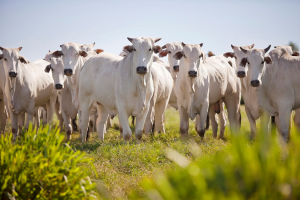
Scientists investigated the off-target and de novo mutagenesis in a cattle line bearing edits for diluted coat-color using CRISPR-Cas9 technology. The results revealed that no off-target events were detected during genome sequencing, providing evidence that the technology is an effective tool to rapidly introduce variations into cattle populations with fewer chances of off-target mutations.
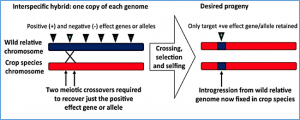
Climate change will have major impacts on crop production: not just increasing drought and heat stress, but also increasing insect and disease loads and the chance of extreme weather events and further adverse conditions. Often, wild relatives show increased tolerances to biotic and abiotic stresses, due to reduced stringency of selection for yield and yield-related traits under optimum conditions.
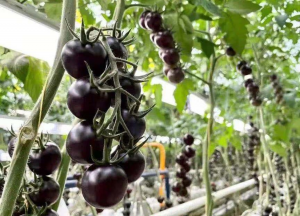
Purple tomato known as Yoom, which won as Fruit Logistica Innovation Award in Berlin in February 2020, will be distributed in China in packaging featuring well-loved Disney characters. Aside from Yoom, Nebula tomato, which has sweet and full of flavor, will also be packaged in with Disney characters. The Yoom tomato is unique because of its purplish to black color. It has a crisp, refreshing flavor with a great balance of sweet and tart and at the same time rich in vitamins, minerals, and antioxidants.
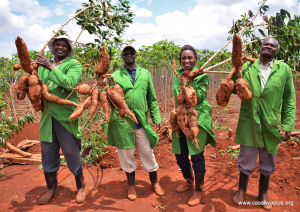
The NBA Board approved the application as stated in the decision document dated June 16, 2021, following the necessary review in accordance with the country's Biosafety Act. KALRO scientists have been developing CBSD-resistant cassava varieties using event 4046 under regulated confined field trial conditions authorized by NBA. The approval paves way for conducting national performance trials of these varieties before registration and release to farmers. The approval is valid for five (5) years from the date of authorization.
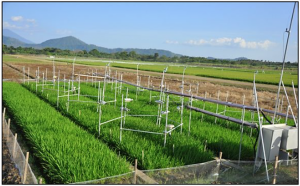
In rice, a small increase in nighttime temperature reduces grain yield and quality. How warm nighttime temperatures (WNT) produce these detrimental effects is not well understood, especially in field conditions where the typical day-to-night temperature fluctuation exceeds the mild increase in nighttime temperature. We observed genome-wide disruption of gene expression timing during the reproductive phase in field-grown rice panicles acclimated to 2 to 3 °C WNT.