


News & Events

Africa's crop production remains low and this is a threat to their food security. In response, a group of researchers presented a review that details their recommendations for Africa to maximize the benefits of biotechnological innovations in terms of agricultural productivity, medical advancement, and environmental and biological benefits.
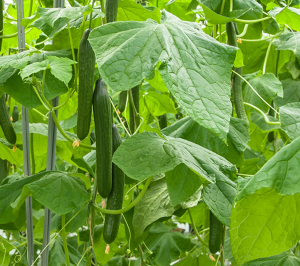
Fruit length is an important horticultural trait for both fruit yield and quality of cucumber (Cucumis sativus L.). Knowledge on the molecular regulation of fruit elongation in cucumber is very limited. In this study, we identified and characterized a cucumber short fruit3 (sf3) mutant. Histological examination indicated that the shorter fruit in the mutant was due to reduced cell numbers. Genetic analysis revealed that the phenotype of the sf3 mutant was controlled by a single gene with semi-dominant inheritance.

In a letter to the Chair of the Humboldt County Board of Supervisors, the American Society of Plant Biologists (ASPB) urged the board not to support Measure M, an ordinance that prohibits the planting of genetically modified organisms (GMOs) in the California county, citing it as anti-science and harmful to American agriculture. Measure M states that "it shall be unlawful for any person, firm, or corporation to propagate, cultivate, raise, or grow genetically modified organisms in Humboldt County."
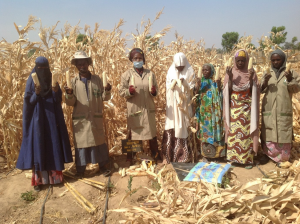
The transgenic maize called Tela is derived from the Latin word ‘tutela' which means 'protection'. The field trials, which are being conducted at the Institute of Agricultural Research in Nigeria, showed that the Tela maize varieties produce 9 tons per hectare, which is way above the best producing maize variety in the country that yields three tons per hectare.
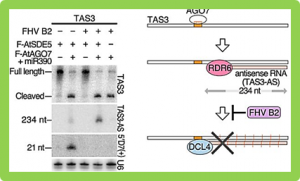
Secondary small interfering RNA (siRNA) production, triggered by primary small RNA targeting, is critical for proper development and antiviral defense in many organisms. RNA-dependent RNA polymerase (RDR) is a key factor in this pathway. However, how RDR specifically converts the targets of primary small RNAs into double-stranded RNA (dsRNA) intermediates remains unclear.
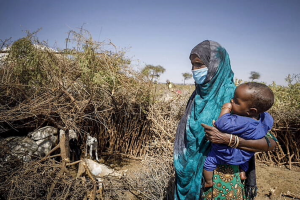
Efforts to fight a global surge in acute food insecurity are being stymied in several countries by fighting and blockades that cut off life-saving aid to families on the brink of famine, warn the UN's Food and Agriculture Organization (FAO) and World Food Programme (WFP) in a new report issued today. Bureaucratic obstacles as well as a lack of funding also hamper the two UN agencies' efforts to provide emergency food assistance and enable farmers to plant at scale and at the right time.
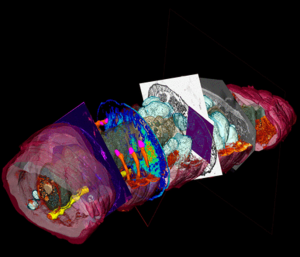
In 1881 the first significant work on earthworm behavior and ecology was published (1). It was Charles Darwin´s last scientific book and is still a fascinating and rewarding read. In PNAS, Geier et al. (2) use an earthworm taken directly from nature to present a method that allows in situ visualizations of micrometer-scale physical and chemical interactions between the worm and all its symbionts and parasites.

Powdery mildew, caused by Podosphaera pannosa, is one of the most serious and widespread fungal diseases for roses, especially in greenhouse-grown cut roses. It has been shown that certain MLO genes are involved in powdery mildew susceptibility and that loss of function in these genes in various crops leads to broad-spectrum, long-lasting resistance against this fungal disease.
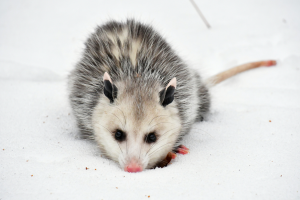
For the past 25 years, scientists have faced the challenge of applying genetic modifications to marsupials because they are born prematurely, continue their development inside their mother's pouches, have thick shells around their eggs, and lack a functional placenta. Riken researchers reported that they have successfully cracked the code and edited the genes for pigment production in gray short-tailed opossums.
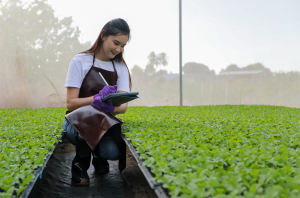
Genome editing is a potential gamechanger in the development of climate-smart crops, according to researchers from the Indian Council of Agricultural Research (ICAR) in their chapter in the book Microbiomes and the Global Climate Change. With the impact of climate change on agriculture and food security, there's a greater need for advancements in the development of climate-smart crops to provide high yields and elevated levels of micronutrients. Genetic engineering has contributed to this effort; however, some crops are difficult to modify through this process.
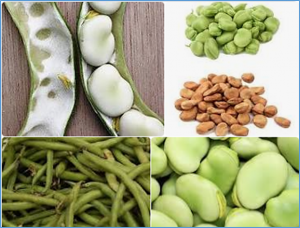
In partially allogamous crops such as faba bean (Vicia faba L.), increasing the share of heterosis in a synthetic cultivar can improve yield and yield stability. The share of heterosis in such synthetic cultivars is increased by higher degrees of cross-fertilization. This trait is defined as percentage of cross-fertilized seeds among all seeds and is a crucial parameter in breeders’ yield predictions. Current approaches use degree of cross-fertilization to predict inbreeding and share of heterosis, they even consider genotype-specific degrees; yet, all genotypes are assumed to contribute equally to the cross-fertilized seeds.
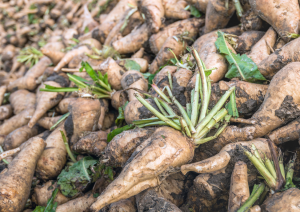
Researchers led by Wageningen University and Research (WUR) and the European CHIC Project have identified the genes involved in the production of bitter compounds in chicory using the gene editing tool CRISPR-Cas. Chicory's taproots are a source of inulin, a natural sweetener used in bread and dairy products and as dietary fiber for healthy intestinal function.