


News & Events

Cry protein levels are expected to decline over time due to microbial decomposition and leaching. Thus, the researchers tracked how long biologically active Cry proteins last in SmartStax corn residue expressing Cry1A.105, Cry1F, Cry2Ab2, Cry3Bb1, and Cry34/35Ab1, when exposed to four post-harvest practices including chisel plow tillage, flail mowing, cover crop planting, and undisturbed residue.
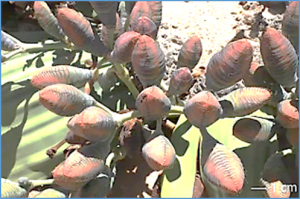
The gymnosperm Welwitschia mirabilis belongs to the ancient, enigmatic gnetophyte lineage. It is a unique desert plant with extreme longevity and two ever-elongating leaves. We present a chromosome-level assembly of its genome (6.8 Gb/1 C) together with methylome and transcriptome data to explore its astonishing biology. We also present a refined, high-quality assembly of Gnetum montanum to enhance our understanding of gnetophyte genome evolution.
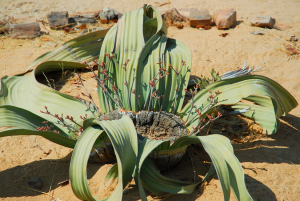
Researchers from the Chinese Academy of Sciences and partners cracked the genetic secrets of Welwitschia, a two-leafed plant that thrives in the desert for over 1,000 years. The results of their findings are reported in Nature Communications."Most plants develop a leaf, and that's it," said Andrew Leitch, a plant geneticist at the Queen Mary University of London. "This plant can live thousands of years, and it never stops growing. When it does stop growing, it's dead."
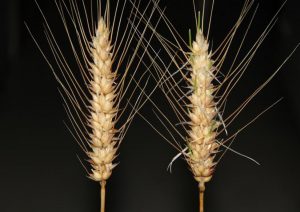
Dr. Kazuhiro Sato and his colleagues at Okayama University have established an accurate genome assembly of ‘Fielder' wheat, a cultivar that is very amenable to genetic editing through bacterial transformation. The research team used a process called circular consensus sequencing (CCS) to establish the genome sequence of Fielder wheat.
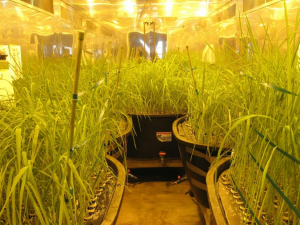
Understanding the genetic basis of mineral nutrient acquisition is key to fully describing how terrestrial organisms interact with the non-living environment. Rice (Oryza sativa L.) serves both as a model organism for genetic studies and as an important component of the global food system. Studies in rice ionomics have primarily focused on above ground tissues evaluated from field-grown plants. Here, we describe a comprehensive study of the genetic basis of the rice ionome in both roots and shoots of 6-week-old rice plants for 20 elements using a controlled hydroponics growth system.
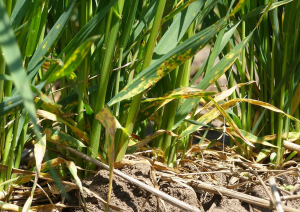
A genome-wide association study (GWAS) conducted by scientists at the Institute of Plant Biology and Biotechnology (IPBB) in Kazakhstan and the International Maize and Wheat Improvement Center (CIMMYT) has found new sources of genetic resistance to tan spot disease, a lesser-known pathogen of wheat. Kazakhstan is one of the main wheat-growing nations in Central Asia and farmers have struggled with tan spot epidemics since the 1980s.
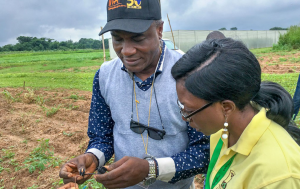
Two studies led by scientists at Cornell University and the International Institute of Tropical Agriculture (IITA) provide cassava breeders with potential best practices to overcome poor or delayed flower production. Cassava has been a difficult crop for plant breeders to improve in part because of delayed and poor production of flowers. The first study aimed to better understand the factors regulating cassava flowering and its low ratio of female to male flowers.
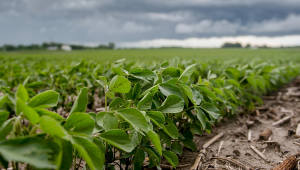
Both Soybean mosaic virus (SMV) and Bean common mosaic virus (BCMV) can induce soybean mosaic diseases, but few studies have explored soybean resistance against BCMV so far. In this study, V94-5152, a soybean variant resistant to BCMV and SMV, was crossed with a susceptible cultivar, Williams 82 to map the resistance gene. By inoculating 292 F2 individuals with a BCMV isolate HZZB011, a segregation ratio of 3 resistant: 1 susceptible was observed, suggesting that V94-5152 possesses a single-dominant resistance gene against BCMV-HZZB011.
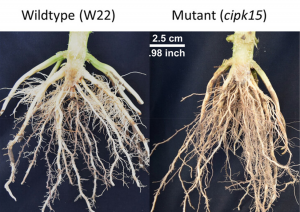
An international team of researchers led by The Pennsylvania State University (Penn State) have found a gene that regulates the angle of root growth in corn, a discovery that will enable the breeding of deeper-rooting crops with enhanced ability to take up nitrogen. The gene, called ZmCIPK15, was found to be missing in a naturally occurring mutant corn line that grows roots at steeper angles that make them go deeper into the soil.
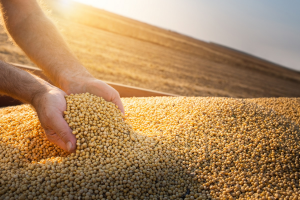
By analyzing how the evolution of learning affects technology adoption of genetically modified (GM) soybean seeds by farmers in the United States, scientists were able to conclude that uncertainty is considerably reduced over time thanks to increased learning efficiency. The scientists examined farmers' adoption decisions in three stages: the early majority (1996-2001), the late majority (2001-2006), and the laggard stages (2006-2009).
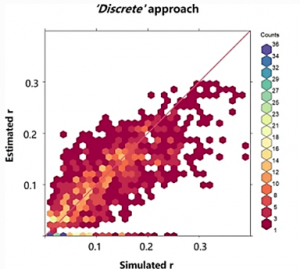
Marker genotypes are generally called as discrete values: homozygous versus heterozygous in the case of diploids, or an integer allele dosage in the case of polyploids. Software for linkage map construction and/or QTL analysis usually relies on such discrete genotypes. However, it may not always be possible, or desirable, to assign definite values to genotype observations in the presence of uncertainty in the genotype calling. Here, we present an approach that uses probabilistic marker dosages for linkage map construction in polyploids. We compare our method to an approach based on discrete dosages, using simulated SNP array and sequence reads data with varying levels of data quality.

Experts at the New York Genome Center (NYGC) and New York University (NYU) have developed chemically modified guide RNAs for the CRISPR system that targets the RNA and not the DNA. This modification in the guide RNA has improved its ability to target RNA in human cells. The results are published in Cell Chemical Biology. The researchers explored a range of RNA modifications and found improved CRISPR efficiencies from 2- to 5-fold compared to the unmodified guides