


News & Events

In the 1940s, Nobel Prize-winning CSHL geneticist Barbara McClintock discovered "jumping genes" in corn and how the plant uses them for adaptability, shuffling the genetic deck over generations. Now, CSHL scientists are still expanding on McClintock's work. Doreen Ware, a CSHL adjunct professor and research scientist at the US Department of Agriculture (USDA), and her colleagues have published the genome sequences of 26 corn stains in the journal Science, describing a large portion of the genetic diversity found in modern corn plants, including transposons and genes that regulate desired crop traits.
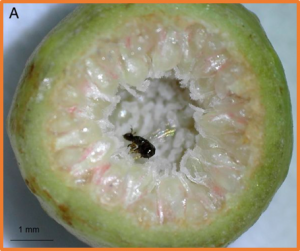
Theory identifies factors that can undermine the evolutionary stability of mutualisms. However, theory’s relevance to mutualism stability in nature is controversial. Detailed comparative studies of parasitic species that are embedded within otherwise mutualistic taxa (e.g., fig pollinator wasps) can identify factors that potentially promote or undermine mutualism stability. We describe results from behavioral, morphological, phylogenetic, and experimental studies of two functionally distinct, but closely related, Eupristina wasp species associated with the monoecious host fig, Ficus microcarpa, in Yunnan Province, China.
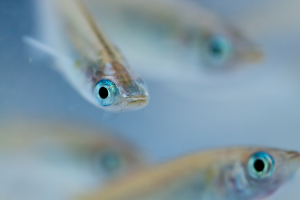
Researchers at Kobe University, Japan, and Agrobioinstitute, Bulgaria, have developed a simple way to monitor endocrine disrupting chemicals (EDCs) in river water using genetically modified plants with genes from medaka fish. The results are published in Chemosphere. GM Arabidopsis exposed to as little as 5 ng/mL of 4-t-octylphenol (OP), an example of an EDC, produced detectable levels of green fluorescent protein (GFP) in response to expression of medaka estrogen receptor genes.

When it comes to the murky-looking water tanks in Kartik Chandran’s laboratory, fume hoods are essential. Not only do the tanks get regular top-ups of sewage sludge and food waste from a nearby cafeteria, but the microbial colonies inside can give off butyric acid—the distilled essence of sour milk and rancid butter. The tanks also emit an occasional whiff of hydrogen sulfide, says Chandran, which reeks of rotten eggs “till the senses are numbed.”
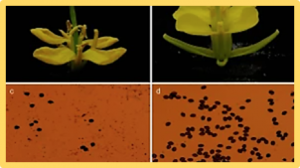
The cytoplasmic male sterility/fertility restoration (CMS/Rf) system has been extensively used for heterosis in plants. It also provides valuable resources for studying mitochondrial–nuclear coevolution and interaction. The oxa CMS, which is a new CMS type reported in Brassica juncea (B. juncea), has been broadly used in the exploitation and application of heterosis in this species. However, the oxa CMS fertility restorer gene BjRf has not been reported. In this study, a stable restorer line was successfully constructed via continuous testcross and artificial selection.

Plant Biotechnology needs better politics to counter well-organized campaigns by environmental groups, encourage innovation, and build public trust in the policies. This is according to Alan Raybould, a genetics expert from The University of Ediburgh. He mentioned this in his commentary published in Transgenic Research.

The opening of the Biotech Outreach Program for the Philippines kicked off with two webinars specifically intended for policymakers and the judicial branch of the Philippine government. The objective was for the participants to learn and share knowledge about the acceptance of biotechnology in the country, specifically genome-edited crops, for the improvement of the agricultural sector through sustainable means derived from new breeding innovations.
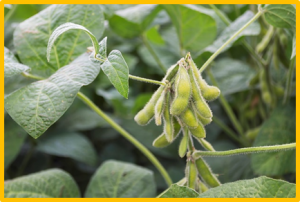
Phosphorus (P) is an essential element for the growth and development of plants. Soybean (Glycine max) is an important food crop that is grown worldwide. Soybean yield is significantly affected by P deficiency in the soil. To investigate the molecular factors that determine the response and tolerance at low-P in soybean, we conducted a comparative proteomics study of a genotype with low-P tolerance (Liaodou 13, L13) and a genotype with low-P sensitivity (Tiefeng 3, T3) in a paper culture experiment with three P treatments, i.e. P-free (0 mmol·L-1), low-P (0.05 mmol·L-1) and normal-P (0.5 mmol·L-1). A total of 4126 proteins were identified in roots of the two genotypes.
The FAO Food Price Index averaged 123.0 points in July 2021, 1.2 percent lower than the previous month although still 31.0 percent higher than its level in the same period of 2020. The index tracks changes in the international prices of the most globally traded food commodities. The July drop reflected declines in the quotations for most cereals and vegetable oils as well as dairy products.

The running fresh water of the Amazon River is a welcoming sound to the peoples of the indigenous resguardo (reserve) in Puerto Nariño, southern Colombia. This watercourse is the only access to the banks of rivers, lakes, flood plains and mainland areas that connect the 22 communities where the Tikuna, Cocama and Yagua peoples live.
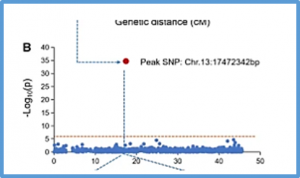
Sclerotinia stem rot (SSR), caused by the fungus Sclerotinia sclerotiorum, is one of the most devastating diseases in soybean (Glycine max (Linn.) Merr.) However, the genetic architecture underlying soybean resistance to SSR is poorly understood, despite several mapping and gene mining studies. In the present study, the identification of quantitative trait loci (QTLs) involved in the resistance to S. sclerotiorum was conducted in two segregating populations
The use of heterosis in rice production has significantly improved yield. However, hybrid vigor cannot be preserved in the offspring because of genetic segregation. Simultaneous editing of REC8, PAIR1, and OSD1 genes turns meiosis into mitosis and eventually produces clonal gametes, while knockout of the MTL gene leads to maternal haploid seeds development.