


News & Events

The scientists from the Imperial College of London recently published their paper where they described how they were able to investigate the plant's reactions to an invading pathogen which provided them evidence about how a plant's immune sensors work. Immune sensors are found in plant cells and detect the presence of specific proteins called effectors, which infectious microbes use to facilitate infection.
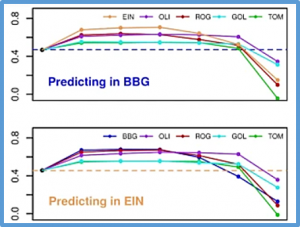
We compared the predictive ability of various prediction models for a maize dataset derived from 910 doubled haploid lines from two European landraces (Kemater Landmais Gelb and Petkuser Ferdinand Rot), which were tested at six locations in Germany and Spain. The compared models were Genomic Best Linear Unbiased Prediction (GBLUP) as an additive model, Epistatic Random Regression BLUP (ERRBLUP) accounting for all pairwise SNP interactions,

All of the 10 GM crops have gone through a comprehensive and stringent authorization procedure, including a favorable scientific assessment conducted by the European Food Safety Authority (EFSA). The authorization decisions do not cover cultivation. Member States did not reach a qualified majority either in favor or against at the Standing Committee and at the subsequent Appeal Committee, therefore the European Commission has the legal duty to proceed in line with the scientific advice received.
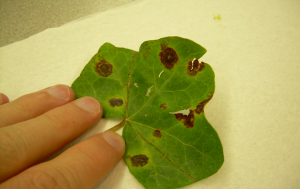
Scientists at Nanyang Technological University, Singapore (NTU Singapore) have identified, for the first time, a key mechanism by which the dangerous "crop killer" Xanthomas bacteria infect crops. Xanthomas is a globally prevalent bacterium capable of infecting 400 different plant species.Xanthomonas infects and damages plants by injecting toxic ‘effector proteins', called Type III effectors, into the plant host.
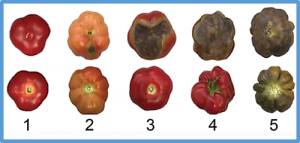
Blossom-end rot (BER) is a devastating physiological disorder that affects tomato and other vegetables, resulting in significant crop losses. To date, most studies on BER have focused on the environmental factors that affect calcium translocation to the fruit; however, the genetic basis of this disorder remains unknown. To investigate the genetic basis of BER, two F2 and F3:4 populations along with a BC1 population that segregated for BER occurrence were evaluated in the greenhouse. Using the QTL-seq approach, quantitative trait loci (QTL) associated with BER Incidence were identified at the bottom of chromosome (ch) 3 and ch11.

The webinar is the fourth of a series of webinars of the Biotech Outreach Program for the Philippines 2021 which is hosted by ISAAA, in partnership with the Southeast Asian Regional Center for Graduate Study and Research in Agriculture (SEARCA) and the United States Department of Agriculture Foreign Agricultural Service (USDA FAS) Manila.
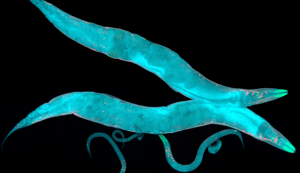
Good bacteria help the human body maintain health and well-being. Engineering these good bacteria to alter gene activity gone wrong, either by turning them down or activating them, is a promising approach to improve health and fight diseases. Researchers at Texas A&M University have developed a sophisticated, programmable gene silencing system that might have future therapeutic implications.
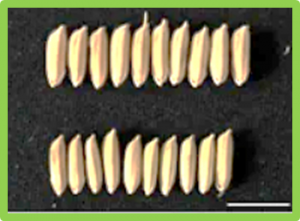
Rice (Oryza sativa L.) grain size is critical to both yield and appearance quality. Therefore, the discovery and identification of rice grain size genes can provide pathways for the cultivation of high-yielding varieties. In the present work, 45,607 SNP markers were used to construct a high-density genetic map of rice recombinant inbred lines, and hence a total of 14 quantitative trait loci (QTLs) were detected based on the phenotypic data of grain weight, grain length and grain width under four different environments.
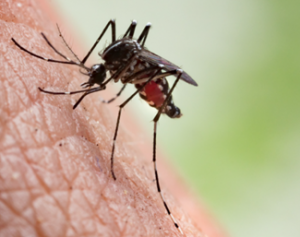
Using CRISPR-Cas9, researchers at the Army's Institute for Collaborative Biotechnologies and the University of California Santa Barbara were able to target a specific gene tied to fertility in male mosquitoes. The study, published in the Proceedings of the National Academy of Sciences, discerned how a mutation can suppress the fertility of female mosquitoes.

The Indian government has relaxed its rules for the importation of crushed and de-oiled GM soya cake for livestock feed, benefiting farmers, poultry farmers, and fishermen.The Indian Directorate General of Foreign Trade (DGFT) released a notification that allows imports of 1.2 million metric tons of crushed and de-oiled GM soya cake (non-living organism only) under ITC HS codes 23040020 and 23040030 from Nhava Sheva port and LCS Petrapole, until October 31, 2021, or until further orders, whichever is earlier.
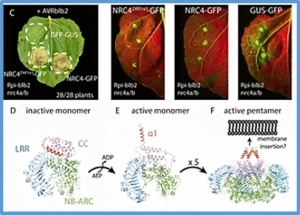
Plants employ sensor–helper pairs of NLR immune receptors to recognize pathogen effectors and activate immune responses. Yet, the subcellular localization of NLRs pre- and postactivation during pathogen infection remains poorly understood. Here, we show that NRC4, from the “NRC” solanaceous helper NLR family, undergoes dynamic changes in subcellular localization by shuttling to and from the plant–pathogen haustorium interface established during infection by the Irish potato famine pathogen Phytophthora infestans.

According to the authors, gene editing, as well as other biotechnologies, have the potential to address urgent concerns on food security, environment, human health. The coalition, which includes the Center for Science in the Public Interest, Consumer Federation of America, Environmental Defense Fund, Wildlife Federation, The Nature Conservancy, and World Wildlife Fund U.S., provided the principles as a high-level framework for responsible innovation and governance of gene-editing technologies.