


News & Events
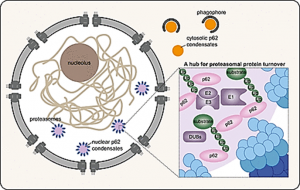
The ability to selectively degrade cellular components ranging from proteins to large complexes and organelles is essential for cellular quality control. Failure leads to accumulation of unwanted material that gives rise to neurodegeneration, cancer, and infectious diseases. Two main degradative pathways have evolved: the ubiquitin–proteasome system (UPS) and autophagy.

Minimally evolved codes are constructed here; these have randomly chosen standard genetic code (SGC) triplets, completed with completely random triplet assignments. Such “genetic codes” have not evolved, but retain SGC qualities. Retained qualities are basic, part of the underpinning of coding. For example, the sensitivity of coding to arbitrary assignments, which must be < ∼10%, is intrinsic. Such sensitivity comes from the elementary combinatorial properties of coding and constrains any SGC evolution hypothesis
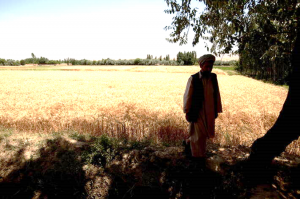
The Director-General of the Food and Agriculture Organization of the United Nations (FAO), QU Dongyu, today called for urgent assistance to help save Afghanistan's next wheat harvest, keep life-sustaining farm animals alive, and avoid a deterioration of the country's already severe humanitarian crises.FAO is seeking $36 million to speed up its support to Afghan farmers and ensure they will not miss the upcoming winter wheat planting season,

The success and adoption of novel food products depend on consumer acceptance. A recent study was conducted to identify the role of the fear of novel foods on consumer acceptance and revealed that consumers were more open to accepting gene-edited foods.The study involved 835 geographically dispersed Chinese consumers and focused on the consumer acceptance evaluation of rice and pork products that were specifically bio-engineered to address cadmium contamination and African swine fever, respectively.
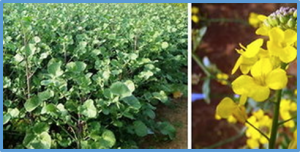
The production of a new allohexaploid Brassica crop (2n = AABBCC) is increasingly attracting international interest: a new allohexaploid crop could benefit from several major advantages over the existing Brassica diploid and allotetraploid species, combining genetic diversity and traits from all six crop species with additional allelic heterosis from the extra genome. Although early attempts to produce allohexaploids showed mixed results

A new report by the Regulatory Horizons Council sets out how the United Kingdom could take a leading role in shaping regulation that will allow innovative and safe products using genetic technologies to be commercialized.The report supports the proposals from recent government consultation and builds on them by providing additional recommendations for what a new regulatory approach should look like over the longer term.
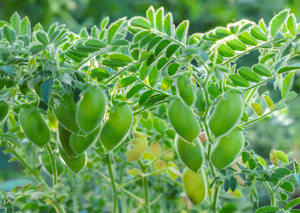
Researchers at the International Crops Research Institute for the Semi-Arid Tropics (ICRISAT) have identified a set of promising genes in chickpea that could play a key role in the plant's defense against dry root rot (DRR), a devastating fungal disease.Led by Dr. Mamta Sharma, the team has now explained the mechanism of DRR at the molecular level. They found the involvement of endochitinase and PR-3-type chitinase (CHI III) genes in delaying the progression of DRR
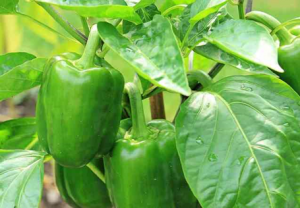
Pepper yellow leaf curl disease caused by begomoviruses seriously affects pepper (Capsicum spp.) production in a number of regions around the world. Ty genes of tomato, which confer resistance to the tomato yellow leaf curl virus, are the only begomovirus resistance genes cloned to date. In this study, we focused on the identification of begomovirus resistance genes in Capsicum annuum.
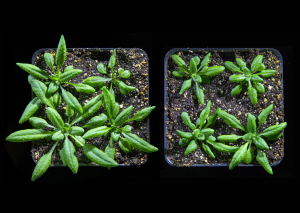
A research team from the U.S. Department of Energy's Brookhaven National Laboratory (BNL) has developed a plant that produces more oil by manipulating the availability of sugar for oil synthesis. The work is part of a University of Illinois-led biosystems design project to engineer two of the most productive American biomass crops—energycane and Miscanthus—to accumulate an abundant and sustainable supply of oil for biodiesel, biojet fuel, and bioproducts.

The Food and Agriculture Organization of the United Nations (FAO) announced the launch of its initiative titled Global Action on Green Development of Special Agricultural Products: One Country One Priority Product (OCOP). The initiative targets the development of green and sustainable value chains for special agricultural products, support small and family farmers who will benefit immensely from the global market, which will facilitate the transformation of agri-food systems and attain the Sustainable Development Goals.
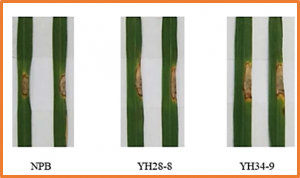
The functions of ubiquitin-conjugating enzymes (E2) in plant immunity are not well understood. In this study, OsUBC26, a rice ubiquitin-conjugating enzyme, was characterized in the defence against Magnaporthe oryzae. The expression of OsUBC26 was induced by M. oryzae inoculation and methyl jasmonate treatment. Both RNA interference lines and CRISPR/Cas9 null mutants of OsUBC26 reduced rice resistance to M. oryzae.
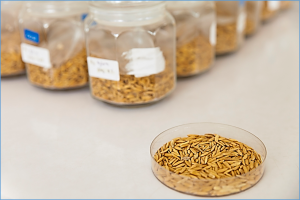
Researchers from Fujian Agriculture and Forestry University conducted a study to investigate the role of OsUBC26, a rice ubiquitin-conjugating enzyme, in rice plant's defense against blast fungus Magnaporthe oryzae. The findings are published in Molecular Plant Pathology.The functions of ubiquitin-conjugating enzymes in plant immunity remain a mystery to scientists. Thus, the study was conducted to pinpoint the function of OsUBC26 in rice resistance to blast fungus.