


News & Events
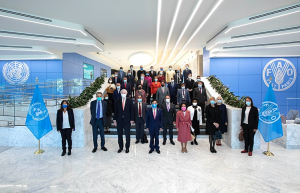
World Food Day 2021 celebrations began today, with a global event where participants noted that while the challenges of global hunger, climate crisis and COVID-19 remain formidable, there is also a new momentum and energy behind efforts to transform our agri-food systems, making them more fit for purpose. A UN Food Systems Summit last month mapped out the broad outlines of how the world needs to move forward to reshape the structures under which our food is produced, distributed and consumed.
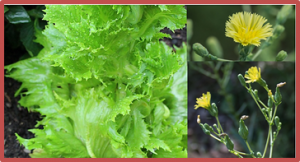
Bolting, defined as stem elongation, marks the plant life cycle transition from vegetative to reproductive stage. Lettuce is grown for its leaf rosettes, and premature bolting may reduce crop quality resulting in economic losses. The transition to reproductive stage is a complex process that involves many genetic and environmental factors. In this study, the effects of photoperiod and ambient temperature on bolting and flowering regulation were studied by utilizing a lettuce mapping population to identify quantitative trait loci (QTL) and by gene expression analyses of genotypes with contrasting phenotypes.
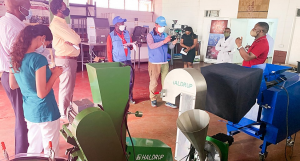
An agricultural program from the Republic of Korea has recently hailed ICRISAT’s role in innovating and disseminating technologies and practices that improve livelihoods of smallholder farmers in Zimbabwe. During a visit to Matopos Research Center, Zimbabwe, Dr Choi Young Sup, Director, Korean Program for International Cooperation in Agricultural Technology (KOPIA), commended ICRISAT’s outstanding efforts in modernizing production and processing of small grains for the benefit of farmers in the drier parts of the country.
The visit of ICRISAT Governing Board Chair Dr Prabhu Pingali provided an opportunity for staff at headquarters to present the organization’s work and accomplishments and update on the latest research in the pipeline. Interacting with the staff, Dr Pingali shared his appreciation on the work being done. His observations mainly centered on creating greater visibility for ICRISAT’s success and impacts,
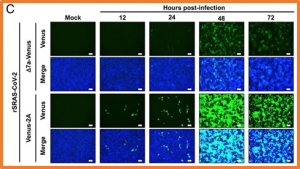
Severe acute respiratory syndrome coronavirus 2 (SARS-CoV-2), the causative agent of the current COVID-19 pandemic, is one of the biggest threats to public health. However, the dynamic of SARS-CoV-2 infection remains poorly understood. Replication-competent recombinant viruses expressing reporter genes provide valuable tools to investigate viral infection. Low levels of reporter gene expressed from previous reporter-expressing recombinant (r)SARS-CoV-2 in the locus of the open reading frame (ORF)7a protein have jeopardized their use to monitor the dynamic of SARS-CoV-2 infection in vitro or in vivo. Here, we report an alternative strategy where reporter genes were placed upstream of the highly expressed viral nucleocapsid (N) gene followed by a porcine tescherovirus (PTV-1) 2A proteolytic cleavage site.
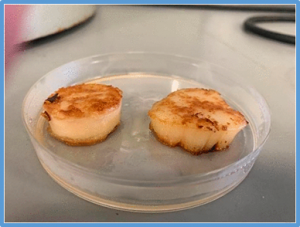
The now-famous plant protein patty known as the Impossible Burger is designed to mimic the taste, texture, and even bloodiness of real meat. Raw, it looks just like red ground beef. Grilled medium rare, the soy-based burger firms up but keeps its soft, pink center. “We’re replicating the entire sensory experience,” says biochemist Celeste Holz-Schietinger, an inventor for Impossible Foods, based in Redwood City, CA. “Even the sizzle.”
We announce the creation of a new body within the National Academies of Sciences, Engineering, and Medicine called the Strategic Council for Research Excellence, Integrity, and Trust, charged with advancing the overall health, quality, and effectiveness of the research enterprise across all domains that fund, execute, disseminate, and apply scientific work in the public interest. By promoting the alignment of incentives and policies, adoption of standard tools, and implementation of proven methods, the Strategic Council seeks to optimize the excellence and trustworthiness of research for the benefit of society.
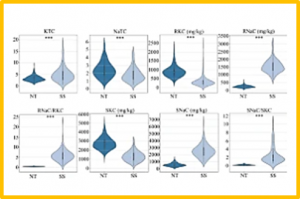
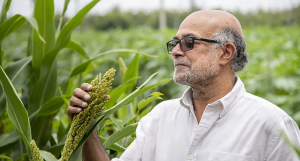
Salt stress influences maize growth and development. To decode the genetic basis and hub genes controlling salt tolerance is a meaningful exploration for cultivating salt-tolerant maize varieties. Herein, we used an association panel consisting of 305 lines to identify the genetic loci responsible for Na+- and K+-related traits in maize seedlings. Under the salt stress, seven significant single nucleotide polymorphisms were identified using a genome-wide association study,
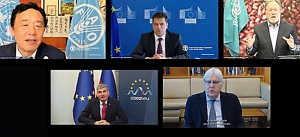
Brussels/Rome – Acting before disasters strike is more efficient and helps save both lives and money, officials from the United Nations food agencies and the European Union said during a virtual meeting today designed to boost the role of anticipatory action as an urgently needed solution to food crises. The Brussels Dialogue - “From reaction to prevention: anticipatory action against food crises” – brought together the heads of the Food and Agriculture Organization (FAO), the World Food Programme (WFP), and the European Union’s Humanitarian Aid operations.
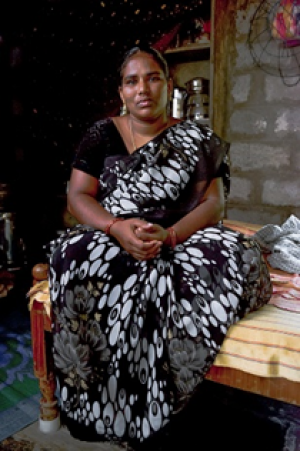
Sireesha Tullimilli is one of thousands of smallholder farmers practicing agroecology in Andhra Pradesh, a South-East Indian state. Agroecology is a type of farming that applies ecological concepts with the goal of mitigating climate change and protecting wildlife and communities alike. In fact, Sireesha spreads awareness on nutrition and sustainable farming techniques that eliminate chemical use, protect soil and boost farmer incomes.
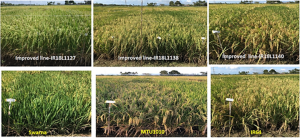
Rice (Oryza sativa L.) in rainfed marginal environments is prone to multiple abiotic and biotic stresses, which can occur in combination in a single cropping season and adversely affect rice growth and yield. The present study was undertaken to develop high-yielding, climate-resilient rice that can provide tolerance to multiple biotic and abiotic stresses. An assembled first-crossing scheme was employed to transfer 15 quantitative trait loci (QTL) and genes-qDTY1.1 , qDTY2.1 , qDTY3.1 , qDTY12.1 (drought), Sub1 (submergence), Gm4 (gall midge), Pi9, Pita2 (blast), Bph3, Bph17 (brown plant hoppers), Xa4, xa5, xa13, Xa21, and Xa23 (bacterial leaf blight)-from eight different parents using genomics-assisted breeding.
Reversing biodiversity loss, reducing greenhouse gas emissions, enhancing adaptation, strengthening resilience and improving productivity are essential to address poverty and hunger, QU Dongyu, Director-General of the Food and Agricultural Organization of the United Nations (FAO), said at a high-level panel discussion on Tuesday.