


News & Events
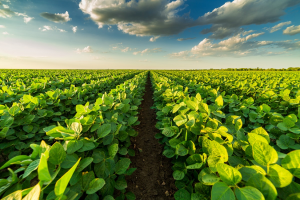
Most studies on drought-tolerant genetically modified (GM) plants are done to document how such tolerance occurs during the plants' vegetative stage. However, a team of scientists decided to broaden their study and observe drought tolerance in GM soybean plants at seedling, vegetative and reproductive phases. Results showed that the GM soybean plants performed better during all stages due to the higher expression levels of the cisgene and drought-induced genes.
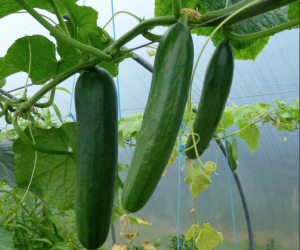
Cucumber is agriculturally, economically and nutritionally important vegetable crop. China produces three-fourths of the world’s total cucumber production. Cucumber fruit quality depends on a number of traits such as the fruit color (peel and flesh color), spine (density, size and color), fruit shape, fruit size, defects, texture, firmness, taste, maturity stage and nutritional composition. Fruit color and spine traits determine critical quality attributes and have been the interest of researchers at the molecular level. Evaluating the molecular mechanisms of fruit quality traits is important to improve production and quality of cucumber varieties.
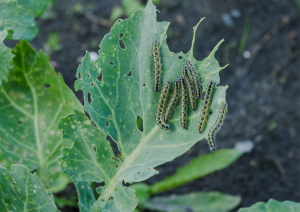
Plants are constantly attacked by insect pests, and they have mechanisms to defend themselves, including chemicals or sturdier leaves. Now, researchers have found that when wild black mustard plants defend themselves against an initial enemy, they already anticipate the need to later fend off other, different enemies and prepare for the most likely sequence of attackers.
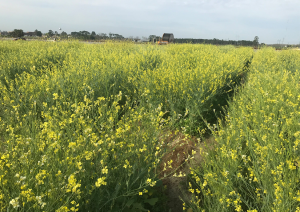
Research from the University of Georgia led by scientist Puneet Dwivedi has found that replacing petroleum-based aviation fuel with sustainable fuel from a type of mustard plant can reduce carbon emissions by up to 68 percent. Dwivedi's team estimated the break-even price and life cycle carbon emissions of sustainable aviation fuel (SAF) derived from oil obtained from Brassica carinata, a non-edible oilseed crop.
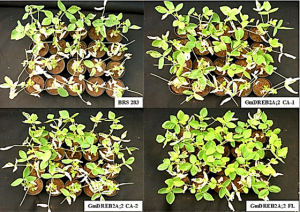
Soybean is an important commodity worldwide. Abiotic conditions can adversely disturb crop growth and final yield. The transcription factor Dehydration-Responsive Element-Binding Proteins 2 (DREB2) act as a regulator of drought-responses. This study aimed to characterize soybean plants genetically modified with GmDREB2A;2 FL and GmDREB2A;2 CA for molecular, physiological, and agronomic responses, at different developmental periods. Results showed that seedlings from GmDREB2A;2 FL event presented lower growth reduction under osmotic treatment during germination.
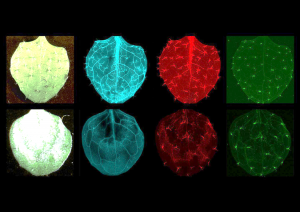
Iron is an essential micronutrient important to photosynthesis, and the research conducted by researchers at Dartmouth College focused on the activity in chloroplasts, where 90 percent of the iron in plant leaves is stored and where photosynthesis takes place. The research team followed the cause of light-induced leaf bleaching observed in iron-deficient plants. They identified two regulatory proteins that protect plants from absorbing too much light during iron deficiency.

Scientists at the University of California Riverside have figured out how plants respond to light and can flip this genetic switch to encourage food growth. This discovery could help increase food production for the world's growing population. Light influences almost all aspects of plant growth. Plants sense light and temperature with the phytochrome B protein.
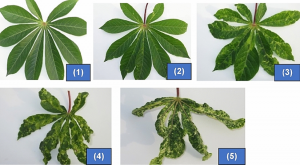
Cassava mosaic disease (CMD) is a serious threat to cassava production in sub-Saharan Africa. The use of genomic-assisted selection at the seedling trial stage would help to reduce the time for release, breeding cost, and resources used, hence increase selection efficiency in cassava breeding programs. Five cassava populations were screened for resistance to CMD during the seedling evaluation trial at 1, 3, and 5 months after planting using a scale of 1-5. The genotypes in the five populations were also screened using six molecular markers linked to the CMD2 gene.
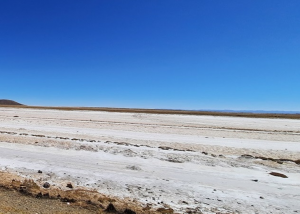
The Food and Agriculture Organization (FAO) has launched the Global Map of Salt-Affected Soils, a key tool for stopping salinization and boosting productivity on October 20, 2021, at the opening day of the Global Symposium on Salt-Affected Soils. The three-day virtual conference was co-organized by FAO and attended by more than 5,000 experts.

New relevant information helps people rethink their choice to vaccinate. With the emergence of the new COVID-19 variants, there is a fresh opportunity to reach out to vaccine hesitant individuals. This is according to the US National Academies of Sciences, Engineering, and Medicine.NAS released resources on strategies for communicating with people who are not vaccinated to build confidence in COVID-19 vaccines.
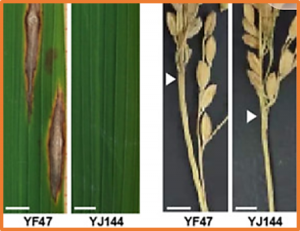
Yanfeng 47 (YF47) is an elite japonica rice variety cultivated in China on nearly 2 million hectares over the past 20 years. However, YF47 is highly susceptible to rice blast (Magnaporthe oryzae), one of the most destructive rice diseases. In this study, we developed novel TPAP (tetra-primer ARMS-PCR) functional markers for the genes Pita, Pib, and Pid2, all of which afford broad-spectrum resistance to blast. A collection of 91 japonica rice germplasms with similar ecological characteristics to YF47 were screened, and Wuyunjing 27 (WYJ27) with Pita and Pib alleles and P135 with the Pid2 allele were identified.

Princeton University researchers have developed a new tool to enhance the use of the CRISPR-Cas9 gene-editing technique. The tool called Repair-seq aids researchers to quickly see how various genes involved in repairing DNA damage impact the efficiency of genome editing technologies.The research team is led by Britt Adamson, who worked together with researchers at the Massachusetts Institute of Technology and Editas Medicine