


News & Events
The Food and Agriculture Organization of the United Nations (FAO) announced the Global Conference on Green Development of Seed Industries which will be held on November 4-5, 2021 via Zoom. The conference is designed to provide a neutral forum for its members, partners, industry and opinion leaders, and other stakeholders to engage in focused dialogues on how best to make quality seeds of preferred productive, nutritious and resilient crop varieties available to farmers.
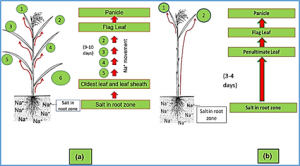
Although rice has been categorized as a salt-sensitive crop, it is not equally affected throughout its growth, being most sensitive at the seedling and reproductive stages. However, a very poor correlation exists between sensitivity at these two stages, which suggests that the effects of salt are determined by different mechanisms and sets of genes (QTLs) in seedlings and during flowering. Although tolerance at the reproductive stage is arguably the more important, as it translates directly into grain yield, more than 90% of publications on the effects of salinity on rice are limited to the seedling stage.

Research experts explored the policy implications for seed systems in the sub-Saharan Africa (SSA) region where genetically modified (GM) crops are being approved by different countries in the area. Their analysis produced several recommendations which include the importance of harmonization of individual country regulations as well as the close coordination of government approaches for the long-term benefit of agricultural innovation in the region.
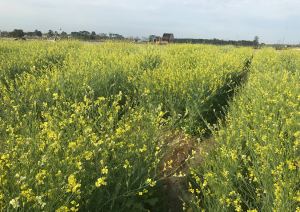
Research from the University of Georgia led by scientist Puneet Dwivedi has found that replacing petroleum-based aviation fuel with sustainable fuel from a type of mustard plant can reduce carbon emissions by up to 68 percent. Dwivedi's team estimated the break-even price and life cycle carbon emissions of sustainable aviation fuel (SAF) derived from oil obtained from Brassica carinata, a non-edible oilseed crop.
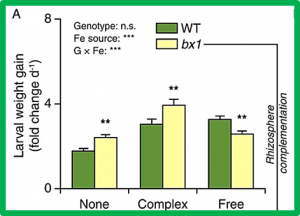
Plant secondary (or specialized) metabolites mediate important interactions in both the rhizosphere and the phyllosphere. If and how such compartmentalized functions interact to determine plant–environment interactions is not well understood. Here, we investigated how the dual role of maize benzoxazinoids as leaf defenses and root siderophores shapes the interaction between maize and a major global insect pest, the fall armyworm.
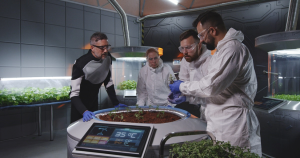
The Whole-Body Edible and Elite Plant (WBEEP) strategy was proposed by Chinese scientists for space crop improvement and help establish efficient space farming that is essential for humans to survive in space. The strategy involves several plant biotechnology techniques that include biofortification, increased yield, and enhancement of nutrient use by the plant.
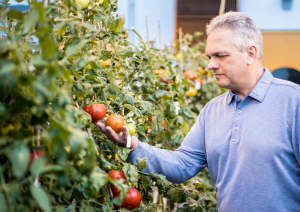
Scientists led by Boyce Thompson Institute faculty (BTI) member Jim Giovannoni have discovered a gene that could help tomatoes stay firm while having the right combination of flavor and softness when eaten. The study looked into the tomato genome for genes involved in fruit softening but not fruit ripening. The team identified a transcription factor, Solanum lycopersicum lateral organ boundaries (SlLOB1), that regulated a broad array of cell wall-related genes and fruit-softening processes
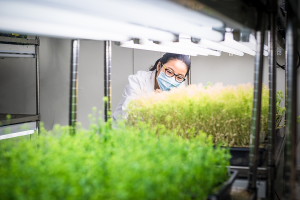
Weeds are important biotic constraints to agricultural production, so herbicides are widely used with agronomic crops as the primary method of weed control. Accordingly, extensive efforts to develop herbicide-resistant (HR) crops have been made using various methods, including clustered regularly interspaced short palindromic repeats/CRISPR-associated protein 9 (CRISPR/Cas9)-mediated gene editing. Thus far, most of the HR crops developed using gene-editing methods have adopted site-specific mutations of endogenous genes, but rarely by insertion or deletion (indel) mutations.
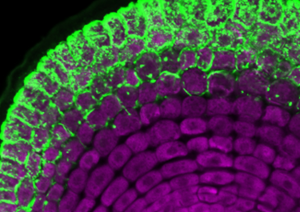
The ectomycorrhizal fungus Laccaria bicolor, shown in green, envelops the roots of a transgenic switchgrass plant. Switchgrass is not known to interact with this type of fungi naturally; the added PtLecRLK1 gene tells the plant to engage the fungus. Photo Source: ORNL, U.S. Dept. of Energy. A research team at the Oak Ridge National Laboratory (ORNL) has successfully introduced a gene from poplar into switchgrass, that allows switchgrass to interact with a beneficial fungus, ultimately boosting the grass' growth and viability in changing environments.
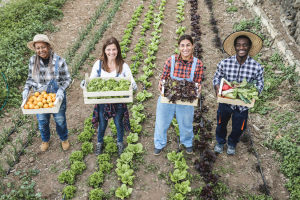
While the challenges of global hunger, climate crisis and COVID-19 continue, there is also a new momentum and energy behind initiatives to transform agri-food systems, making them more fit for purpose. This was the realization of the participants of the World Food Day 2021 celebrated on October 15, 2021.
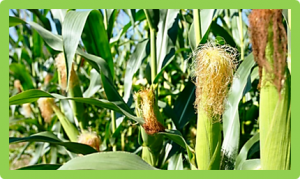
Drought has become a major stress for agricultural productivity in temperate regions, such as central Europe. Thus, information on how crop plants respond to drought is important to develop tolerant hybrids and to ensure yield stability. Posttranscriptional regulation through changed protein abundances is an important mechanism of short-term response to stress events that has not yet been widely exploited in breeding strategies. Here, we investigated the response to repeated drought exposure of a tolerant and a sensitive maize hybrid in order to understand general protein abundance changes induced by singular drought or repeated drought events.
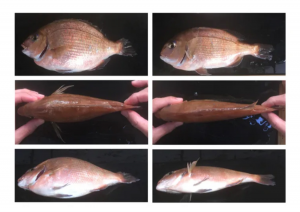
In Japan, the startup Regional Fish Co., Ltd., together with the Kyoto University and Kinki University, the Ministry of Health, Labor and Welfare and the Ministry of Agriculture, Forestry and Fisheries, has created a gene-edited red sea bream "Madai" and will begin selling in October.The gene-edited fish was developed using CRISPR gene editing technology to knock out a protein that suppresses muscle growth.