


News & Events

Nepal is again open to receiving genetically modified (GM) soybean meal imports after months of restricting the product from entering its borders. This comes after Nepalese feed producers with the help of United States (US) officials were able to convince regulators of the safety of GM soymeal. The government of Nepal previously restructured its system to issue safety permit for several products in August,
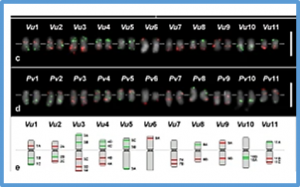
Current status on plant cytogenetic and cytogenomic research has allowed the selection and design of oligo-specific probes to individually identify each chromosome of the karyotype in a target species. Here, we developed the first chromosome identification system for legumes based on oligo-FISH barcode probes. We selected conserved genomic regions between Vigna unguiculata (Vu, cowpea) and Phaseolus vulgaris (Pv, common bean) (diverged ~ 9.7–15 Mya), using cowpea as a reference, to produce a unique barcode pattern for each species.

In observance of Presidential Proclamation No. 1414, s. 2007, the Philippines will celebrate the 17th National Biotechnology Week (NBW) on November 22-26, 2021. This celebration highlights the valuable contribution of biotechnology to food security, sustainable agriculture, equitable access to health services, sustainable environment, and industry development. This year's NBW celebration is chaired by the Department of Interior and Local Government.
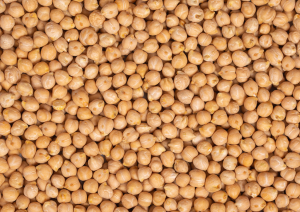
The team assembled the pan-genome by sequencing the genomes of 3,366 chickpea lines from 60 countries, with 3,171 cultivated accessions and 195 wild accessions that are conserved in multiple genebanks. They also identified 29,870 genes that include 1,582 previously unreported novel genes. Chickpea is the world's third-most cultivated legume, and is indispensable to diets in many countries. The demand for chickpea is expected to increase in the coming years as the global population rises.
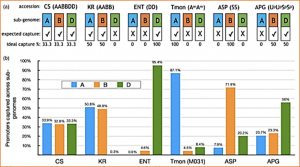
A data set of promoter and 5′UTR sequences of homoeo-alleles of 459 wheat genes that contribute to agriculturally important traits in 95 ancestral and commercial wheat cultivars is presented here. The high-stringency myBaits technology used made individual capture of homoeo-allele promoters possible, which is reported here for the first time. Promoters of most genes are remarkably conserved across the 83 hexaploid cultivars used with <7 haplotypes per promoter and 21% being identical to the reference Chinese Spring. InDels and many high-confidence SNPs are located within predicted plant transcription factor binding sites, potentially changing gene expression.
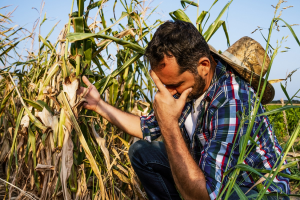
The Council for Agricultural Science and Technology (CAST) of the United States released a report that outlined how biotech crops can improve the economic welfare of farmers. It states that genetically modified organisms (GMOs) cause higher food prices and deny consumers significant health benefits. In their report, CAST published their analysis about the effects of banning GM crops, specifically the economic impact that the products can bring to the farmers and country producers.
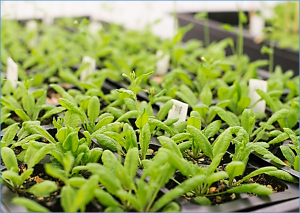
Scientists from the Salk Institute for Biological Studies (Salk), together with researchers from the University of Cambridge and Johns Hopkins University have sequenced the genome of the world's most widely used model plant species, Arabidopsis thaliana, at a level of detail never previously achieved. The study reveals the secrets of Arabidopsis chromosome regions called centromeres, shining the light on centromere evolution and providing insights into the genomic equivalent of black holes.
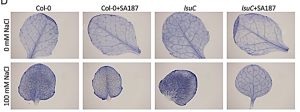
Enterobacter sp. SA187 is a root endophytic bacterium that maintains growth and yield of plants under abiotic stress conditions. In this work, we compared the metabolic wirings of Arabidopsis and SA187 in the free-living and endophytic interaction states. The interaction of SA187 with Arabidopsis induced massive changes in bacterial gene expression for chemotaxis, flagellar biosynthesis, quorum sensing, and biofilm formation
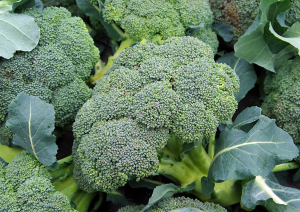
A team of scientists at the University of Florida, Kansas State University, and Virginia Tech has found the genes to slow down the wilting and yellowing of broccoli when it is harvested. As soon as a head of broccoli is harvested, an internal clock for freshness starts counting down, and the crisp green crown soon wilts and yellows. To understand what causes this transformation, the research team investigated the genes responsible for the molecular changes inside broccoli as it ages.
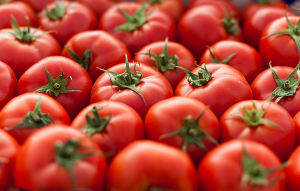
Researchers from Nagoya University reported that they have successfully developed sweeter tomatoes using gene editing technology. The results are published in Scientific Reports. High-sugar content tomatoes are usually expensive in the market because of the extensive process needed to achieve the sweetness, which also reduces the size of the fruits. With gene editing, consumers would have more access to sweeter tomatoes.
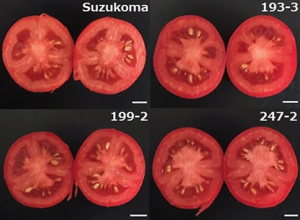
Sugar content is one of the most important quality traits of tomato. Cell wall invertase promotes sucrose unloading in the fruit by maintaining a gradient of sucrose concentration between source leaves and fruits, while invertase inhibitor (INVINH) regulates this process. In this study, knock-out of cell wall INVINH in tomato (SlINVINH1) was performed by genome editing using, CRISPR/Cas9 and Target-AID technologies.

Bioceres Crop Solutions Corp. has received the import approval of the Company's HB4 wheat flour for animal and human consumption from Brazil's Ministry of Science, Technology and Innovation. After a rigorous review process that included the use of OMICS datasets to support the scientific safety evaluation of HB4 wheat, the Brazilian National Biosafety Commission (CTNBio) has unanimously endorsed biosafety conditions for flour obtained from HB4 wheat.