


News & Events
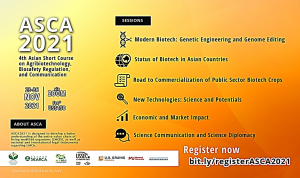
The potential of agribiotech to contribute to sustainable agriculture depends on research and development, as well as the integration of other factors, such as effective communication, science-based national regulatory frameworks, and an adequate understanding of international legal instruments. Strong collaboration among key players in the agri-biotech and biosafety arena is important, so that science and regulation can evolve and society can benefit from modern biotechnology while risks are minimized.
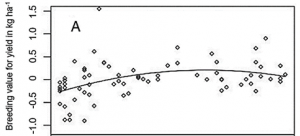
Intensive systems with two or three rice (Oryza sativa L.) crops per year account for about 50% of the harvested area for irrigated rice in Asia. Any reduction in productivity or sustainability of these systems has serious implications for global food security. Rice yield trends in the world’s longest-running long-term continuous cropping experiment (LTCCE) were evaluated to investigate consequences of intensive cropping and to draw lessons for sustaining production in Asia. Annual production was sustained at a steady level over the 50-y period in the LTCCE through continuous adjustment of management practices and regular cultivar replacement.

The Hand-in-Hand Geospatial Platform is a supporting tool for the Hand-in-Hand (HiH) Initiative, an evidence-based, country-led and country-owned initiative to accelerate the Sustainable Development Goals (SDGs), SDG1 and SDG 2, using the most sophisticated tools available, including advanced geo-spatial modeling and analytics to identify the biggest opportunities to raise the incomes and reduce the inequities and vulnerabilities of rural populations, who constitute the vast majority of the world's poor.

The Environmental Health Matters Initiative (EHMI) of the National Academies of Science, Engineering, and Medicine (NASEM) was established by the three presidents as a mechanism for a transformational cross-institutional approach to enable challenges to be informed—rapidly if needed—by insights from a broad range of applicable scientific disciplines and sectors spanning academia, government, foundations, businesses, and nongovernmental organizations.
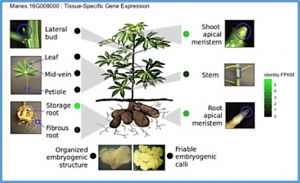
Manihot esculenta (cassava) is a root crop originating from South America that is a major staple in the tropics, including in marginal environments. This study focused on South American and African germplasm and investigated the genetic architecture of hydrogen cyanide (HCN), a major component of root quality. HCN, representing total cyanogenic glucosides, is a plant defense component against herbivory but is also toxic for human consumption.
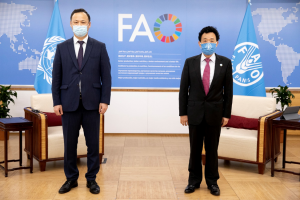
On 10 November 2021, the FAO Director-General QU Dongyu met with Ruslan Kazakbaev, Minister for Foreign Affairs of the Kyrgyz Republic. The Director-General and the Minister discussed UN Climate Change Conference (COP26). The Director-General noted the active role of the Kyrgyz Republic during COP26, while the Minister pointed out that his country gives high priority to climate change issues.
Global food trade has accelerated and is poised to hit an all-time record in both volume and value terms, according to a new report released today by the Food and Agriculture Organization of the United Nations (FAO). While global food trade has shown “remarkable resilience to disruptions throughout the COVID-19 pandemic”, rapidly rising prices of food commodities and energy pose significant challenges for poorer countries and consumers
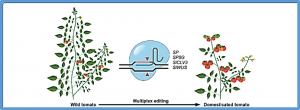
Meganucleases are rare cutting enzymes that can generate DNA modifications and are part of the plant genome editing toolkit although they lack versatility. Here, we evaluated the use of two meganucleases, I-SceI and a customized meganuclease, in tomato and oilseed rape. Different strategies were explored for the use of these meganucleases. The activity of a customized and a I-SceI meganucleases was first estimated by the use of a reporter construct GFFP with the target sequences and enabled to demonstrate that both meganucleases can generate double-strand break and HDR mediated recombination in a reporter gene.
Researchers from France evaluated the use of two meganucleases, I-SceI and a customized meganuclease, in tomato and oilseed rape. Their findings are published in Transgenic Research. Meganucleases are molecular scissors that can cause changes in the DNA. Because of this function, they are used in editing the genomes of plants. To assess their efficacy in tomato and oilseed rape, the researchers employed different strategies.
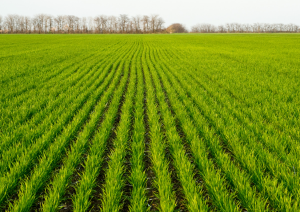
A research team at the Chair of Plant Nutrition at the Technical University of Munich (TUM) has found that weather conditions in the winter and during the transition from fall to winter and winter to spring have a significant influence on the yield of key cereal crops, such as winter barley and winter wheat. Global climate change has been continuously predicted to increase temperatures and change the distribution of precipitation.
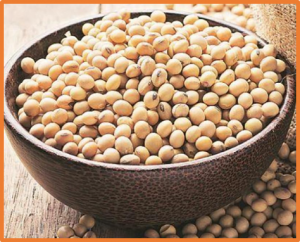
Soybean oil stability and quality are primarily determined by the relative proportions of saturated versus unsaturated fatty acids. Commodity soybean typically contains 11% palmitic acid, as the primary saturated fatty acids. Reducing palmitic acid content is the principal approach to minimize the levels of saturated fatty acids in soybean. Though high palmitic acid enhances oxidative stability of soybean oil,
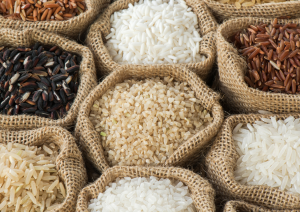
Research conducted by scientists from the University of Illinois and the Latin American Fund for Irrigated Rice (FLAR) will now allow Latin American rice breeders to select regionally relevant eating-quality traits from the outset of a breeding program, saving time, effort, and money. Rice qualities are extremely important to rice sales and consumption worldwide. Rice preferences also vary across regions and cultures.