


News & Events
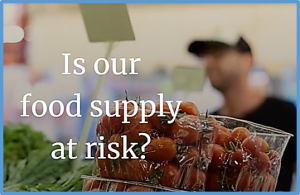
The economic fallout of the COVID-19 pandemic, climate variability and extremes, conflict, and the persistence of hunger and malnutrition have shown us that now is the time for us to build more resilient agrifood systems. If we don’t, agrifood systems will not be able to ensure food availability to all as well as physical and economic access to nutritious foods that make up healthy diets.

Insulin-dependent or type 1 diabetes (T1D) is a polygenic autoimmune disease. In humans, more than 60 loci carrying common variants that confer disease susceptibility have been identified by genome-wide association studies, with a low individual risk contribution for most variants excepting those of the major histocompatibility complex (MHC) region (40 to 50% of risk); hence the importance of missing heritability due in part to rare variants. Nonobese diabetic (NOD) mice recapitulate major features of the human disease including genetic aspects with a key role for the MHC haplotype and a series of Idd loci

The marine, nonheterocystous cyanobacterium Trichodesmium has long been chronicled as a prominent and cosmopolitan feature of the surface waters of many tropical and subtropical areas of the ocean. Indeed, reports of its accumulation in blooms at the surface appear in the journals and logs of Charles Darwin, Captain James Cook, and his botanist, Joseph Banks (1⇓–3). Phycologists mapped its distribution in the sea beginning with the first major ocean plankton survey, the Great Plankton Expedition of 1899
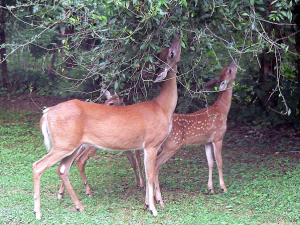
Widespread human SARS-CoV-2 infections combined with human–wildlife interactions create the potential for reverse zoonosis from humans to wildlife. We targeted white-tailed deer (Odocoileus virginianus) for serosurveillance based on evidence these deer have angiotensin-converting enzyme 2 receptors with high affinity for SARS-CoV-2, are permissive to infection, exhibit sustained viral shedding, can transmit to conspecifics

The use of hybrids is widespread in agriculture, yet the molecular basis for hybrid vigor (heterosis) remains obscure. To identify molecular components that may contribute to trait heterosis, we analyzed paired proteomic and transcriptomic data from seedling leaf and mature leaf blade tissues of maize hybrids and their inbred parents. Nuclear- and plastid-encoded subunits of complexes required for protein synthesis in the chloroplast and for the light reactions of photosynthesis were expressed above midparent and high-parent levels, respectively.

In January 2021, New York’s Northwell Health hospital system launched a clinical trial to learn whether the over-the-counter drug famotidine (also known as Pepcid) reduces the severity of COVID-19 in symptomatic patients who do not require hospitalization. The randomized trial began in response to anecdotal reports along with clinical studies showing that Pepcid benefited COVID-19 patients
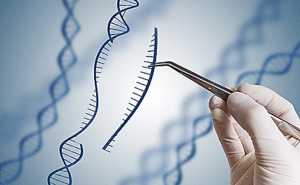
In recent years, many have considered how best to govern increasingly powerful genome editing technologies. Since 2015, more than 60 statements, declarations, and other codes of practice have been published by international organizations and scientific institutions (1). In particular, the 2018 birth of two twins, Lulu and Nana—whose HIV-receptors CCR5 were altered by biophysics researcher
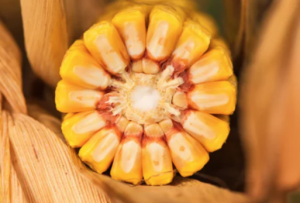
Lack of high-throughput phenotyping systems for determining moisture content during the maize nixtamalization cooking process has led to difficulty in breeding for this trait. This study provides a high-throughput, quantitative measure of kernel moisture content during nixtamalization based on NIR scanning of uncooked maize kernels. Machine learning was utilized to develop models based on the combination of NIR spectra and moisture content determined from a scaled-down benchtop cook method.
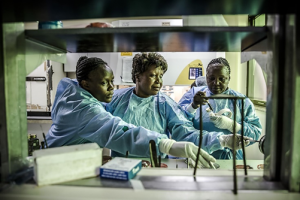
The silent global threat of antimicrobial resistance (AMR) highly impacts the agri-food sector, QU Dongyu, Director-General of the Food and Agriculture Organization of the United Nations (FAO) warned today while presenting FAO’s new five-year plan to help Members tackle the challenge. AMR’s impacts can lead to “economic losses, decline in livestock production, poverty, hunger and malnutrition – particularly in low and middle-income countries,” Qu said in opening remarks at an Information Webinar on the topic hosted by FAO as part of World Antimicrobial Awareness Week.
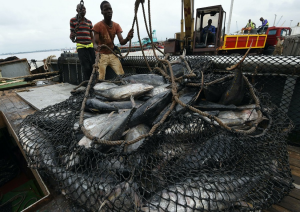
The Food and Agriculture Organization of the United Nations (FAO), the Vatican and the Catholic maritime charity, Stella Maris, today marked World Fisheries Day urging immediate action to stop human rights violations at sea. At a virtual event entitled ‘Stemming the tide: Together we can stop human rights violations at sea!’, FAO and the Holy See reaffirmed their commitment to protect the rights of fishers who are among the world’s poorest and most vulnerable and often subjected to exploitation in fisheries.
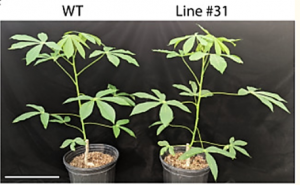
Research on a few model plant-pathogen systems has benefitted from years of tool and resource development. This is not the case for the vast majority of economically and nutritionally important plants, creating a crop improvement bottleneck. Cassava bacterial blight (CBB), caused by Xanthomonas axonopodis pv. manihotis (Xam), is an important disease in all regions where cassava (Manihot esculenta Crantz) is grown. Here, we describe the development of cassava that can be used to visualize one of the initial steps of CBB infection in vivo.
Through a series of unexpected discoveries, researchers from Rothamsted Research were able to obtain information that plant breeders and academics can use to mix and match wheat genes to develop improved varieties, which can jumpstart an increase in wheat yield production that has stagnated in recent years.