


News & Events

Scientists from the United States (US) conducted an international study to determine the consumers' willingness to buy fresh biotech-produced fruits. Their findings showed some optimism about the future of fruit biotechnology as they were able to record a higher acceptance rate from younger and educated consumers.
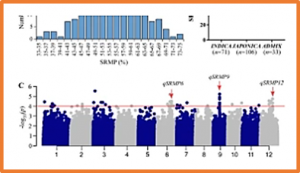
Seed reserve mobilization plays important roles in the early seedling growth in rice. However, the genetic basis underlying this process is poorly understood. In this study, the genetic architecture of variation in seed reserve mobilization during seed germination was studied using a genome-wide association study approach in rice. Three quantitative trait loci (QTL) including qSRMP6, qSRMP9, and qSRMP12 for seed reserve mobilization percentage were identified.
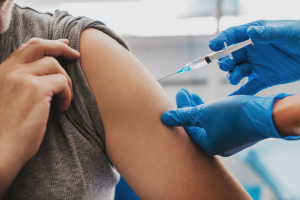
At the start of the COVID-19 pandemic, Cuba has decided to develop their own vaccines. The efforts of their own experts have been paying off based on the reports of the developers. The Finlay Institute of Vaccines reports that one of their COVID-19 vaccines, Soberana 02, has been over 90% effective in protecting against symptomatic COVID-19 infection when used together with a related vaccine, Soberana Plus
The RNA-guided CRISPR-associated (Cas) nucleases are handy tools for genome editing in different species. However, the large size of the commonly used Cas9 and Cas12 nucleases limits their application, especially for therapeutic purposes. Thus, the researchers developed a miniature class 2 type V-F CRISPR-Cas genome-editing system from Acidibacillus sulfuroxidans (AsCas12f1).
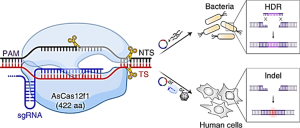
The RNA-guided CRISPR-associated (Cas) nucleases are versatile tools for genome editing in various organisms. The large sizes of the commonly used Cas9 and Cas12a nucleases restrict their flexibility in therapeutic applications that use the cargo-size-limited adeno-associated virus delivery vehicle. More compact systems would thus offer more therapeutic options and functionality for this field. Here, we report a miniature class 2 type V-F CRISPR-Cas genome-editing system from Acidibacillus sulfuroxidans (AsCas12f1, 422 amino acids).
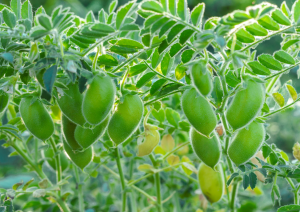
The research group used the chickpea cytokinin oxidase/dehydrogenase gene expressed under the chickpea WRKY31 gene promoter. The WRKY31 gene promoter was selected to modulate the cytokinin level in roots and investigate the effect of cytokinin depletion in root growth and architecture, and subsequently, on yield and productivity of chickpea.

Lack of proper preparation will lead to unpredictable shocks that will impact global agrifood systems. This is according to the recently released report by the Food and Agriculture Organization of the United Nations (FAO) on The State of Food and Agriculture (SOFA) 2021 titled Making Agrifood Systems More Resilient to Shocks and Stresses. Agrifood systems faced shocks and stresses due to the COVID-19 pandemic.
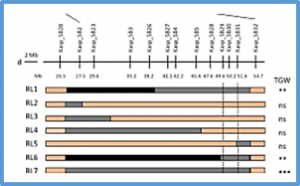
Thousand grain weight (TGW), determined by grain length and width, and is an important yield component in wheat; understanding of the underlying genes and molecular mechanisms remains limited. A stable QTL QTgw.caas-5B for TGW was identified previously in a RIL population developed from a cross between Zhongmai 871 (ZM871) and a sister line Zhongmai 895 (ZM895), and the aim of this study was to perform fine mapping and validate the genetic effect of the QTL. It was delimited to an interval of approximately 2.0 Mb flanked by markers Kasp_5B29 and Kasp_5B31 (49.6–51.6 Mb)
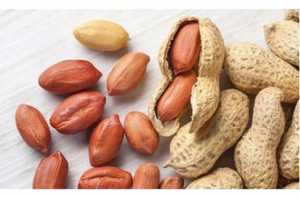
To accelerate the development of improved groundnut varieties, ICRISAT’s groundnut breeding team is gearing up to provide seed to research partners for multi-environment testing (MET) during the 2022 rainy season. Two product profiles are being targeted by the team. Resistance to late leaf spot (LLS) as well as rust are key traits for both profiles. To select lines with resistance to LLS and rust, markers for two major QTLs that correspond to the resistance to these diseases were used.
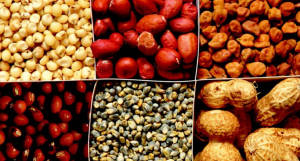
“There are no good crops without good seeds. Seeds are the foundation of agri-food systems. We rely on seeds to produce food, feed, fibre, fuel and they contribute to a friendly environment,” emphasized Dr QU Dongyu, Director General, FAO, in his opening remark while inaugurating FAO’s Global Conference on Green Development of Seed Industries held during 4-5 November 2021.
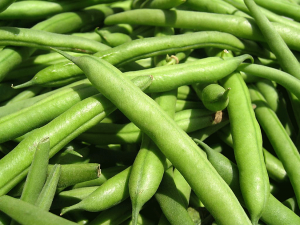
The pod is the main edible part of snap beans (Phaseolus vulgaris L.). The commercial use of the pods is mainly affected by their color. Consumers seem to prefer golden pods. The aim of the present study was to identify the gene responsible for the golden pod trait in the snap bean. ‘A18-1’ (a golden bean cultivar) and ‘Renaya’ (a green bean cultivar) were chosen as the experimental materials. Genetic analysis indicated that a single recessive gene, pv-ye, controls the golden pod trait.
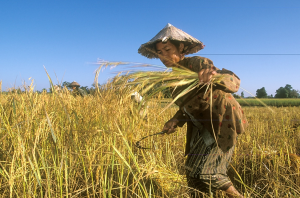
Countries need to make their agrifood systems more resilient to sudden shocks of the kind witnessed during the COVID-19 pandemic, which has emerged as a major driver of the latest rise in global hunger estimates. According to a new report published today by the Food and Agriculture Organization of the United Nations (FAO), without proper preparation unpredictable shocks will continue to undermine agrifood systems.