


News & Events
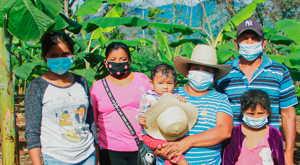
Hunger in Latin America and the Caribbean is at its highest point since 2000, after a 30 percent increase in the number of people suffering hunger from 2019 to 2020, says a new UN report. According to the Regional Overview of Food Security and Nutrition 2021, in just one year, and in the context of the COVID-19 pandemic, the number of people living with hunger increased by 13.8 million, reaching a total of 59.7 million people.

Inactivating p53 mutations are the most abundant genetic alterations found in cancer. Here we show that CRISPR/Cas9-induced double-stranded DNA breaks enrich for cells deficient in p53 as well as in genes of a core CRISPR-p53 tumor suppressor interactome. Such enrichment could predispose to cancer development and thus pose a challenge for clinical CRISPR use. Transient p53 inhibition could suppress the enrichment of cells with these mutations. The level of DNA damage response induced by an sgRNA influenced the enrichment of p53 deficient cells and could be a relevant parameter in sgRNA design to limit cellular enrichment.
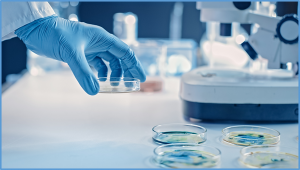
Experts from Karolinska Institutet in Sweden reported a connection between CRISPR, a protein that protects cells from DNA damage known as p53, and other cancer genes. The results, published in Cancer Research, contribute more information to precision medicine. CRISPR has been a popular gene editing tool in research. However, some hurdles need to be addressed to be used efficiently in precision medicine. One of these challenges is associated with how cells respond to DNA damage, which CRISPR gene editing causes in a controlled fashion.
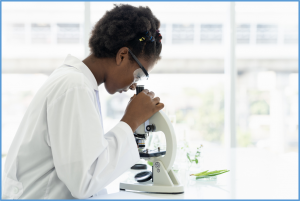
"No discovery has been greeted with more excitement and coverage than gene editing," according to Dr. Val Giddings, Senior Fellow at the Information Technology and Innovation Foundation, in his article published in Open Access Government. Giddings stressed the importance of gene editing in addressing many sustainability challenges faced in health, food, and the environment, and the only limitation that gene editing has is in the power of human imagination.
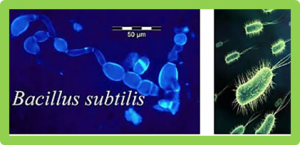
Our understanding of plant–microbe interactions in soil is limited by the difficulty of observing processes at the microscopic scale throughout plants’ large volume of influence. Here, we present the development of three-dimensional live microscopy for resolving plant–microbe interactions across the environment of an entire seedling growing in a transparent soil in tailor-made mesocosms, maintaining physical conditions for the culture of both plants and microorganisms. A tailor-made, dual-illumination light sheet system acquired photons scattered from the plant while fluorescence emissions were simultaneously captured from transparent soil particles and labeled microorganisms,
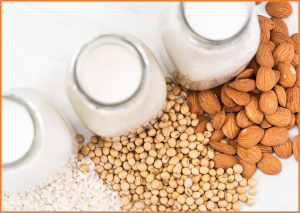
A new study published in Science of the Total Environment reveals that the proportion of UK people eating and drinking plant-based alternative foods such as plant-based milk, vegan sausages, and vegetable burgers nearly doubled between 2008–2011 and 2017–2019. The study, conducted by the London School of Hygiene & Tropical Medicine (LSHTM), with partners at the University of Oxford is believed to be the first analysis of plant-based alternative foods (PBAF) consumption trends in the UK.
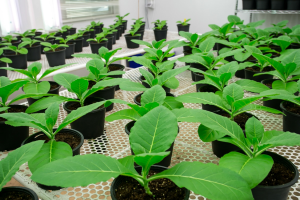
Scientists from Spain were successful in developing a model plant that can release insect pheromones that affect pests of herbaceous plants. This is an important step towards crop protection as it can help reduce the need for chemical pesticides.The scientists used genetically modified Nicotiana benthamiana as a model plant to encode volatile compounds like moth pheromones to turn them into a pheromone biofactory.
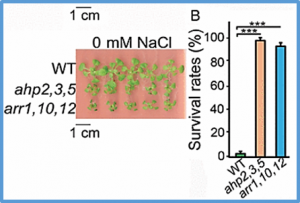
Cytokinin (CK) in plants regulates both developmental processes and adaptation to environmental stresses. Arabidopsis histidine phosphotransfer ahp2,3,5 and type-B Arabidopsis response regulator arr1,10,12 triple mutants are almost completely defective in CK signaling, and the ahp2,3,5 mutant was reported to be salt tolerant. Here, we demonstrate that the arr1,10,12 mutant is also more tolerant to salt stress than wild-type (WT) plants.

ISAAA and its network of Biotechnology Information Centers, in partnership with Murdoch University, held a webinar focused on the latest scientific and regulatory updates on gene-edited (GEd) plant products in Asia and Australia. The aim was to share knowledge and advice about the technology and regulations related to it to provide the intended beneficiaries with advice on the production and international trade of the GEd products.

The work is based on a discovery previously made by the late Simon Chan and colleagues over a decade ago when they serendipitously discovered a way to eliminate the genetic contribution from one parent while breeding Arabidopsis. They modified a protein called CENH3 which is found in the centromere of a chromosome. Crossing wild-type Arabidopsis with plants with modified CENH3, they got plants with half the normal number of chromosomes, and the part of the genome from one parent plant had been eliminated to create a haploid plant.
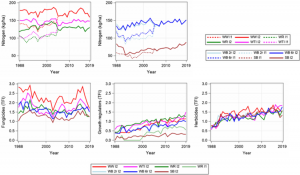
Plant breeding and improved crop management generated considerable progress in cereal performance over the last decades. Climate change, as well as the political and social demand for more environmentally friendly production, require ongoing breeding progress. This study quantified long-term trends for breeding progress and ageing effects of yield, yield-related traits, and disease resistance traits from German variety trials for five cereal crops with a broad spectrum of genotypes.
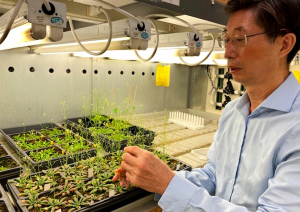
Auxin uses two main pathways to orchestrate plant growth, one of them has been discovered by Professor Zhenbiao Yang and his team. One theory proposed a century ago suggests that when plants are ready to grow, auxin causes their cells to become acidic, loosening the bonds between components and allowing the walls to soften and expand. How auxin activates acidification remained a mystery until now.