


News & Events
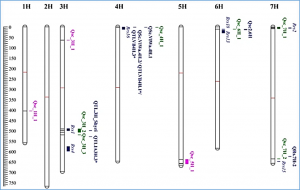
Genome-Wide Association Studies (GWAS) of four Multi-parent Advanced Generation Inter-Cross (MAGIC) populations identified nine regions on chromosomes 1H, 3H, 4H, 5H, 6H and 7H associated with resistance against barley scald disease. Three of these regions are putatively novel resistance Quantitative Trait Loci (QTL). Barley scald is caused by Rhynchosporium commune, one of the most important barley leaf diseases that are prevalent in most barley-growing regions.
A group of 70 lawmakers in the US led by Adrian Smith and Jim Costa is calling for the Biden Administration to seek assurance from the Mexican government that the country will abide by the biotech provisions indicated in the United States-Mexico-Canada Agreement (USMCA). Biotech application approvals have been halted in Mexico since 2018 and Mexican President López Obrador has announced the intent to phase out certain biotech products including biotech corn for human consumption by 2024.
In 2020, hunger in Latin America and the Caribbean reached its highest point in the last 15 years. This is according to the Regional Overview of Food Security and Nutrition 2021 released by the Food and Agriculture Organization of the United Nations, International Fund for Agricultural Development, and other partners. The prevalence of hunger in the region stands at 9.1%, an increase of 2% from 2019. The number of people living with hunger reached a total of 59.7 million.
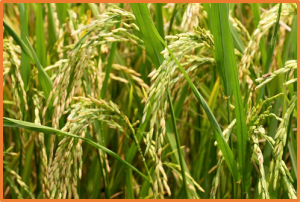
Structural variations (SVs), such as inversion and duplication, contribute to important agronomic traits in crops1. Pan-genome studies revealed that SVs were a crucial and ubiquitous force driving genetic diversification 2,3,4. Although genome editing can effectively create SVs in plants and animals 5,6,7,8, the potential of designed SVs in breeding has been overlooked. Here, we show that new genes and traits can be created in rice by designed large-scale genomic inversion or duplication using CRISPR/Cas9.
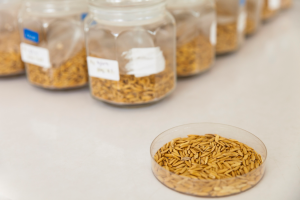
Researchers from China Agricultural University and partners reported that new genes and traits can be developed in rice through designed large-scale genomic inversion or duplication using CRISPR-Cas9. The results are published in Nature Plants. Structural variations, such as inversion and duplication, contribute to vital agronomic characteristics in crops as well as driving genetic diversification

The 4th Asian Short Course on Agribiotechnology, Biosafety Regulation, and Communication (ASCA 2021) was held from November 23-26, 2021 via Zoom. The event, which was first held in 2018 in Malaysia, accommodated 48 participants from nine countries that included the Philippines, Malaysia, Thailand, Vietnam, China, Ghana, Democratic Republic of Congo, Brazil, and India.
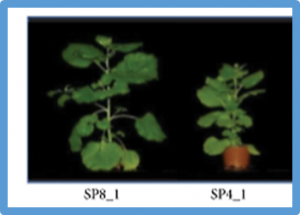
Plant-based bioproduction of insect sex pheromones has been proposed as an innovative strategy to increase the sustainability of pest control in agriculture. Here, we describe the engineering of transgenic plants producing (Z)-11-hexadecenol (Z11-16OH) and (Z)-11-hexadecenyl acetate (Z11-16OAc), two main volatile components in many Lepidoptera sex pheromone blends. We assembled multigene DNA constructs encoding the pheromone biosynthetic pathway and stably transformed them into Nicotiana benthamiana plants.
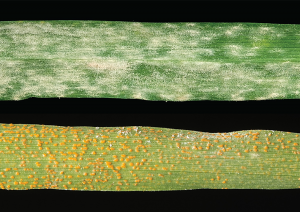
Scientists at The Sainsbury Laboratory and the Norwich Research Park have discovered that the barley and wheat gene conferring resistance to stripe rust also does the same to completely different pathogens.The fungal pathogen stripe rust Puccinia striiformis causes major global losses in cereal crop yields, particularly wheat. The species has independent lineages that infect diverse cereal species, such as wheat stripe rust and barley stripe rust which infect wheat and barley, respectively.

ISAAA, together with Biotechnology Alliance Association, will be conducting a live webinar titled Biotechnology Approaches in Crop Improvement in Thailand: Genetic Engineering and Genome Editing on December 7, 2021 at 10 AM GMT+7. The registration is now open for interested participants.
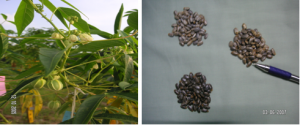
- Preliminary Evaluation on the project with the title of "Agro-practice protocol of cassava cultivar HL-S14 in Southeastern region”, *on-line* August 5, 2021
- Cassava breeding of HL-S14 was preliminarily assessed on-line September 14,2021

The economic importance of the maize streak virus disease to the African maize production dynamic is to be appreciated now more than ever due to the preponderant influence of a changing climate. Continued dependence on a single major-effect quantitative trait locus (QTL) called Msv1 on Chromosome 1 of Maize (Zea mays L.) is not guaranteed to ensure durable resistance to the causal pathogen. With over ten decades of research on the disease and its associated host plant resistance mechanisms, it is pertinent to consider future approaches to attaining durability by looking to the synergistic roles of moderate- and minor-effect QTLs located on other chromosomes so as to facilitate a secure farming system for sub-Saharan Africa.

In 2022, the Food and Agriculture Organization of the United Nations (FAO) must make “extraordinary” efforts to achieve tangible on-the-ground progress towards reducing hunger, making agrifood systems more efficient, inclusive, resilient and sustainable, and to ultimately achieve the Four Betters – Better Production, Better Nutrition, a Better Environment and a Better Life for all – Director-General QU Dongyu told the FAO Council today.