


News & Events
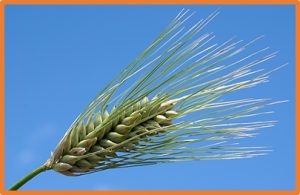
Selection indices using genomic information have been proposed in crop-specific scenarios. Routine use of genomic selection (GS) for simultaneous improvement of multiple traits requires information about the impact of the available economic and logistic resources and genetic properties (variances, trait correlations, and prediction accuracies) of the breeding population on the expected selection gain. We extended the R package “selectiongain” from single trait to index selection to optimize and compare breeding strategies for simultaneous improvement of two traits.

Public interest in and support for nutrition and healthy diets are growing stronger, offering a ray of hope for a challenge affecting billions of people, QU Dongyu, Director-General of the Food and Agriculture Organization of the United Nations (FAO) said today, stressing that FAO will strengthen its efforts to promote better nutrition for all. “Advocacy efforts on the importance of nutrition, heathy diets and agrifood systems for human and planetary health are showing results,” he said, citing the mid-term review of the UN Decade of Action on Nutrition.
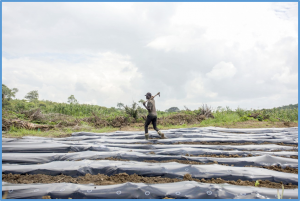
The scourge of unsightly images of plastic refuse littering our beaches and oceans always receives much attention. But a new report by the Food and Agriculture Organization of the United Nations (FAO) suggests that the land we use to grow our food is contaminated with far larger quantities of plastic pollution, posing an even greater threat to food security, people’s health, and the environment
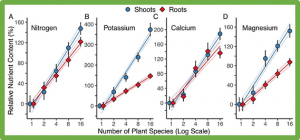
Fertile soils have been an essential resource for humanity for 10,000 y, but the ecological mechanisms involved in the creation and restoration of fertile soils, and especially the role of plant diversity, are poorly understood. Here we use results of a long-term, unfertilized plant biodiversity experiment to determine whether biodiversity, especially plant functional biodiversity, impacted the regeneration of fertility on a degraded sandy soil. After 23 y, plots containing 16 perennial grassland plant species had, relative to monocultures of these same species, ∼30 to 90% greater increases in soil nitrogen, potassium, calcium, magnesium, cation exchange capacity, and carbon and had ∼150 to 370% greater amounts of N, K, Ca, and Mg in plant biomass.
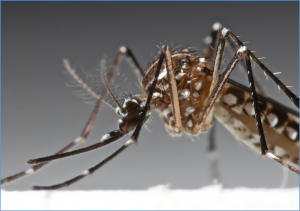
The American Committee of Medical Entomology (ACME) of the American Society of Tropical Medicine and Hygiene has responded to the lack of standard guidance on the risk assessment and containment decisions on gene drive-modified arthropods through the publication of an addendum to the Arthropod Containment Guidelines. The addendum provides more specific recommendations on containment practices for arthropods modified with engineered transgenes capable of gene drive.
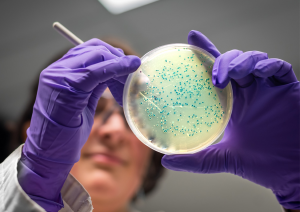
Scientists from The University of Manchester have discovered a new way to produce complex antibiotics using CRISPR gene editing to reprogram pathways to future medicines urgently needed to fight antimicrobial resistance, treat neglected diseases, and tackle future pandemics. The Manchester researchers used CRISPR-Cas9 to create new nonribosomal peptide synthetase (NRPS) enzymes that deliver clinically important antibiotics
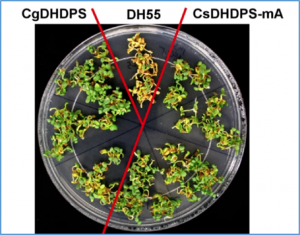
Camelina sativa (camelina) is emerging as an alternative oilseed crop due to its short growing cycle, low input requirements, adaptability to less favorable growing environments and a seed oil profile suitable for biofuel and industrial applications. Camelina meal and oil are also registered for use in animal and fish feeds; however, like meals derived from most cereals and oilseeds, it is deficient in certain essential amino acids, such as lysine.

Experts from Agriculture and Agri-Food Canada reported the enhancement of lysine content in camelina (Camelina sativa) through the expression of a feedback inhibition-insensitive form of dihydrodipicolinate synthase (DHDPS) from a bacterium. The results are published in Transgenic Research. Camelina is becoming a popular alternative oilseed crop because of its short growing cycle, low input needs, adaptability to less favorable growing environments
The Australian Office of the Gene Technology Regulator (OGTR) invites comments from the public to assess an application from The University of Adelaide to conduct a field trial of wheat and barley genetically modified for yield enhancement and improved abiotic stress tolerance. The field trial is proposed to take place at two sites, with a total area of 2 hectares per year across both sites. One site will be in Light Regional Council (SA) and the other site will be in the Shire of Merredin (WA).
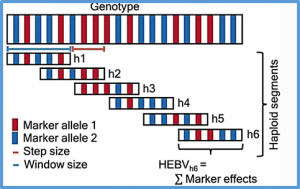
Genomic prediction is often combined with truncation selection to identify superior parental individuals that can pass on favorable quantitative trait locus (QTL) alleles to their offspring. However, truncation selection reduces genetic variation within the breeding population, causing a premature convergence to a sub-optimal genetic value. In order to also increase genetic gain in the long term, different methods have been proposed that better preserve genetic variation.

A scientific communication training program for early- to mid-career researchers in STEM that aims to bridge gaps as well as guide training fellows in conducting successful science communication outreach programs organized by APEC-SLP Science Communication Team is scheduled for December 2021 to January 2022. Early- and mid-career researchers in STEM often encounter challenges to effectively, clearly, and concisely communicating science to both their fellow scientists and to the general public.
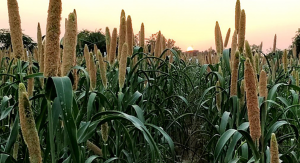
Fifteen years after its first release, scientists at the International Crops Research Institute for the Semi-Arid Tropics (ICRISAT) are helping the popular pearl millet hybrid, GHB 538, make a comeback in an improved version. The new GHB 538, christened Maru Sona or desert gold in the local language, is equipped with the genes to fend off devastating downy mildew disease and was recently released for cultivation in India's Gujarat state. Compared to the original hybrid, Maru Sona shows high resistance to downy mildew disease (82.0%), an increase in grain (3.5%) and fodder (10.8%) yield,