


News & Events
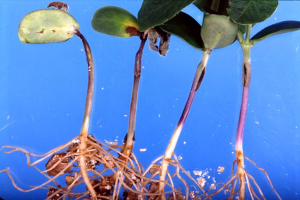
Phytophthora sojae is the causative agent for Phytophthora root and stem rot in soybean [Glycine max (L.) Merr.] and can be managed by deployment of resistance to P. sojae (Rps) genes. PI 340,029 is a soybean landrace carrying broad-spectrum resistance to the pathogen. Analysis of an F2 population derived from a cross between PI 340,029 and a susceptible cultivar ‘Williams’ reveals that the resistance to P. sojae race 1 is conferred by a single gene,
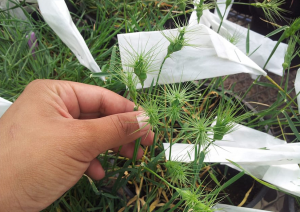
An international collaboration involving 15 research institutes from eight countries has optimized efforts to introduce beneficial traits from wild wheat accessions in genebanks into existing wheat varieties. The research led by Sukhwinder Singh of the International Maize and Wheat Improvement Center (CIMMYT) as part of the Seeds of Discovery project extends many potential benefits to national breeding programs,
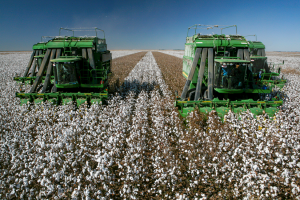
The USDA Foreign Agricultural Service released the 2021 Global Agricultural Information Network (GAIN) report on the agricultural biotechnology updates in Pakistan and South Korea. According to the report, cotton is still the only GM crop approved for cultivation and use in Pakistan since regulatory uncertainty continues to be a hurdle in seeking approval of other crops.

Jasmonate signaling for adaptative or developmental responses generally relies on an increased synthesis of the bioactive hormone jasmonoyl-isoleucine (JA-Ile), triggered by environmental or internal cues. JA-Ile is embedded in a complex metabolic network whose upstream and downstream components strongly contribute to hormone homeostasis and activity. We previously showed that JAO2, an isoform of four Arabidopsis JASMONIC ACID OXIDASES,
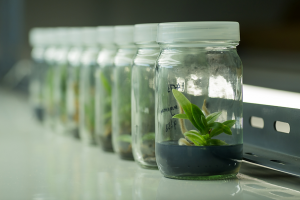
Université de Strasbourg researchers reported in The Plant Journal that suppressing jasmonate signaling reduction in Arabidopsis JASMONIC ACID OXIDASE mutants led to broad-spectrum stress tolerance. Jasmonate signaling for adaptive and developmental responses is controlled by the boost of the hormone called jasmonoyl-isoleucine (JA-Ile), which is triggered by internal or external cues

Initial laboratory studies on the Omicron SARS-CoV-2 variant showed that it is highly likely to compromise the protection provided by COVID vaccines. The researchers, which include teams from South Africa, Germany, and Sweden, as well as the Pfizer-BioNtech collaboration, said that the COVID vaccine protection would still be useful, especially with boosters.
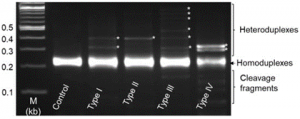
Transcription activator-like effector (TALE) nucleases (TALENs) mediated gene editing methods are becoming popular and have revealed the staggering complexity of genome control during development. Here, we present a simple and efficient gene knockout using TALENs in kawakawa, Euthynnus affinis, using slc24a5. We examined slc24a5 gene expression and functional differences between two TALENs that hold the TALE scaffolds, +153/+47 and +136/+63 and target slc24a5
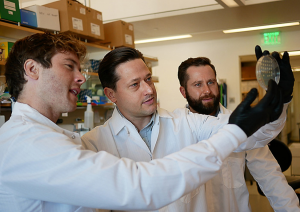
Since their discovery, CRISPR enzymes have been used to edit the genomes of one type of cell at a time. Now, the group that invented the CRISPR-Cas9 genome editing technology nearly 10 years ago has found a way to add or modify genes within a community of many different species simultaneously, opening the door to what could be called "community editing."
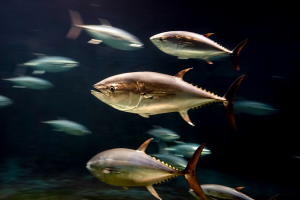
Japanese scientists were successful in using transcription activator-like effector nucleases (TALENs) to induce small mutations with major changes in phenotype of the kawakawa (Euthynnus affinis). Their study, which demonstrated the disruption of the gene slc24a5 using Platinum TALENs in the fish, is the first to use genome editing technology to study color variation in tuna species.
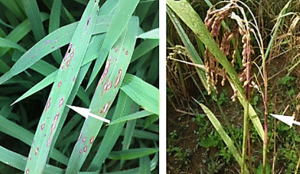
Rice is a key food security crop in Africa. The importance of rice has led to increasing country-specific, regional, and multinational efforts to develop germplasm and policy initiatives to boost production for a more food-secure continent. Currently, this critically important cereal crop is predominantly cultivated by small-scale farmers under suboptimal conditions in most parts of sub-Saharan Africa (SSA).

New research conducted at The University of Texas at Austin has added to the number of naturally occurring versions of CRISPR-Cas system, giving researchers a wealth of potential new tools for large-scale gene editing. Scientists have identified clusters of genes that use CRISPR to insert themselves into different places in an organism's genome, called CRISPR-associated transposons (CASTs).

ISAAA, in partnership with the Philippine Department of Agriculture Biotechnology Program Office and Biotech Coalition of the Philippines, will be launching its latest publication titled Breaking Barriers with Breeding: A Primer on New Breeding Innovations for Food Security on December 13, 2021 at 10 AM GMT+8 via Zoom. Genome editing has been one of the most game-changing innovations in food and agriculture. It allows experts to improve the characteristics of living organisms using molecular scissors to edit the DNA in a specific location