


News & Events
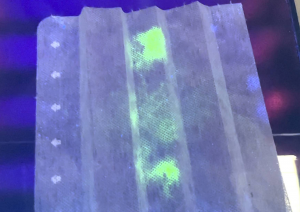
In February 2020, the team injected an inactive and non-threatening form of the coronavirus into female ostriches, successfully extracting a large quantity of antibodies from the eggs that they laid. The team then developed a special filter placed inside the face mask. The filter can be taken out and sprayed with a fluorescent dye containing the coronavirus antibodies from the ostrich eggs. If the virus is present, the filter will glow under UV light.

The targeted deletion, replacement, integration or inversion of genomic sequences could be used to study or treat human genetic diseases, but existing methods typically require double-strand DNA breaks (DSBs) that lead to undesired consequences, including uncontrolled indel mixtures and chromosomal abnormalities. Here we describe twin prime editing (twinPE), a DSB-independent method that uses a prime editor protein and two prime editing guide RNAs (pegRNAs)
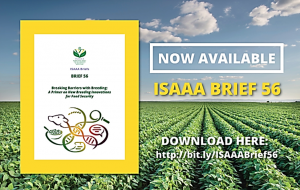
As modern biotechnology rapidly moves forward, ISAAA continues to share the latest cutting-edge biotechnologies to its network of stakeholders and beneficiaries with its most recent publication about new breeding innovations and their impact on global challenges. Breaking Barriers with Breeding: A Primer on New Breeding Innovations for Food Security (ISAAA Brief 56) is ISAAA's most recent addition to its Briefs series. It highlights the most available tools used in genome editing and their impact on global food security
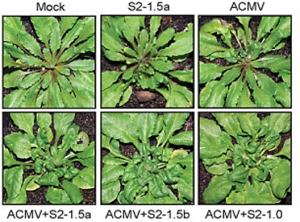
Cassava mosaic disease (CMD), which is caused by single-stranded DNA begomoviruses, severely limits cassava production across Africa. A previous study showed that CMD symptom severity and viral DNA accumulation increase in cassava in the presence of a DNA sequence designated SEGS-2 (sequence enhancing geminivirus symptoms). We report here that when SEGS-2 is coinoculated with African cassava mosaic virus (ACMV) onto Arabidopsis thaliana, viral symptoms increase. Transgenic Arabidopsis with an integrated copy of SEGS-2 inoculated with ACMV also display increased symptom severity and viral DNA levels. Moreover, SEGS-2 enables Cabbage leaf curl virus (CaLCuV) to infect a geminivirus-resistant Arabidopsis thaliana accession.
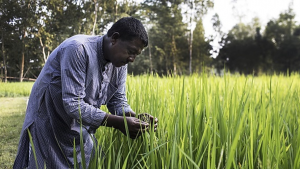
Satisfying the changing food habits and increased demand for food intensifies pressure on the world’s water, land and soil resources. However, agriculture bears great promise to alleviate these pressures and provide multiple opportunities to contribute to global goals. Sustainable agricultural practices lead to water saving, soil conservation, sustainable land management, conservation of natural resources, ecosystem and climate change benefits

Mountain tourism needs to be more sustainable and equitable, said the Director-General of the Food and Agriculture Organization (FAO), QU Dongyu, at a high-level event hosted by His Excellency Sergio Mattarella, President of the Italian Republic at the Quirinale Palace, which was attended by Ministers and representatives of local authorities from mountain regions of Italy, ahead of International Mountain Day.
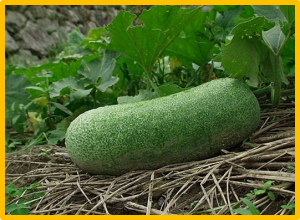
Fruit shape is an important agronomic trait in wax gourds. Therefore, in this study, we employed bulked segregant analysis (BSA) to identify a candidate gene for fruit shape in wax gourds within F2 populations derived by crossing GX-71 (long cylindrical fruit, fruit shape index = 4.56) and MY-1 (round fruit, fruit shape index = 1.06) genotypes. According to BSA, the candidate gene is located in the 17.18 Mb region on chromosome 2. Meanwhile, kompetitive allele-specific PCR (KASP) markers were used to reduce it to a 19.6 Kb region. Only one gene was present within the corresponding region of the reference genome, namely Bch02G016830 (designated BFS). Subsequently, BFS was sequenced in six wax gourd varieties with different fruit shapes.

Undernourishment and severe and moderate food insecurity rates in Europe and Central Asia are, on average, much lower than in the rest of the world. However, more than 14 million people became moderately or severely food insecure from 2019 to 2020, during the COVID-19 pandemic. Furthermore, with overweight and obesity well above the global prevalence – and on the rise – the region’s 50-plus countries must renew their commitments to ending hunger and malnutrition by 2030, as envisaged by the Sustainable Development Goals (SDGs).
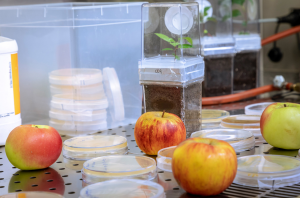
A study led by scientists from Graz University of Technology (TU Graz) in Austria shows that apple trees inherit their microbiome to the same extent as their genes. The results of this study lay the foundation for new breeding strategies for healthy and climate-robust fruit and vegetables. Microbiome research is only a few decades old, but it has already produced some ground-breaking findings.
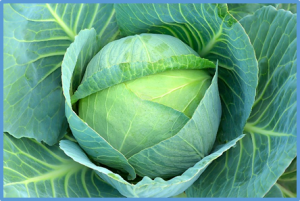
TL28-1 is a novel spontaneous wax-deficient mutant with a glossy phenotype identified from cabbage. In this study, the genetic analysis suggested that the wax-deficient trait of TL28-1 was controlled by a single recessive gene. All wax monomers longer than 28 carbons were significantly decreased in TL28-1. Fine-mapping results showed that the wax-deficient locus wdtl28 was located at an 80-kb interval between BOL01-20 and BOL01-24 markers on chromosome 1.
Food Standards Australia New Zealand (FSANZ) is opening the call for comments to the public regarding the importation of genetically modified (GM) wheat derived from the wheat line IND-00412-7. The line was developed to be drought- and herbicide-tolerant. The application is seeking to permit foods derived from GM wheat for importation into Australia and New Zealand, as well as to allow the sale and use of foods made from it.
Researchers at Harvard University have compiled a dataset of over 200,000 plant species worldwide to illustrate the extent to which species extinctions and non-native invasive plants reorganize plant communities in the Anthropocene, the current geological age dominated by human activity.Led by Barnabas H. Daru, a former postdoctoral fellow at the Harvard University Herbaria and in the Department of Organismic and Evolutionary Biology, the project began several years ago with mapping North American biomes