


News & Events
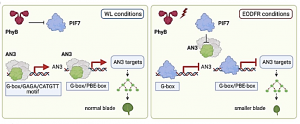
Plants are agile, plastic organisms able to adapt to everchanging circumstances. Responding to far-red (FR) wavelengths from nearby vegetation, shade-intolerant species elicit the adaptive shade-avoidance syndrome (SAS), characterized by elongated petioles, leaf hyponasty, and smaller leaves. We utilized end-of-day FR (EODFR) treatments to interrogate molecular processes that underlie the SAS leaf response. Genetic analysis established that PHYTOCHROME-INTERACTING FACTOR 7 (PIF7) is required for EODFR-mediated constraint of leaf blade cell division, while EODFR messenger RNA sequencing data identified ANGUSTIFOLIA3 (AN3) as a potential PIF7 target.
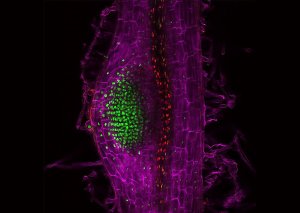
Scientists at the University of Florida Institute of Food and Agricultural Sciences (UF/IFAS) are now one step closer to developing plants with the ability to harness nitrogen-fixing bacteria. Nitrogen is essential to plants, but plants can only absorb it in some of its chemical forms. Some of these forms are naturally found in soils, but not in quantities needed to reach adequate crop yields. Nitrogen is plentiful in the air, but in a form that plants cannot use.

Experts at Hokkaido University, Japan presented a framework that can be used to differentiate genetically modified organisms (GMOs) from genome-edited organisms, taking into account both technical and socio-ethical considerations. Their paper is published in Trends in Biotechnology. Depending on the technique used to edit the genome, an organism may have foreign DNA or none at all. In the proposed framework, if there is no foreign DNA involved, the resulting product can be considered as non-GMO.
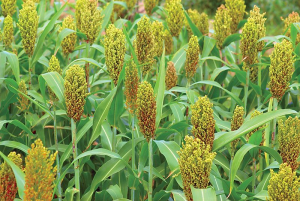
bHLH family proteins play an important role in plant stress response. However, the molecular mechanism regulating the salt response of bHLH is largely unknown. This study aimed to investigate the function and regulating mechanism of the sweet sorghum SbbHLH85 during salt stress. The results showed that SbbHLH85 was different from its homologs in other species. Also, it was a new atypical bHLH transcription factor and a key gene for root development in sweet sorghum. The overexpression of SbbHLH85 resulted in significantly increased number and length of root hairs via ABA and auxin signaling pathways, increasing the absorption of Na+.
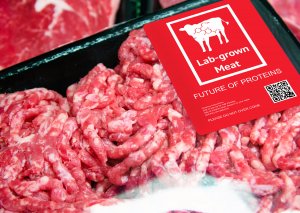
Research conducted by the UK Food Standards Agency (FSA) reveals that a third of UK consumers would try cultured meat, and a quarter would try edible insects. It also revealed that 6 in 10 people are willing to try plant-based products. An online survey conducted between December 20211 and January 2022 by Ipsos MORI on behalf of FSA, it included 1,930 adults aged 16-75 living in England, Wales, and Northern Ireland.
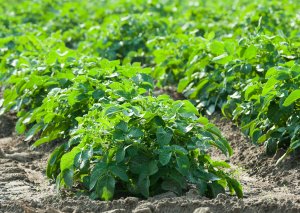
Researchers from Lancaster University working on key crops in sub-Saharan Africa have discovered an imperfection in a critical enzyme within cowpea and believe this imperfection is also present in other crops. In the study published in Nature Plants, Professor Carmo-Silva and Lancaster University Senior Research Associate Dr. Sam Taylor found that as cowpea leaves go into the shade, the activity of the enzyme Rubisco drops more rapidly than was previously thought.
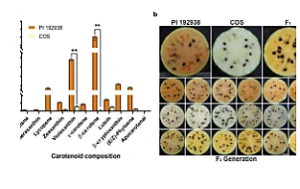
Vitamin A deficiency is a worldwide public nutrition problem, and β-carotene is the precursor for vitamin A synthesis. Watermelon with golden flesh (gf, which occurs due to an accumulated abundance of β-carotene) is an important germplasm resource. In this study, a genetic analysis of segregated gf gene populations indicated that gf was controlled by a single recessive gene. BSA-seq (Bulked segregation analysis) and an initial linkage analysis placed the gf locus in a 290-Kb region on watermelon chromosome 1. Further fine mapping in a large population including over 1000 F2 plants narrowed this region to 39.08 Kb harboring two genes, Cla97C01G008760 and Cla97C01G008770
Researchers in the University of Nebraska–Lincoln's Institute of Agriculture and Natural Resources (IANR) shed light on crop yield improvement. While plant genetics has been considered the key factor in improving crop yields, the new IANR analysis which studied data for 3,000 irrigated fields in three Nebraska regions over a 15-year period, revealed that climate and field management, rather than genetics, had a far greater influence on increased crop productivity.

Global prices of food slightly went down as international prices for vegetable oils and sugar decreased significantly, according to the Food and Agriculture Organization of the United Nations (FAO). The FAO Food Price Index averaged 133.7 points in December 2021, which indicates a 0.9 percent decrease from the previous month and 23.1 percent from the previous year. The FAO Food Price Index monitors the monthly changes in the international prices of commonly-traded food commodities.
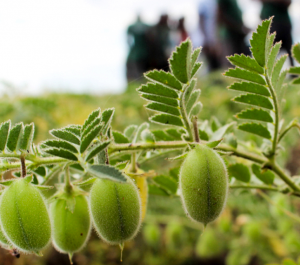
To understand the genetic constitution of vigour in chickpea (Cicer arietinum L.), genomic data from a bi-parental population and multiple diversity panels were used to identify QTL, sequence-level haplotypes and genetic markers associated with vigour-related traits in Australian environments. Using 182 Recombinant Inbred Lines (RILs) derived from a cross between two desi varieties, Rupali and Genesis836, vigour QTL independent of flowering time were identified on chromosomes (Ca) 1, 3 and 4 with genotypic variance explained (GVE) ranging from 7.1 to 28.8%.
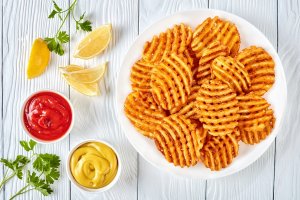
A researcher in Australia was successful in producing gene-edited potatoes with decreased cold-induced sweetening and acrylamide formation in fried potato products, an option that may prove to be better for the economy and human health. The more popular forms of processed potatoes are crisps and French fries. However, potatoes turn brown after frying due to the accumulation of hexose sugars.
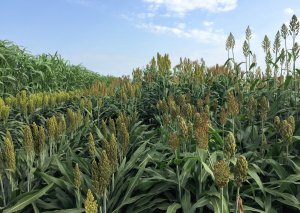
Scientists at Iowa State University have harnessed data analytics to look at the mechanisms that determine how genetics and changing environmental conditions interact during crucial developmental stages of plants. The study published in New Phytologist focused on how temperature changes affect the height of sorghum plants and the concept of phenotypic plasticity, or how a given trait can differ as a result of environmental conditions.