


News & Events
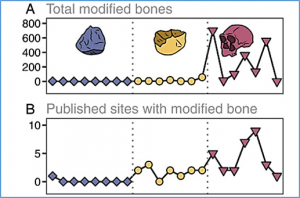
The appearance of Homo erectus shortly after 2.0 Ma is widely considered a turning point in human dietary evolution, with increased consumption of animal tissues driving the evolution of larger brain and body size and a reorganization of the gut. An increase in the size and number of zooarchaeological assemblages after the appearance of H. erectus is often offered as a central piece of archaeological evidence for increased carnivory in this species, but this characterization has yet to be subject to detailed scrutiny.
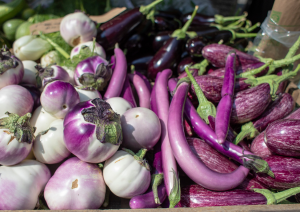
A team at the Universitat Politècnica de València in Spain led by Jaime Prohens is set to produce eggplant varieties that are resilient to climate change stresses, including drought and the outbreaks of new pests and diseases. Through the Eggplant Pre-Breeding Project, the team used wild relatives of eggplant, the weedy cousins of the domesticated crop, to add new and useful traits to domesticated varieties so they can withstand hotter, drier climates in Southeast Asia, sub-Saharan Africa, and the Mediterranean Basin.
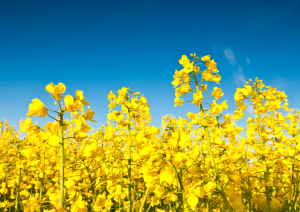
After almost 20 years of planting GM cotton and canola, it is timely to consider issues associated with herbicide tolerant traits, weed resistance, and changes in weed management measures. As part of 20 years of operation of the Gene Technology Act 2000, the Regulator commissioned a report to provide advice on GM crops with multiple herbicide tolerant traits. The report examined the regulatory, industry, technological, and agronomic practices surrounding the use of herbicides and herbicide tolerant crops in Australia.

White clover is an agriculturally important forage legume grown throughout temperate regions as a mixed clover–grass crop. It is typically cultivated with low nitrogen input, making yield dependent on nitrogen fixation by rhizobia in root nodules. Here, we investigate the effects of clover and rhizobium genetic variation by monitoring plant growth and quantifying dry matter yield of 704 combinations of 145 clover genotypes and 170 rhizobium inocula. We find no significant effect of rhizobium variation. In contrast, we can predict yield based on a few white clover markers strongly associated with plant size prior to nitrogen fixation, and the prediction accuracy for polycross offspring yield is remarkably high
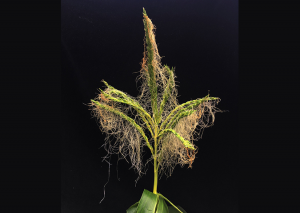
Researchers at the University of Massachusetts Amherst have discovered the genetic linkages governing flower formation, solving a long-standing mystery of the many different types of flowers in the world and shedding light into a dark corner of evolution. The process called "programmed cell death" has long been known as partly responsible for flowers' morphological diversity. Programmed cell death is a genetic mechanism that eliminates some cells on purpose and it is at work in the carpels of flowers, or the seed-bearing structures at the heart of the flower.
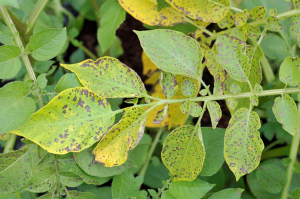
Late blight is one of the major potato diseases that can cause crop and income loss to farmers. The United States has pledged funds to address this problem in Bangladesh, Indonesia, Kenya, and Nigeria. The Feed the Future Global Biotech Potato Partnership led by the Michigan State University (MSU) aims to bring Late Blight-resistant (LBR) potatoes to the four countries and possibly to other Feed the Future target countries through funds provided by the United States Agency for International Development (USAID) in the next five years.
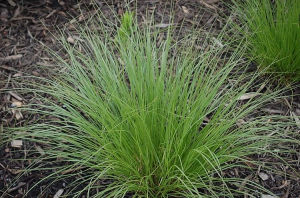
Desiccation tolerance is an ancient and complex trait that spans all major lineages of life on earth. Although important in the evolution of land plants, the mechanisms that underlay this complex trait are poorly understood, especially for vegetative desiccation tolerance (VDT). The lack of suitable closely related plant models that offer a direct contrast between desiccation tolerance and sensitivity has hampered progress. We have assembled high-quality genomes for two closely related grasses, the desiccation-tolerant Sporobolus stapfianus and the desiccation-sensitive Sporobolus pyramidalis. Both species are complex polyploids; S. stapfianus is primarily tetraploid, and S. pyramidalis is primarily hexaploid.

African biotechnology experts and youth have called for fair and equitable sharing of benefits from utilization of digital sequence information (DSI) on genetic resources. This was during a virtual pre-COPMOP workshop held on 20th January 2022. Digital sequence information on genetic resources is an emerging cross-cutting issue first addressed in 2016 by the Conference of the Parties to the Convention on Biological Diversity (CBD) and the Conference of the Parties serving as the meeting of the Parties to the Nagoya Protocol (COP13/COPMOP2).
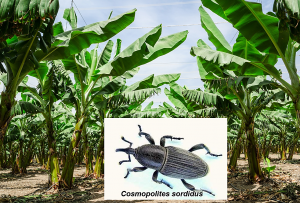
Scientists at the International Institute of Tropical Agriculture (IITA) and their partners have identified molecular markers associated with resistance to banana weevil, one of the crop's most destructive pests that can cause up to 100% yield loss. Banana and plantain are important staple foods and sources of income for millions of people globally, particularly in sub-Saharan Africa. The banana weevil borer, Cosmopolites sordidus (Germar), is one of the major banana pests that constrains banana and plantain production.
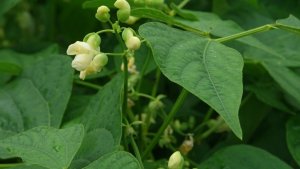
The most important viruses infecting common bean (Phaseolus vulgaris L.) in Brazil are BCMV, BGMV and CPMMV, the last two transmitted by the whitefly Bemisia tabaci, occurring simultaneously and causing severe yield losses. Genetically modified progenies of common bean, from carioca market class and multiple virus resistance (BCMV, BGMV and CPMMV), have been developed using conventional breeding and molecular tools. Agronomic performance and virus disease severity (VS) evaluated in two field trials, selected 39 elite progenies out of 477. Molecular analyses identified the presence of BCMV and BGMV resistance alleles in plants.
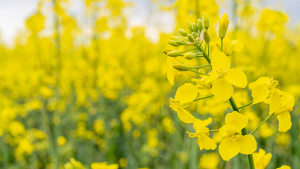
Researchers at the University of Calgary used gene editing technology to develop a shorter, highly branched canola variety with more pods and easier to harvest. This improvement is based on the needs of canola producers. This type of canola is 34 percent shorter than the average height of canola plants. Decreasing the height of the plant is intended for minimizing lodging. It is difficult to control the height of canola, thus it is prone to lodging.
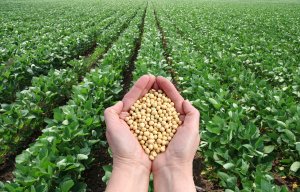
Argentina based the revisions to its regulatory framework on the current global scientific advances and the country's 30 years of experience and lessons learned, specifically on establishing the absence of new or increased risks with respect to the previously assessed genetically modified (GM) crops. The environmental risk assessment (ERA) process went through a review-evaluation in 2020 and 2021. The following modifications were made to the ERA: