


News & Events
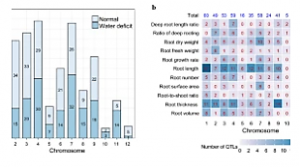
Root system architecture (RSA) is an important factor for facilitating water and nutrient uptake from deep soils and adaptation to drought stress conditions. In the present research, an integrated meta-analysis approach was employed to find candidate genes and genomic regions involved in rice RSA traits. A whole-genome meta-analysis was performed for 425 initial QTLs reported in 34 independent experiments controlling RSA traits under control and drought stress conditions in the previous twenty years. Sixty-four consensus meta-QTLs (MQTLs) were detected, unevenly distributed on twelve rice chromosomes.

China released new rules on field trials of gene-edited plants, paving the way for faster improvement of crops for food security. The Ministry of Agriculture and Rural Affairs published the new guidelines on January 25, 2022. This announcement is part of the country's goal to overhaul the seed industry. Beijing also passed new guidelines to clear the path for GM crop approvals and is expected to promote gene-edited crops soon.
The Department of Environment, Food and Rural Affairs (DEFRA) announced that new UK legislation will be implemented to cut the unnecessary red tape for gene editing, with the goal of helping farmers have access to more resilient, nutritious, and productive crops. This also implies that UK scientists will be able to conduct research and development more easily using genetic technologies for plants. "New genetic technologies could help us tackle some of the biggest challenges of our age – around food security, climate change and biodiversity loss…
Many studies have confirmed that structural variation (SV) is pervasive throughout the maize genome. Deletion is one type of SV that may impact gene expression and cause phenotypic changes in quantitative traits. In this study, two read count approaches were used to analyze the deletions in the whole-genome sequencing data of 270 maize inbred lines. A total of 19,754 deletion windows overlapped 12,751 genes, which were unevenly distributed across the genome. The deletions explained population structure well and correlated with genomic features. The deletion proportion of genes was determined to be negatively correlated with its expression.

With the full picture of damage and needs after Tonga’s massive volcanic eruption and tsunami only gradually emerging, what is already clear is that the stakes could not be higher for the farmers and fishers of the South Pacific island nation, living in one of the world’s most disaster-prone regions. With roughly 86 percent of Tongans engaged in agriculture, FAO is extremely concerned about the potential impacts across all agriculture sectors, including fisheries, crops and livestock, even though information is limited, with communications and access remaining severely affected.

Experts from Tata Institute for Genetics and Society (TIGS) developed a method to reverse insecticide resistance using CRISPR-Cas9 gene editing. The results of their study are published in Nature Communications. Insecticides are vital in the global efforts to stop the spread of mosquito-borne diseases as well as in controlling insect-driven crop damage that impacts food security. However, many insects have adapted and have developed resistance to the potency of insecticides.
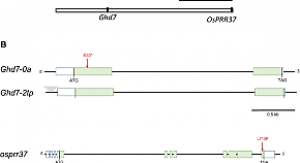
The ranges of cultivated crops expanded into various environmental conditions around the world after their domestication. Hokkaido, Japan, lies at the northern limit of cultivation of rice, which originated in the tropics. Novel genotypes for extremely early heading date in Hokkaido are controlled by loss-of-function of both Grain number, plant height and heading date 7 (Ghd7) and Oryza sativa Pseudo-Response Regulator 37 (OsPRR37). We traced genotypes for extremely early heading date and analyzed the phylogeny of rice varieties grown historically in Japan.
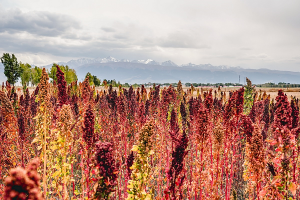
After helping to sequence the quinoa genome five years ago, researchers at the Brigham Young University (BYU) used this information and came up with quinoa hybrids that are more tolerant to abiotic stress. The BYU research team was able to develop new hybrids of quinoa that were more heat tolerant, more salt tolerant, and were better at surviving in very dry conditions using the information they previously obtained from sequencing the plant's genome.
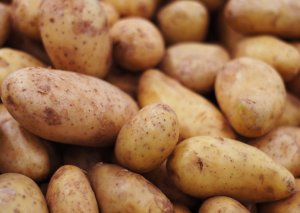
Potatoes, the third most important staple food crop in the world consumed by approximately 1.3 billion people, are mostly tetraploids, carrying four copies of chromosome sets, which complicates breeding efforts to introduce new traits. Diploid potatoes, however, are self-incompatible with the problem of inbreeding depression. Researchers from the Agricultural Genomics Institute at Shenzhen, Chinese Academy of Agricultural Sciences (AGIS, CAAS) worked on developing a hybrid potato breeding system for years.
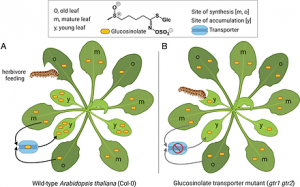
Plants, as a whole, are well stocked with chemical defense compounds that function in protection against herbivores and pathogens. Within individual plants, however, there is extensive variation in the amounts of chemical defenses among different organs, tissues, and developmental stages. For example, defense compounds are typically present in greater concentrations in young compared to old leaves and in reproductive compared to vegetative organs. These patterns have been rationalized by various theories, chief among them the optimal defense theory, but this theory has proved very difficult to test until a recent report from Hunziker et al. (1).
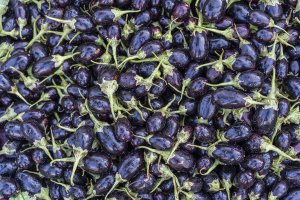
Cornell University announced that it received an award grant from the United States Agency for International Development (USAID) to continue the efforts to bring genetically engineered (GE) eggplant varieties to farmers in Bangladesh and the Philippines. USAID has provided Cornell's Feed the Future Insect-Resistant Eggplant Partnership a grant amounting to US$10 million as part of the Feed the Future initiative by the US government.
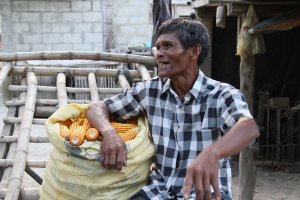
GM maize is one of the viable options to help meet food security and income needs in emerging economies. However, there is limited GM maize adoption in Africa and Asia. In the Philippines, farmers have adopted GM maize for almost two decades. The Asia-Pacific Association of Agricultural Research Institutions (APAARI) released a policy paper highlighting the economic and policy lessons from the Philippines.