


News & Events
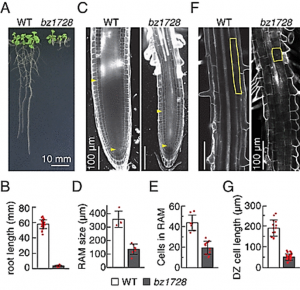
Plant root growth is indeterminate but continuously responds to environmental changes. We previously reported on the severe root growth defect of a double mutant in bZIP17 and bZIP28 (bz1728) modulating the unfolded protein response (UPR). To elucidate the mechanism by which bz1728 seedlings develop a short root, we obtained a series of bz1728 suppressor mutants, called nobiro, for rescued root growth. We focused here on nobiro6, which is defective in the general transcription factor component TBP-ASSOCIATED FACTOR 12b (TAF12b).

Adam Smith Institute released a paper titled Splice of Life: The Case of GMOs and Gene Editing, which is based on two decades' worth of research about the benefits of adopting GMOs. The paper, authored by Cameron English, Director of Biosciences at the American Council on Science and Health, stresses that the UK is moving in the right direction by considering more liberal biotech regulations.

A new peer-reviewed study published in BMC Biotechnology describes Oxitec's Friendly™ Fall Armyworm technology and how it offers an effective solution to fight the insect's resistance to currently used crop protection tools. The findings show that the world's first fall armyworm carrying Oxitec's self-limiting gene, which has received commercial biosafety approval from Brazilian regulators in 2021,
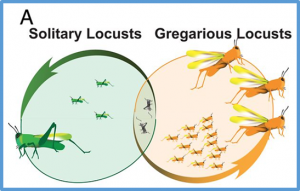
Changes in population density lead to phenotypic differentiation of solitary and gregarious locusts, which display different resistance to fungal pathogens; however, how to regulate their cellular immune strategies remains unknown. Here, our stochastic simulation of pathogen proliferation suggested that humoral defense always enhanced resistance to fungal pathogens, while phagocytosis sometimes reduced defense against pathogens.

Philippines Department of Agriculture Secretary William Dar, in a recent interview, said, "The stance of the Department of Agriculture (DA) is clear: biotechnology is a pillar of our ‘OneDA approach' to ensuring agricultural productivity, sustainability, economic growth, and nutritional security." At a Healthier Rice Project Team and Advisory Committee meeting held on February 2, 2022, Secretary Dar highlighted the DA's programs or the massive production of Golden Rice seeds and production of Golden Rice in its pioneer provinces.

A study by the University of Bonn projected that if the European Union (EU) were to allow the adoption of already existing genetically modified (GM) crops, it could result in a reduction equivalent to 7.5% of the total agricultural greenhouse gas emissions of Europe. The researchers highlighted that yield increases by GM crops that can help in climate change mitigation have not been previously quantified in previous studies.
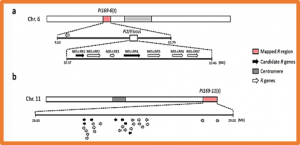
Rice blast, one of the most destructive epidemic diseases, annually causes severe losses in grain yield worldwide. To manage blast disease, breeding resistant varieties is considered a more economic and environment-friendly strategy than chemical control. For breeding new resistant varieties, natural germplasms with broad-spectrum resistance are valuable resistant donors, but the number is limited. Therefore, artificially induced mutants are an important resource for identifying new broad-spectrum resistant (R) genes/loci

Shifting towards more efficient, inclusive, resilient and sustainable agrifood systems will play a central role in recovery from the COVID-19 pandemic and delivering on the 2030 Agenda for Sustainable Development, the Director-General of the Food and Agriculture Organization of the United Nations (FAO), QU Dongyu, said today. He addressed a high-level panel meeting organised by the United Nations Economic and Social Council (ECOSOC) entitled “Recovery from the pandemic through the lens of SDGs 4, 5, 14 and 17”.
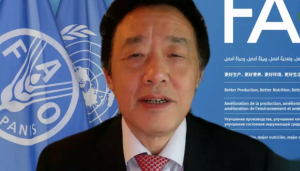
The 36th FAO Regional Conference for the Near East (NERC36) started today with a focus on improving nutrition, building resilient rural communities, optimizing water management, addressing the impacts of the climate crisis and fostering green recovery initiatives, as well as gender-sensitive development strategies. Agrifood sectors are among those struggling to recover from the shocks created by the COVID-19 pandemic over the past two years, and highlight the importance of sustainable and resilient societies, FAO Director-General QU Dongyu said in opening remarks conveyed virtually to the meeting hosted by the Government of Iraq.
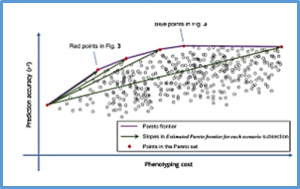
Multivariate genomic prediction based on secondary traits, such as data from various omics technologies including high-throughput phenotyping (e.g., unmanned aerial vehicle-based remote sensing), has attracted much attention because it offers improved accuracy gains compared with genomic prediction based only on marker genotypes. Although there is a trade-off between accuracy gains and phenotyping costs of secondary traits, no attempt has been made to optimize these trade-offs.

The UK Government Office for Science released a report on the future uses and considerations of genomic science. The report, titled Genomics Beyond Healthcare, examines how the genome can provide insights into people's characteristics and behaviors and investigate how research on the DNA code presents both benefits and challenges to society. "Since we launched the UK Genomics Healthcare program in 2011, the UK has grown into a global powerhouse in genomic healthcare, from diagnostics to drugs and vaccines.
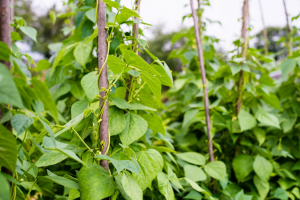
Researchers from Brazil selected genetically modified (GM) progenies of the common bean (Phaseolus vulgaris L.) that were found to be resistant to the three most common viruses of the plant. The GM common bean can potentially decrease yield losses for farmers and reduce virus spread in the field. The bean common mosaic virus (BCMV), bean golden mosaic virus (BGMV) and cowpea mild mottle virus (CMMV) all severely affect the common bean, with the BGMV and CMMV being transmitted by whitefly.