


News & Events
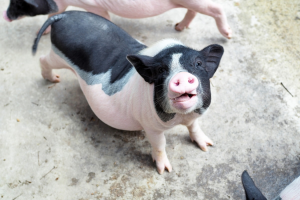
By reducing phytic acid during digestion, pigs were able to properly digest amino acids resulting in better nutrition for optimum growth, reduction of pollution caused by phosphorus found in animal manure, and reduction of production cost by eliminating expensive feeds supplementation.Phosphorus in plant seeds is mainly stored in the form of phytic acid. In corn, 60-80% of phosphorus is in the form of phytate. Pigs and poultry usually find it hard to utilize phytic acid due to the lack of enzyme to digest it leaving a utilization rate of 0-40%.
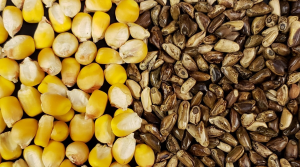
Using a new tool developed by scientists from Iowa State University, researchers will now be able to identify traits like disease resistance and stress resistance in the corn's wild ancestor and use them to further advance modern corn breeding selection.The tool harnesses the latest techniques to produce fertile transgenic teosinte plants for the first time. Teosinte is a wild grassy plant that was domesticated over the course of a thousand years ago to develop into the modern corn.
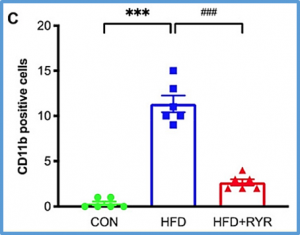
Using a mouse model of high-fat diet (HFD) feeding and a cellular model of HepG2 cells challenged by lipopolysaccharide (LPS) and palmitic acid (PA), the possible molecular mechanisms were exploited in the aspects of NF-κB/NLRP3 inflammasome and mTORC1-SREBPs signaling pathways by examining the relevant gene/protein expressions. Subsequently, the correlation between these two signals was also verified using cellular experiments.

Freezing tolerance increases as the plant ages, according to the findings of scientists from Zhejiang Agriculture and Forestry University in China. Their study is published in BMC Plant Biology journal. Freezing stress impedes the development of plants and causes significant damage to plants. Thus, plants have evolved several mechanisms during their growth and development to resist freezing stress. The researchers from China conducted the study to further understand how plants react to freezing signals.

Wetland plants exhibit high tolerance to flooding because of their ability to form air channels called lysigenous aerenchyma, which help transfer gases to the submerged roots. Aside from withstanding flooding, these air channels also help plants during drought and nutrient deficiency. To understand the mechanism behind the formation of these air channels, the research team conducted the study which could provide insights on how to develop more resilient crops.
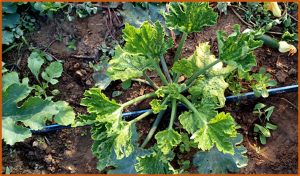
Tomato leaf curl New Delhi virus (ToLCNDV) is a devastating pathogen that causes huge crop loss. It is spreading to new geographical locations at a very rapid rate-raising serious concerns. Evolution of insecticidal resistance in Bemisia tabaci which acts as the carrier for ToLCNDV has made insect control very difficult in the recent years. Thus, it is important that the host molecular mechanisms associated with ToLCNDV resistance/susceptibility are investigated to develop management strategies.
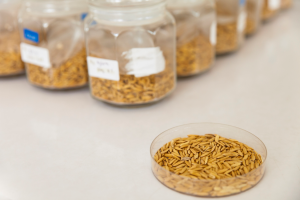
In thale cress, the WUS gene has been found to be necessary for the maintenance of stem cells during the early stages of flower development, particularly when the pistil and stamens are formed. The researchers found a similar gene in rice called TAB1. Rice plants without this gene lacked any fertile grains. Further analysis of the mutant plants also showed stem cells were present during the early stages of the formation of floral organs but eventually disappeared by the time the ovules were developed.

A team of scientists from the University of California, Davis, have identified a new gene in wheat that can increase grain production. The discovery could help growers produce more wheat without additional resources or expanding operations. The researchers found WAPO1 gene that controls the maximum number of grains in a wheat spike. WAPO1 is one of the first wheat genes discovered to affect the crop's yield.

- Dr Nguyễn Thế Nhuận addressed the final report on “Strawberry breeding adapting to hi-tech practices in greenhouse” at the IAS, Jan. 12 2022.
- Dr Hoàng Văn Tám addressed the final report on: “Processed organic fertilizer from Pangasius fishery farms' waste " at the IAS, Jan. 21 2022

Rice Growth-Regulating Factors (GRFs) were originally identified to be gibberellin (GA)-induced, but the nature of GA induction has remained unknown because most reports thereafter focused on revealing their roles in growth-promoting activities. GRFs have the WRC (Trp, Arg, Cys) domain to target DNA and contain the QLQ (Gln, Leu, Gln) domain to interact with GRF-Interacting Factor (GIF), which recruits ATP-dependent DNA translocase Switch/Sucrose Non-fermenting (SWI/SNF) for chromatin remodeling. Both GRFs and GIFs exhibit transcriptional activities but GIFs lack a DNA-binding domain.

In Florida, Oxitec has been invited by its partner, the Florida Keys Mosquito Control District, to continue its landmark pilot project in the Florida Keys that began in April 2021. The pilot project has approvals from the US Environmental Protection Agency, Florida state, and local government. It was designed to evaluate the use of Oxitec mosquitoes in controlling the invasive Aedes aegypti mosquitoes found in the Florida Keys and other regions of the United States.

World food prices went up in January due to the prices of vegetable oils and dairy products, according to the Food and Agriculture Organization of the United Nations (FAO). In January 2022, the FAO Food Price Index averaged 135.7 points, which is 1.1 percent higher than in December 2021. The Index tracks monthly changes in the international prices of commonly-traded food commodities. Vegetable oils were the major contributor to the price increase.