


News & Events
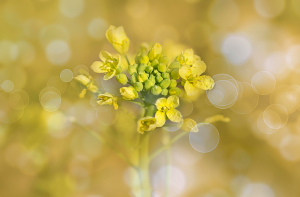
Scientists from Rothamsted Research have engineered a plant to produce a range of important chemicals used in manufacturing common everyday items which are usually obtained from fossil fuels. The chemicals are from a group of molecules called 4-VPs (vinyl phenols) that are widely used in food and makeup and even include plastic used in television and mobile phone screens.
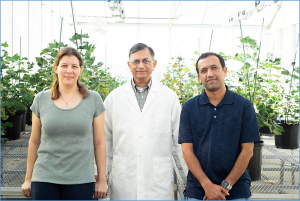
Using cottonseed as food has been an unmet target of many plant breeders until Texas A&M University professor, Dr. Keerti Rathore, successfully developed gossypol-free cottonseed. This breakthrough has the potential to significantly contribute to global food security. According to an e-book released by Scientia, over 20 million farmers worldwide depend on cotton for their livelihood. However, for every 1 kilogram of fiber produced, 1.65 kilograms of cottonseed mostly goes to waste because it contains a natural toxic compound called gossypol.
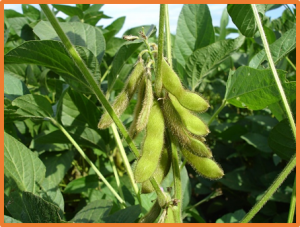
Soybean is one of the most important oilseed and fodder crops. Benefiting from the efforts of soybean breeders and the development of breeding technology, large number of germplasm has been generated over the last 100 years. Nevertheless, soybean breeding needs to be accelerated to meet the needs of a growing world population, to promote sustainable agriculture and to address future environmental changes. The acceleration is highly reliant on the discoveries in gene functional studies.
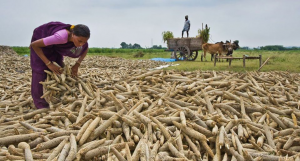
She would mix the flour with water, take a chunk of the dough and beat it between her palms to make a big flat disc and then cook it on the wood-fired clay oven. If she offered it to me, I’d turn my nose up. I couldn’t comprehend why she’d choose them over thinner, tastier, easier-to-eat wheat rotis. But a few years back, I switched to the food my grandma ate. I replaced wheat flour in my kitchen with flour made from pearl millets after I saw a report that said that the latter were healthier.

“Be like the tiger – be bold, be fearless and be strong!” The FAO Director-General, QU Dongyu, exhorted FAO employees all over the world to keep on delivering in challenging times and circumstances to help transform agrifood systems to end rural poverty, hunger and malnutrition in the world. His remarks, drawing on symbols from the Chinese Lunar New Year of the Tiger, came as he celebrated 44 employees for 25 years of service, hailing them for their “long-standing loyalty and dedication to the noble mandate of FAO.”
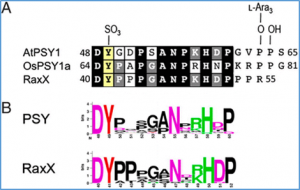
In this article, we describe the development of the plant immunity field, starting with efforts to understand the genetic basis for disease resistance, which ∼30 y ago led to the discovery of diverse classes of immune receptors that recognize and respond to infectious microbes. We focus on knowledge gained from studies of the rice XA21 immune receptor that recognizes RaxX (required for activation of XA21 mediated immunity X), a sulfated microbial peptide secreted by the gram-negative bacterium Xanthomonas oryzae pv. oryzae. XA21 is representative of a large class of plant and animal immune receptors that recognize and respond to conserved microbial molecules.

The Food and Agriculture Organization of the United Nations (FAO) and the World Food Programme (WFP) have launched a project to improve the diet of school-aged children, with support from the German Federal Ministry of Food and Agriculture (BMEL). In many countries school meals represent a significant portion of children’s daily diets, and it is vital that these directly contribute to their nutrition needs. The initiative - “School food nutrition guidelines and standards for safeguarding children and adolescents’ right to food”
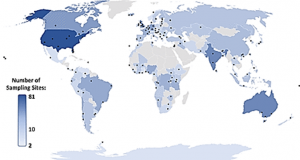
Despite growing evidence of the deleterious effects on ecological and human health, little is known regarding the global occurrence of pharmaceuticals in rivers. Studies assessing their occurrence are available for 75 of 196 countries, with most research conducted in North America and Western Europe. This leaves large geographical regions relatively unstudied. Here, we present the findings of a global reconnaissance of pharmaceutical pollution in rivers.
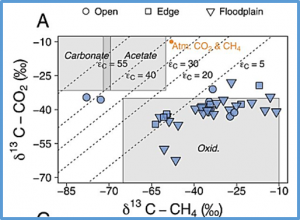
Carbon dioxide (CO2) supersaturation in lakes and rivers worldwide is commonly attributed to terrestrial–aquatic transfers of organic and inorganic carbon (C) and subsequent, in situ aerobic respiration. Methane (CH4) production and oxidation also contribute CO2 to freshwaters, yet this remains largely unquantified. Flood pulse lakes and rivers in the tropics are hypothesized to receive large inputs of dissolved CO2 and CH4 from floodplains characterized by hypoxia and reducing conditions.
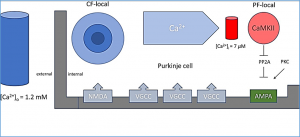
Schonewille et al. (1) show that genetic deletion of GluN1 N-methyl-D-aspartate receptors (NMDARs) from cerebellar granule cells (GC-GluN1 ko), but not from Purkinje cells (PC-GluN1 ko), impairs long-term depression (LTD) at parallel fiber (PF) to PC synapses and vestibuloocular reflex (VOR) phase reversal. NMDARs are postsynaptically expressed at climbing fiber (CF) synapses (2). Challenging our findings that these postsynaptic receptors promote PF-LTD (3), the authors state “NMDARs in PCs are neither involved in PF-PC synaptic plasticity nor required for cerebellar motor learning” (1). We respectfully reject this conclusion.
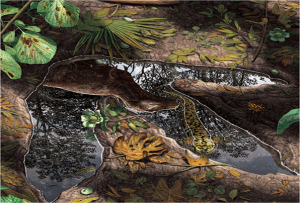
No one has ever seen a living Czekanowskia, an extinct gymnosperm that grew in forests across the Northern Hemisphere from around 210 through 100 million years ago. So before attempting to paint a picture of this ancient plant, Marlene Hill Donnelly built her own. Donnelly, a paleoartist at the Field Museum in Chicago, IL, consulted with paleobotanists, examined fossils, and studied work by other paleoartists. She shaped foil and wire into branches and leaves with lobes so narrow that they resembled pine needles, though finer.
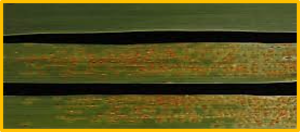
Cultivars with durable resistance are the most popular means to control wheat stripe rust. Durable resistance can be achieved by stacking multiple adult plant resistance (APR) genes that individually have relatively small effect. Chinese wheat cultivars Ruihua 520 (RH520) and Fengdecun 12 (FDC12) confer partial APR to stripe rust across environments. One hundred and seventy recombinant inbred lines from the cross RH520 × FDC12 were used to determine the genetic basis of resistance and identify genomic regions associated with stripe rust resistance