


News & Events

Quebec City-based biopharmaceutical company Medicago and GlaxoSmithKline (GSK) have announced that Health Canada has granted approval for the plant-based virus-like particles (VLP), recombinant, adjuvanted COVIFENZ® COVID-19 vaccine. Health Canada based its decision on scientific data shared by Medicago. COVIFENZ® COVID-19 vaccine uses coronavirus-like particle (CoVLP) technology

Forty-one (41) researchers from 17 countries have come together to offer a compromise on a controversial topic under the United Nations (UN) Convention on Biological Diversity in a new paper in Nature Communications. The scientists published their thoughts on the ongoing UN policy discussions about sharing of digital sequence of information to support conservation efforts.

Sunflower broomrape is a holoparasitic angiosperm that parasitizes on sunflower roots, severely constraining crop yield. Breeding for resistance is the most effective method of control. OrDeb2 is a dominant resistance gene introgressed into cultivated sunflower from a wild-related species that confers resistance to highly virulent broomrape races. The objectives of this study were as follows: (i) locate OrDeb2 into the sunflower genome and determine putative candidate genes and (ii) characterize its underlying resistance mechanism
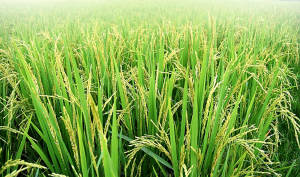
A genome-wide expression analysis of rice root tips from two varieties helped scientists identify candidate genes for water stress adaptation. The two varieties reacted differently to water stress, providing more options for candidate genes potentially involved in root system architecture modification to be investigated further. A team of scientists from Iran and Australia analyzed the transcriptome response of rice root tips to water stress using IR64 and Azucena varieties.
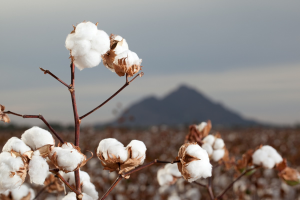
Evaluation for toxicity of any genetically modified (GM) crop is a requirement before its release to the environment. Scientists fed seeds of a gene stacked cotton variety to rats as part of its toxicity evaluation and recorded no harmful effects on the rat. They concluded that GM cotton is safe to be released for commercialization. The study was conducted in Pakistan. The transgenic cotton variety VH-289 containing Cry1Ac, Cry2A, and cp4EPSPS underwent analyses and biosafety studies.
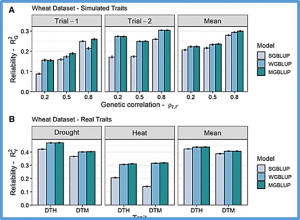
In multi-environment trials, the relative performance of genotypes may vary depending on the environmental conditions, and this phenomenon is commonly referred to as genotype-by-environment interaction (G××E). With genomic prediction, G××E can be accounted for by modeling the genetic covariance between trials, even when the overall experimental design is highly unbalanced between trials, thanks to the genomic relationship between genotypes.

The Crop-to-Food Innovation Program led by the University of Nebraska-Lincoln will give undergraduate students from across the United States the opportunity to be mentored in the fields of biological sciences, chemistry, food science, engineering, and other related majors to enhance their capabilities for cross-disciplinary, cutting-edge research which can help them start their careers after graduation.
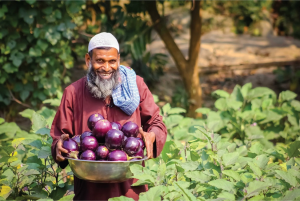
Dr. Shelton was one of the experts who worked on the Bt eggplant project. He told the story of Bt eggplant, starting from its development up to its adoption in Bangladesh, where it was approved for planting in 2014. He emphasized the remarkable rate of Bt eggplant adoption in Bangladesh where it was initially planted by 20 farmers in the 2013-2014 growing season. By 2020-2021 season, there were over 65,000 farmers who adopted Bt eggplant, also known as Bt brinjal in Bangladesh and India.
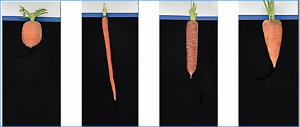
The size and shape of carrot roots are the primary determinants not only of yield, but also market class. These quantitative phenotypes have historically been challenging to objectively evaluate, and thus subjective visual assessment of market class remains the primary method by which selection for these traits is performed. However, advancements in digital image analysis have recently made possible the high-throughput quantification of size and shape attributes

Scientists at the Center for Advanced Bioenergy and Bioproducts Innovation (CABBI) have created CROPSR, the first open-source software tool for genome-wide design and evaluation of guide RNA (gRNA) sequences for CRISPR experiments. "CROPSR provides the scientific community with new methods and a new workflow for performing CRISPR-Cas9 knockout experiments," said developer Hans Müller Paul, a molecular biologist and Ph.D. student with co-author Matthew Hudson, Professor of Crop Sciences at the University of Illinois Urbana-Champaign.
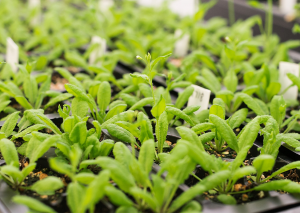
Researchers from the Tokyo Institute of Technology (Tokyo Tech) have developed a novel plant-based platform to boost the production of KODA, a plant oxylipin produced in extremely low amounts, which helps plants cope with environmental stressors. 9-hydroxy-10-oxo-12(Z),15(Z)-octadecadienoic acid, or KODA, belongs to the class of plant oxylipins. Oxylipins help plants recover from stresses like physical injuries and infections. Many plants naturally synthesize KODA, however, the amount is usually low in most, with the free-floating duckweed Lemna paucicostata an exception.
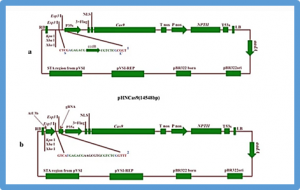
Remarkable diversity in the domain of genome loci architecture, structure of effector complex, array of protein composition, mechanisms of adaptation along with difference in pre-crRNA processing and interference have led to a vast scope of detailed classification in bacterial and archaeal CRISPR/Cas systems, their intrinsic weapon of adaptive immunity. Two classes: Class 1 and Class 2, several types and subtypes have been identified so far.