


News & Events

Mapping out genomes helps scientists understand how the genes of an organism translate into traits. But there is more to it than just comprehending how a single organism functions and adapts to its environment. It holds key information of how the organism interacts with other organisms, adapts to changes in its environment, and how it thrives for long-term survival. But to unleash the full potential of genomics, we need to view it not as a field of study that focuses on a single species but as a field of study that branches out to include other different scientific fields.
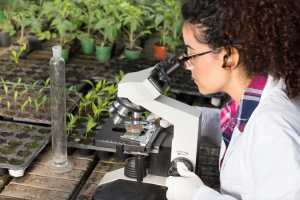
Researchers from Université Paris-Saclay in France reported successful use of Prime Editing in potato and spreading earthmoss (Physcomitrium patens), a model organism widely used for plant research. Their findings are published in Plant Science. CRISPR-Cas9 technology has revolutionized plant research and precision crop breeding. Though it has been proven to be an efficient tool for disruptive targeted mutagenesis, its use in the introduction of precise and predictable nucleotide substitutions still needs improvement.
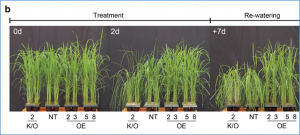
Plants have evolved sophisticated defense systems to enhance drought tolerance. These include the microRNA (miRNA) group of small noncoding RNAs that act as post-transcriptional regulators; however, details of the mechanisms by which they confer drought tolerance are not well understood. Here, we show that osa-MIR171f, a member of osa-MIR171 gene family, is mainly expressed in response to drought stress and regulates the transcript levels of SCARECROW-LIKE6-I (SCL6-I) and SCL6-II in rice (Oryza sativa)

Today CGIAR mourns the passing of Dr. Barbara H. Wells, Global Director of Genetic Innovation, and Director General of the International Potato Center (CIP). Dr. Wells died on February 16, 2022. Dr. Wells’ distinguished career in the agriculture and forestry research and innovation sectors spanned more than 30 years. She joined CGIAR in 2014 as Director General of CIP. Among many achievements there, Dr. Wells presided over an expansion of the Center’s work through partnerships – including with the World Food Programme and McCain Foods – that brought CIP’s innovations to farmers all over the world, achieving scale and delivering impact.

The economic fallout of the COVID-19 pandemic, climate variability and extremes, conflict, and the persistence of hunger and malnutrition have shown us that now is the time for us to build more resilient agrifood systems. If we don’t, agrifood systems will not be able to ensure food availability to all as well as physical and economic access to nutritious foods that make up healthy diets.
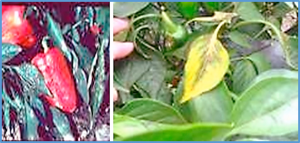
The host susceptibility factors are important targets to develop genetic resistances in crops. Genome editing tools offer exciting prospects to develop resistances based on these susceptibility factors, directly in the cultivar of choice. Translation initiation factors 4E have long been known to be a susceptibility factor to the main genus of Potyviridae, potyviruses, but the inactivation of the eIF4E2 gene has only recently been shown to provide resistance to some isolates of pepper veinal mottle virus (PVMV) in big-fruit tomato plants
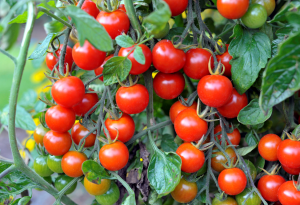
A team of researchers from France's National Research Institute for Agriculture, Food and Environment (INRAE) used CRISPR technology to develop cherry tomatoes with resistance to pepper veinal mottle virus. Their findings are published in Plant Science. Researchers target host susceptibility factors in developing genetic resistances of crops. Using CRISPR-Cas9-NG in cherry tomatoes,

Scientists in China have expressed their excitement to submit applications for use of gene-edited crops after their government has released the preliminary guidelines on January 24, 2022. The Chinese government's approval of gene-edited crops is expected to boost research on improved crops that are pest-resistant and resilient to climate change.
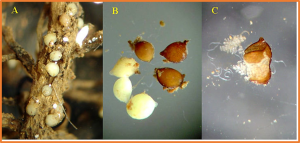
Soybean cyst nematode (SCN, Heterodera glycines Ichinohe) is the most economically damaging pathogen affecting soybean production worldwide. Host-induced gene silencing provides a promising approach to confer resistance to plant parasitic nematodes. In the present study, we produced stable transgenic soybean plants individually harboring the inverted repeats of three essential H. glycines genes, Hg-rps23, Hg-snb1, and Hg-cpn1, and evaluated their resistance to SCN infection.

Soybean cyst nematode (SCN) is the most economically destructive pathogen affecting soybean production globally. To combat this pathogen, the researchers produced stable transgenic soybean plants individually containing the inverted repeats of three SCN genes (Hg-rps23, Hg-snb1, and Hg-cpn1) and assessed their resistance to the pathogen. Results showed that host-induced silencing of essential SCN genes could enhance broad-spectrum SCN resistance in stable transgenic soybean plants, without negative impacts on the agronomic performance.
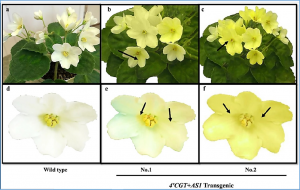
For the first time, scientists were successful in using genetic engineering of aurone pigments biosynthesis pathway to produce the yellow color in the petals of the white African violet. African violets are found in different colors except for yellow. For this study, the scientists used the S. Jolly Diamond cultivar which has white petals. Their objective was to change the petals' colors from white to yellow by using the aurone pigment biosynthesis pathway.
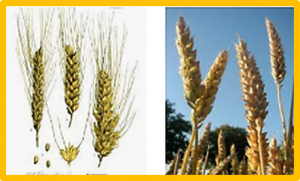
Grain size and weight are crucial components of wheat yield. Dissection of their genetic control is thus essential for the improvement of yield potential in wheat breeding. We used a doubled haploid (DH) population to detect quantitative trait loci (QTLs) for grain width (GW), grain length (GL), and thousand grain weight (TGW) in five environments. Six major QTLs, QGw.cib-4B.2, QGl.cib-4A, QGl.cib-5A.1, QGl.cib-6A, QTgw.cib-4B, and QTgw.cib-5A, were consistently identified in at least three individual environments and in best linear unbiased prediction (BLUP) datasets,