


News & Events
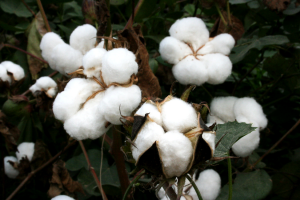
Scientists found evidence that Salt Tolerance5 (ThST5) from Thellungiella halophila is a promising candidate to improve salt tolerance in cotton. These findings can take salt-tolerant cotton research to new levels. ThST5 was previously isolated by the scientists from the halophyte T. halophila, an ortholog of Arabidopsis SPT4 which encodes a transcription elongation factor. However, previous evaluations did not confer SPT4-2's salt tolerance in crops. For this study, the scientists were able to record evidence that SPT4-2 increases salt tolerance in cotton plants.
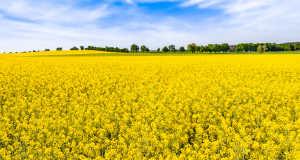
Oil from bioengineered canola has been found to be safe to consume in human foods, nutraceuticals, and animal feeds. Results of the study are published in Frontiers in Nutrition. The bioengineered canola (NS-B5ØØ27-4) is a plant-based source for omega-3 long-chain polyunsaturated fatty acids, with a high level of docosahexaenoic acid (DHA), thus it is referred to as DHA canola. The said nutrients were originally obtained from marine sources but the increasing demand for such has led to overfishing.
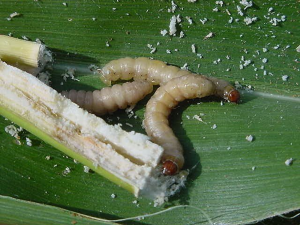
Stem borers are major insect pests of maize in Uganda. A study was conducted in 2014–2016 to assess the performance of Bt hybrids expressing Cry1Ab (event MON810) against the two major stem borer species in Uganda – the African stem borer (Busseola fusca) and the spotted stem borer (Chilo partellus) – under artificial infestation. The study comprised 14 non-commercialized hybrids, including seven pairs of Bt and non-Bt hybrids (isolines),
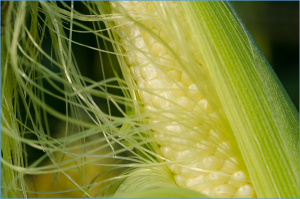
Researchers from National Crops Resources Research Institute, Uganda, conducted a study to analyze the performance of Bt maize MON810 in controlling maize stem borers. The results are published in Crop Protection journal. African stem borer (Busseola fusca) and the spotted stem borer (Chilo partellus) are among the major insect pests of maize in Uganda.
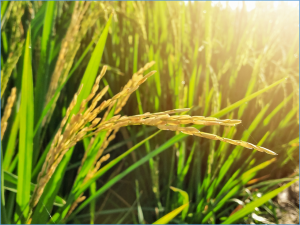
Australian scientists are estimating the nutrient profile of individual colored rice varieties using a light facility that accelerates electrons in a close magnetic loop field to produce a light brighter than a million suns. The researchers' objective is to investigate the rice's surface and potentially help produce rice that is more nutritious for consumers. The Canadian Light Source is a football field-sized synchrotron light facility located in Canada.
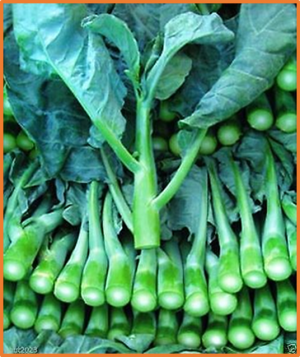
Many species of the Brassicaceae family, including some Brassica crops, require vernalization to avoid pre-winter flowering. Vernalization is an unfavorable trait for Chinese kale (Brassica oleracea var. chinensis Lei), a stem vegetable, and therefore it has been lost during its domestication/breeding process. To reveal the genetics of vernalization variation, we constructed an F2 population through crossing a Chinese kale (a non-vernalization crop) with a kale (a vernalization crop).
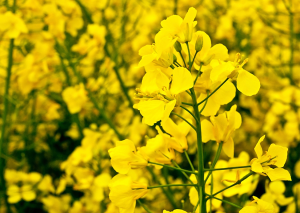
Australia's Office of the Gene Technology Regulator (OGTR) has received license application DIR 190 from BASF Australia for commercial cultivation of genetically modified (GM) Indian mustard line RF3 modified for herbicide tolerance. GM Indian mustard RF3 has been produced by conventional breeding of non-GM Indian mustard with GM canola containing the RF3 modification. The GM Indian mustard contains genes for herbicide tolerance and for male fertility restoration.

Nigeria is set to provide efficient guidelines, programs, policies, and processes to further enhance its national biosafety system. This was stressed by Dr. Rufus Ebegba, Director-General/Chief Executive Officer of the National Biosafety Management Agency (NBMA), during a review meeting of the draft national guidelines on genetically modified plants with stacked genes in Abuja. Dr. Ebegba stressed that the agency aims to release guidelines that would define its stand as a biotech-adopting country.
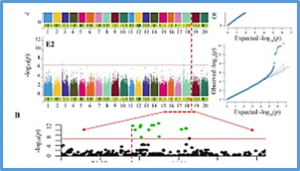
The seed germination phase is a critical component of the plant lifecycle, and a better understanding of the mechanism behind seed germination in soybeans is needed. We used a genome-wide association study (GWAS) to detect a GWAS signal on chromosome 18. In this GWAS signal, SNP S18_56189166 was located within the 3’untranslated region of Glyma.18G280900, which encodes allene oxide cyclase 4 (named GmAOC4). Analysis of real-time PCR demonstrated that expression levels of GmAOC4 in the low-germination variety (KF, carrying SNP S18_56189166-T) were higher than in the high-germination variety (NN, carrying SNP S18_56189166-C).
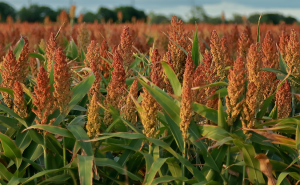
Experts from the Chinese Academy of Sciences reported the successful development of fragrant cultivated sorghum using CRISPR-Cas9 gene editing technology. Their findings are published as a breakthrough report in the Journal of Integrative Plant Biology. Soghum is the fifth largest crop with high economical value because it is used as a staple food and raw material for liquor and vinegar brewing. It is also used as a silage source due to its high biomass and quality.

Ukraine is the world's breadbasket, ranked in 2022 as the fifth largest wheat exporter globally, exporting $3.59 billion of wheat. With the conflict that is going on in Ukraine and the resulting longer-term disruptions of the country's rural economy, there is potential for another round of turmoil linked to prices of staple cereals. Wheat is a staple crop and is essential to food security as it is consumed by more than 2.5 billion people worldwide.
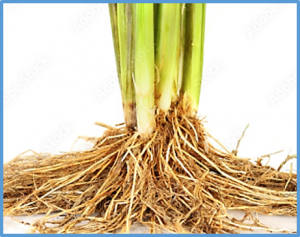
Root system architecture (RSA) is an important agronomic trait with vital roles in plant productivity under water stress conditions. A deep and branched root system may help plants to avoid water stress by enabling them to acquire more water and nutrient resources. Nevertheless, our knowledge of the genetics and molecular control mechanisms of RSA is still relatively limited. In this study, we analyzed the transcriptome response of root tips to water stress in two well-known genotypes of rice: