


News & Events
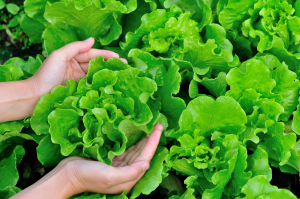
RUC Davis graduate student, Kevin Yates, together with his professors, developed a GM lettuce that produces a fusion protein combining PTH with part of a human antibody protein. The fusion protein is engineered to be unchanging in the bloodstream. Being able to plant and extract the drug will be beneficial to astronauts in long spaceflights to save weight and get a fresh source of drugs. Conventional medicines usually have a short shelf life and thus astronauts would need ways to replenish their supplies during long spaceflights.

Scientists from Spain conducted a risk-benefit analysis to review the impact of genetically modified (GM) products on human, animal, and environmental health. Despite the limited data on their long-term implications that make it difficult to assess the long-term risk of consuming GM crops, scientific evidence shows that GM crop use did not bring any harm to date. Rather, economic, environmental, and health benefits for the public have resulted from GM crop commercialization.
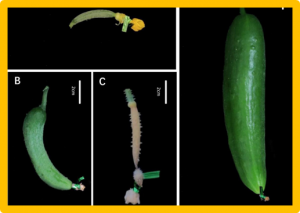
Parthenocarpy is an important agronomic trait in cucumber (Cucumis sativus L.) production. However, the systematic identification of parthenocarpic germplasms from national gene banks for cucumber improvement remains an international challenge. In this study, 201 cucumber lines were investigated, including different ecotypes. The percentages of parthenocarpic fruit set (PFS) and parthenocarpic fruit expansion (PFE) were evaluated in three experiments.
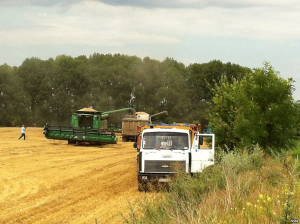
With global prices of food and fertilizers already reaching worrying highs, the continuing impacts of the COVID-19 pandemic and Russia’s invasion of Ukraine raise serious concerns for food security, both in the short and long term. CGIAR Senior Research Fellows Joseph Glauber and David Laborde from IFPRI are curating a special series of posts providing analysis on the implications of rising food and fertilizer prices
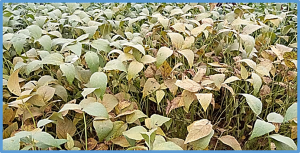
Looking out across a crop nursery filled with diseased plants, you’d be forgiven for thinking there is something wrong. However, these are no ordinary nurseries – they are “disease nurseries” filled with crop samples and breeding lines gathered from around the world, and they play a vital role in helping scientists to identify varieties that can withstand a disease outbreak.
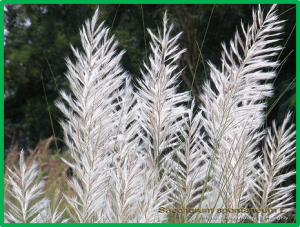
Saccharum spontaneum, a wild relative of sugarcane, is highly tolerant to drought and salinity. The exploitation of germplasm resources for salinity tolerance is a major thrust area in India. In this study, we utilized suppression subtractive hybridization (SSH) followed by sequencing for the identification of upregulated transcripts during salinity stress in S. spontaneum clones coming from different geographical regions of India. Our sequencing of the SSH library revealed that 95% of the transformants contained inserts of size 200-1500 bp. We have identified 314 differentially expressed transcripts in the salinity-treated samples after subtraction, which were subsequently validated by quantitative real-time polymerase chain reaction.
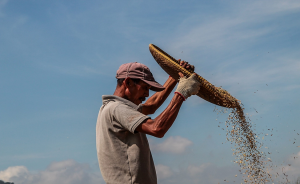
A recent Twitter conversation between the UN’s David Beasley and Tesla’s Elon Musk has shown that hunger is deceptively complex. There is a crucial difference between acute hunger, caused by shocks like war or natural disasters, and chronic hunger, which occurs when agricultural production (and distribution) fails to keep pace with threats such as soil degradation, erratic rainfall, or heatwaves, or when poverty renders food unaffordable.
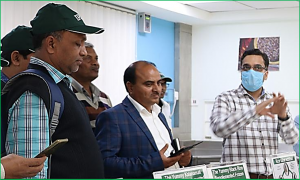
A workshop on climate-smart agriculture was conducted for researchers, scientists, and officials of Bihar Agriculture University (BAU) Sabour, India to provide them with the knowledge and skills for developing interventions for farmers to mitigate climate-crisis challenges. In Climate Change 2022: Impacts, Adaptation and Vulnerability, the Intergovernmental Panel on Climate Change (IPCC) Working Group II reported that the increase in global average temperature will have significant risks to agricultural and food systems in vulnerable regions like India
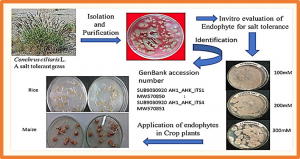
The present study aimed to witness the plant-microbe interaction associated with salt tolerance in crops. We isolated the endophytic microbe from the root zone of halophytic grass. Later, the salt tolerance of the endophyte was tested in the saline medium and was identified using nucleotide sequencing (GenBank under the accession numbers: SUB9030920 AH1_AHK_ITS1 MW570850: SUB9030920 AH1_AHK_ITS4 MW570851)
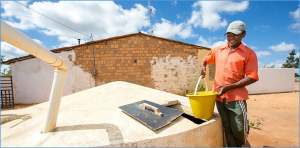
Below our feet lies a hidden treasure. It may be hundreds of metres below. Or it may be so close to the ground that it bubbles up to the surface. This unseen treasure is groundwater: namely, the vast reservoirs of fresh water under the ground. It sustains ecosystems and provides food, drink and livelihoods for billions. As climate patterns change with global heating, this reliable water source is becoming ever more important for food security and livelihoods.
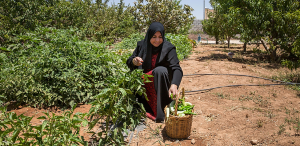
Intense droughts and groundwater depletion have significant consequences for both agriculture and the economy in the Near East and North Africa region. Small-scale farmers who depend on agriculture for both food and income are the most vulnerable to these effects, especially in areas that are dependent on groundwater. With droughts alone expected to reduce the regional GDP by as much as 6 per cent by 2050, governments across the region are trying to limit crop losses.
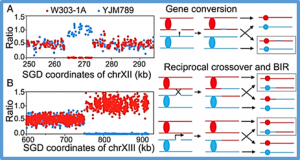
DNA polymerase ε (Pol ε) is one of the three replicative eukaryotic DNA polymerases. Pol ε deficiency leads to genomic instability and multiple human diseases. Here, we explored global genomic alterations in yeast strains with reduced expression of POL2, the gene that encodes the catalytic subunit of Pol ε. Using whole-genome SNP microarray and sequencing, we found that low levels of Pol ε elevated the rates of mitotic recombination and chromosomal aneuploidy by two orders of magnitude