


News & Events

The National Institute of Agricultural Botany (NIAB) of the UK has welcomed the approval by both Houses of Parliament of a Statutory Instrument that will facilitate easier execution of field testing of plants developed through new genetic technologies such as gene editing. According to NIAB chief executive, Prof. Mario Caccamo, gene editing offers a potentially transformative tool in plant research that allows similar changes done through conventional breeding, but in a much more precise and efficient manner.
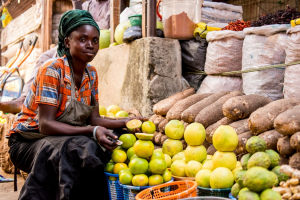
Evidence suggests that through the potential contributions to increase yield, enhance nutrition, and greater environmental sustainability, genome editing can help attain the top three Sustainable Development Goals (SDGs) identified by the United Nations. In a peer-reviewed paper written by Stuart J. Smyth of the University of Saskatchewan in Canada, genome editing can help achieve the top three SDGs as described below.
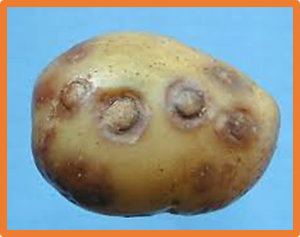
Small interfering RNAs (siRNAs) produced from template double-stranded RNAs (dsRNAs) can activate the immune system in transgenic plants by detecting virus transcripts to degrade. In the present study, an RNA interference (RNAi) gene silencing mechanism was used for the development of transgenic potato plants resistant to potato virus Y (PVY), the most harmful viral disease. Three RNAi gene constructs were designed based on the coat protein (CP) and the untranslated region parts of the PVY genome, being highly conserved among all strains of the PVY viruses.
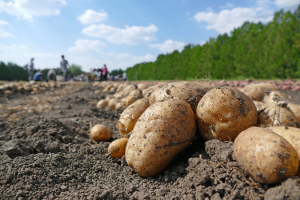
Researchers from the Agricultural Biotechnology Research Institute of Iran and partners used gene silencing techniques to develop genetically modified potato plants resistant to potato virus y (PVY), the most harmful viral disease. The results are published in Transgenic Research. Small interfering RNAs developed from double-stranded RNAs can turn on the immune system in GM plants through the detection of virus transcripts to degrade
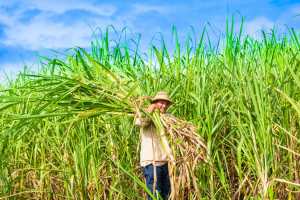
Transgenic sugarcane overexpressing sucrose-phosphate synthase were evaluated under field trial conditions and were found to perform better than its non-transgenic counterparts without affecting bacterial diversity and soil rhizosphere. The field evaluation aids the selection of the best transgenic sugarcane line.
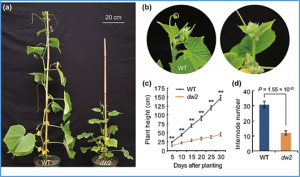
Plant architecture is a composite character which are mainly defined by shoot branching, internode elongation and shoot determinacy. Ideal architecture tends to increase the yield of plants, just like the case of “Green Revolution” increased by the application of semi-dwarf cereal crop varieties in 1960s. Cucumber (Cucumis sativus L.) is an important vegetable cultivated worldwide, and suitable architecture varieties were selected for different production systems.

The Australian Office of the Gene Technology Regulator (OGTR) invites comments from the public to assess an application from Nuseed Pty. Ltd. to conduct a field trial of canola and Indian mustard genetically modified (GM) for altered oil content and herbicide tolerance. The field trial is proposed to take place at up to 20 sites with a total area of 150 hectares per year over five years. Sites would be in New South Wales, Victoria, and Queensland. The GM canola and Indian mustard in this field trial would not be used for human food or animal feed.
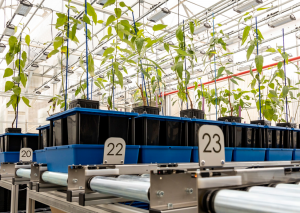
Researchers at the Center for Bioenergy Innovation (CBI) at Oak Ridge National Laboratory (ORNL) have discovered a pathway for lignin formation in plants that could make biofuels processing easier and less costly. The researchers focused on C-lignin, a polymer in the seed coats of certain exotic plants. C-lignin is easier to deconstruct because it has a chemical structure that is more linear than other lignins.
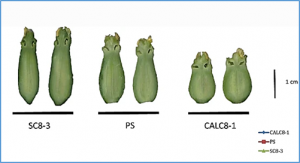
Melon cultivars have a wide range of fruit morphologies. Quantitative trait loci (QTL) have been identified underlying such diversity. This research focuses on the fruit shape QTL fsqs8.1, previously detected in a cross between the accession PI 124112 (CALC, producing elongated fruit) and the cultivar ‘Piel de Sapo’ (PS, producing oval fruit). The CALC fsqs8.1 allele induced round fruit shape, being responsible for the transgressive segregation for this trait observed in that population.

The University of Washington and partners conducted a study with farmers using regenerative farming practices to analyze their impact on the nutritional content of food. The results are published in PeerJ. Regenerative farming practices include no-till, use of cover crops, and diverse rotations to conserve biodiversity. To document evidence on the impact of regenerative farming to food, ten farms in the US grew one acre of a test crop for five years, which was compared with the same crop planted on a nearby farm using conventional agriculture.
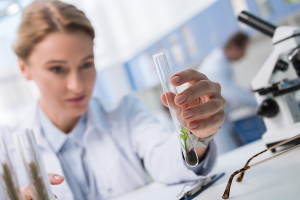
To help growers better understand the function of different genes in mango and macadamia trees, Queensland University of Technology (QUT) researchers are developing new tools for testing gene function to speed up the development of elite cultivars for both tree industries to respond quickly to challenges like pests, diseases, and climate change. Mango and macadamia account for half of Australia's horticultural industry, but both have not undergone extensive molecular breeding programs to produce elite cultivars to make them more resilient to pests

Communication between interacting organisms via bioactive molecules is widespread in nature and plays key roles in diverse biological processes. Small RNAs (sRNAs) can travel between host plants and filamentous pathogens to trigger transkingdom RNA interference (RNAi) in recipient cells and modulate plant defense and pathogen virulence. However, how fungal pathogens counteract transkingdom antifungal RNAi has rarely been reported.