


News & Events
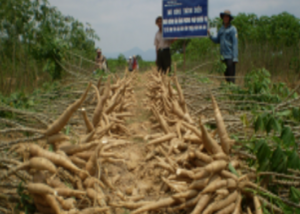
Dr Tran Thanh Hung addressed his preliminary report on farming system model in Truong Sa Islands including crop and husbandry; March 23, 2022. Mutual meeting between IAS and DARD of Ho Chi Minh City on technology transfer to farmers; March 29, 2022.
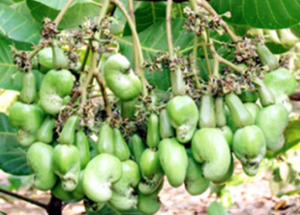
VIETNAM CASHEW ASSOCIATION CONGRESS was held to assess the past activities and to establish the coming works in 2021-2026; February 22, 2022
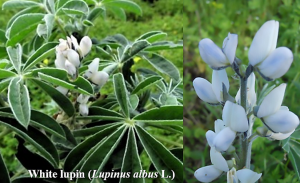
White lupin (Lupinus albus L.) is a promising grain legume to meet the growing demand for plant-based protein. Its cultivation, however, is severely threatened by anthracnose disease caused by the fungal pathogen Colletotrichum lupini. To dissect the genetic architecture for anthracnose resistance, genotyping by sequencing was performed on white lupin accessions collected from the center of domestication and traditional cultivation regions.
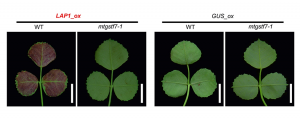
Researchers from the Xishuangbanna Tropical Botanical Garden (XTBG) of the Chinese Academy of Sciences (CAS) have discovered a key gene regulating the biosynthesis of anthocyanins and proanthocyanidins. In a study published in the Journal of Experimental Botany, the researchers showed that MtGSTF7, a TT19-like glutathione S-transferase (GST) gene, was activated by the anthocyanin regulator LAP1 in the accumulation of anthocyanins, but not proanthocyanins, in the model legume plant Medicago truncatula.

Crop Science Centre, an alliance between the University of Cambridge and the National Institute of Agricultural Botany, will conduct a field trial of genetically modified (GM) and gene-edited barley with the aim of reducing dependency on synthetic fertilizers to promote improved soil health, and sustainable and equitable means of food production.
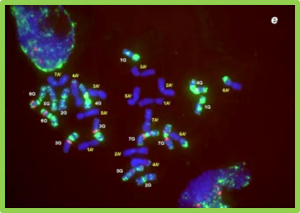
Wheat yields are stagnating around the world and new sources of genes for resistance or tolerances to abiotic traits are required. In this context, the tetraploid wheat wild relatives are among the key candidates for wheat improvement. Despite its potential huge value for wheat breeding, the tetraploid GGAtAt genepool is largely neglected. Understanding the population structure, native distribution range, intraspecific variation of the entire tetraploid GGAtAt genepool and its domestication history would further its use for wheat improvement.

FAO join the call of the Secretary-General to end the war, restore peace and protect people's lives. We express our solidarity with all the people suffering in this war, particularly those whose livelihood depends on agriculture. At FAO, we are mobilizing our resources and capacities to assist within the limitations the war imposes, and in line with our mandate.

The Swiss Parliament is easing restrictions on gene editing techniques in agriculture and extended the moratorium for genetically modified organisms until 2025. The Senate has asked the Swiss government to propose details for the use of gene editing techniques on plants and seeds by mid-2024. Exemptions will be allowed if they have added value for agriculture, consumers, and the environment compared with conventional methods. This move followed a similar decision by the House of Representatives.
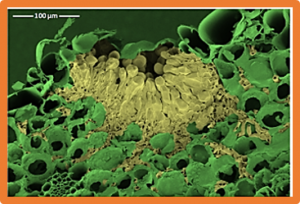
Wheat (Triticum aestivum L.) is a global commodity, and its production is a key component underpinning worldwide food security. Yellow rust, also known as stripe rust, is a wheat disease caused by the fungus Puccinia striiformis Westend f. sp. tritici (Pst), and results in yield losses in most wheat growing areas. Recently, the rapid global spread of genetically diverse sexually derived Pst races, which have now largely replaced the previous clonally propagated slowly evolving endemic populations, has resulted in further challenges for the protection of global wheat yields.

A group of experts from Pennsylvania State University and partners developed a technique that enhances the lifespan and efficiency of CRISPR gene-editing tools after delivery into stem cells. Bioactive Materials published their findings. Stem cells are used by researchers to investigate the impact of disease on various tissue types due to their pluripotency or the ability to produce cells of any time. However, the delivery of gene-editing tools into stem cells can be inefficient, time-consuming, or expensive
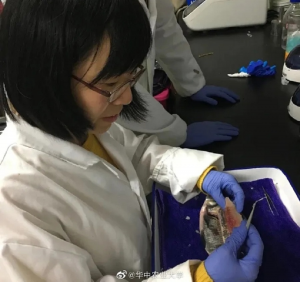
Scientists from the Huazhong Agricultural University (HZAU) and the Chinese Academy of Sciences were able to produce the first generation of spineless fish by knocking out the main genes that control the bone growth in bream, grass carp, and pond crucian carp. Professor Gao Zexia of HZAU studied how to make the bream fish spineless by identifying the gene that regulates bone growth. Her investigation produced the world's first comprehensive fishbone gene expression, which she applied a domestic patent for.
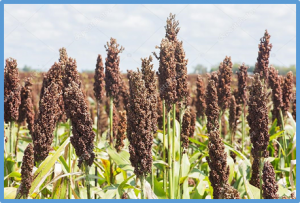
Cyanogenic glucosides (CGs) play a key role in host-plant defense to insect feeding; however, the metabolic tradeoffs between synthesis of CGs and plant growth are not well understood. In this study, genetic mutants coupled with nondestructive phenotyping techniques were used to study the impact of the CG dhurrin on fall armyworm [Spodoptera frugiperda (J.E. Smith)] (FAW) feeding and plant growth in sorghum [Sorghum bicolor (L.) Moench]. A genetic mutation in CYP79A1 gene that disrupts dhurrin biosynthesis was used to develop sets of near-isogenic lines (NILs) with contrasting dhurrin contents in the Tx623 bmr6 genetic background.